


|
|
|
Rethinking the Traditional Fishing Toy Through Material Selection, Magnetic Integration, and Multi-Scenario Play
A fishing toy is a familiar product in the children's toy market. A fishing rod, several fish, and a simple catching mechanism are often enough to create an engaging activity. However, for baby and toddler brands, the challenge is no longer simply to develop another fishing game. It is to make a familiar product more versatile, more distinctive, and better suited to different play environments.
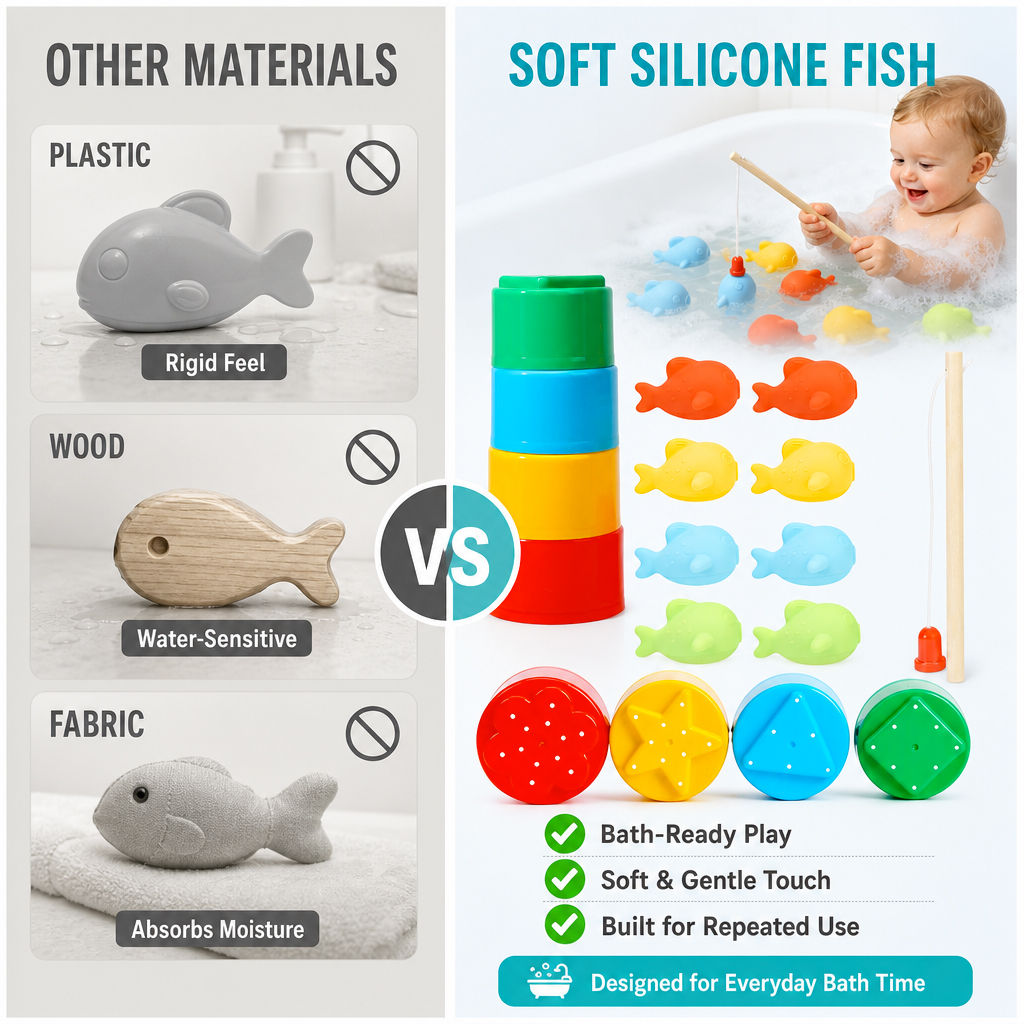
Many conventional children's fishing toys are designed primarily for dry play. Depending on their construction, fabric fish may be difficult to maintain after repeated exposure to water, wooden components may require additional care in wet environments, and rigid plastic fish may offer a different tactile experience from softer materials. These differences can limit how brands position a fishing toy beyond its traditional tabletop setting.
This creates an opportunity for material-led innovation.
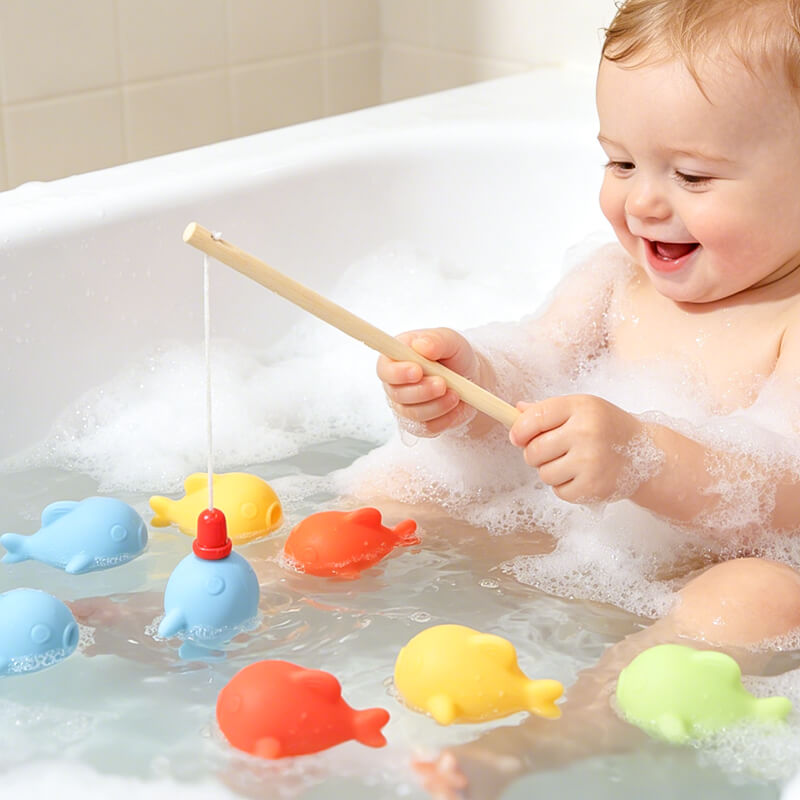
Rather than redesigning the entire fishing game, manufacturers can rethink the materials, component construction, and ways the toy can be used. KEAN's TOY33 Magnetic Fishing Bath Toy takes this approach by combining soft silicone fish, an internal magnetic structure, color-matching activities, and accessories that extend the familiar fishing game into bath-time play.
For brands searching for a differentiated magnetic fishing toy, children's fishing toy, or fishing bath toy, the key question is not simply what the product looks like. It is how its construction changes the overall play experience.
The Problem With Conventional Fishing Toys: One Familiar Game, Limited Possibilities
Traditional fishing toys are popular because the basic interaction is easy to understand. Children use a rod to catch a fish, lift it, and repeat the process. The activity can encourage hand-eye coordination, concentration, and repeated practice with controlled movements.
However, many products compete through similar mechanics. A different fish shape, a new color combination, or a revised fishing rod may change the appearance without substantially changing how the product is used.
Material choice creates another point of differentiation.
Fabric-based fishing toys can offer a soft appearance, but their suitability for repeated wet play depends on the fabric, internal construction, drying requirements, and care instructions. Wooden fishing toys can provide a natural tactile experience, but their finishes and construction need to be appropriate for the intended environment. Conventional rigid plastic toys can be practical for many applications, yet they do not provide the same soft, compressible feel as silicone.
These are not universal defects in every competing product. They are design trade-offs that brands should evaluate when deciding whether a traditional fishing toy can support additional scenarios.
For a brand looking to develop a more versatile product, the opportunity is to address three questions:
Can the fish offer a different tactile experience? Can the product be designed around both dry and water-based play? Can the same set offer more than one way to interact?
TOY33 was developed around these questions.
The Main Difference: Replacing Conventional Fish Components With Silicone
The most important distinction between TOY33 and many conventional fishing sets is its use of silicone fish rather than relying entirely on fabric, wood, or rigid plastic fish.
This is not simply a cosmetic material substitution.
Material affects how a component feels in the hand, how it deforms when squeezed, how its surface is experienced, and how it fits into the intended cleaning and use routine.
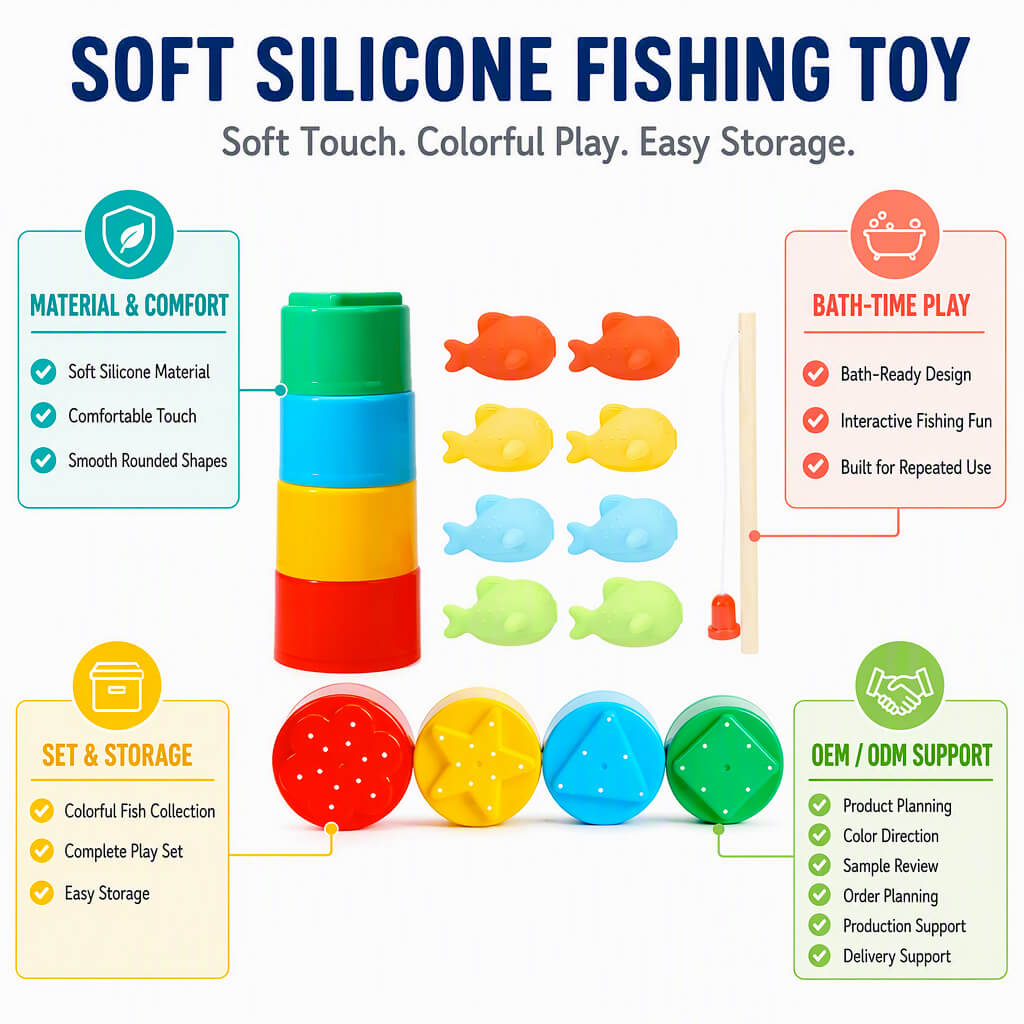
TOY33 uses soft silicone fish with a realistic fish-inspired shape. The design aims to combine a recognizable appearance with a softer tactile experience, giving brands an alternative to conventional hard plastic fishing pieces.
The silicone construction also supports the product's multi-scenario positioning. Instead of treating the toy as a dry tabletop activity only, the set can be used for floor play and bath-time interaction, subject to the product's stated use conditions.
For B2B buyers, the value is clear: the material helps support a different product proposition without abandoning a play pattern customers already understand.
The product is not trying to replace the fishing game with a completely unfamiliar activity. It is reworking a familiar toy around a different material and a broader use scenario.
Magnetic Integration: The Catching Mechanism Is Part of the Design
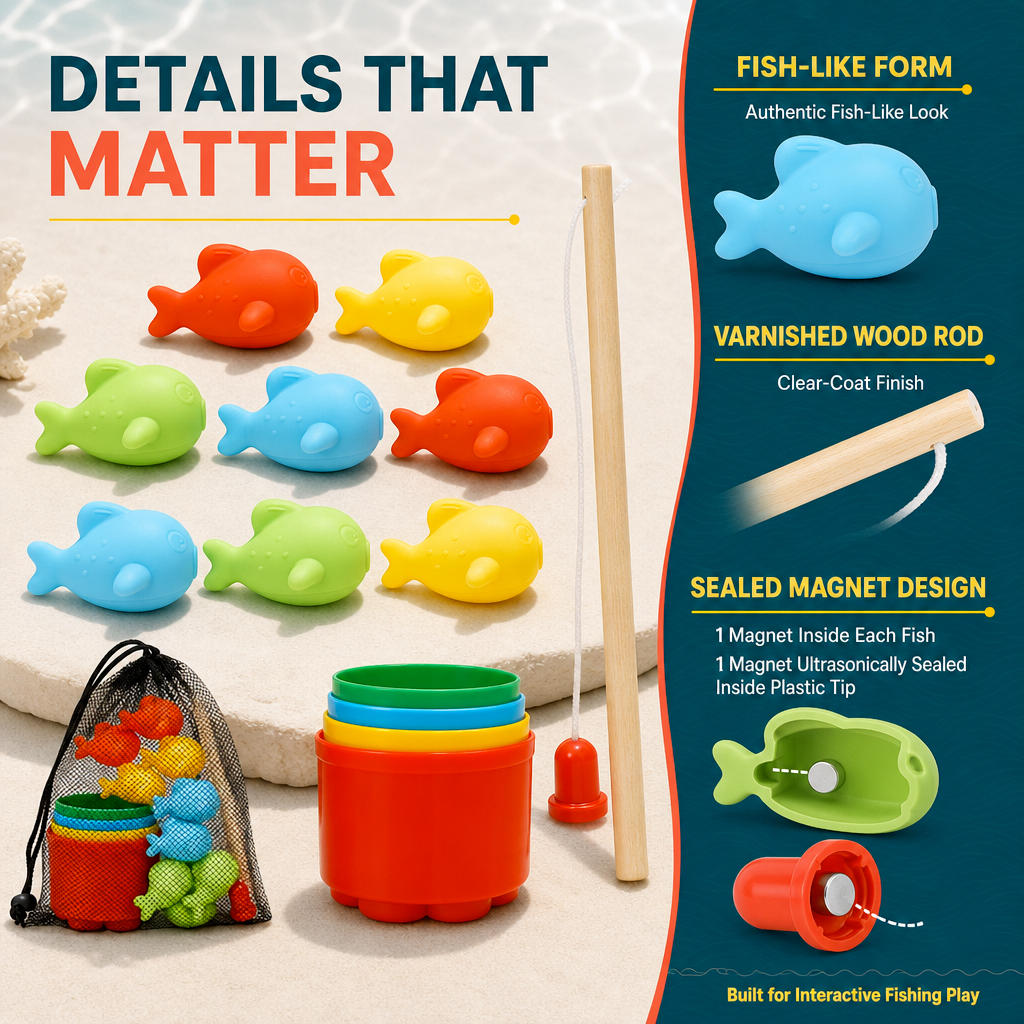
A fishing toy's core interaction depends on the connection between the rod and the fish.
If the catching mechanism is difficult to use, the activity can become frustrating. If the interaction is too simple, the product may offer limited opportunities for repeated practice. The design needs to balance accessibility with an appropriate level of challenge for its intended age group.
TOY33 uses internal magnets to create the fishing interaction.
Each silicone fish contains an internally encapsulated magnet, while the fishing rod incorporates its own magnet structure. This allows the rod to attract and lift the fish without relying on a conventional hook-and-loop connection.
The internal placement of the magnets is an important engineering detail. The magnets are part of the component design rather than exposed decorative elements. This requires the manufacturer to consider magnet positioning, encapsulation integrity, surrounding material geometry, and repeatable assembly or molding conditions.
The goal is not just to make the magnets work in a prototype. The finished product needs to maintain the intended construction throughout manufacturing and pass applicable finished-toy testing.
For brands, this creates a stronger product story than simply adding a magnetic feature to a conventional fishing game. The magnetic mechanism works together with the silicone fish to define the product's overall interaction.
A Practical Comparison: TOY33 and Common Fishing Toy Designs
The differences between fishing toy categories become clearer when evaluated by material, intended environment, tactile experience, and play options.
Design consideration | Common fabric fishing toys | Common wooden fishing toys | Common rigid plastic fishing toys | KEAN TOY33 |
Main fish material | Fabric or textile-based construction | Wood or wood-based components | Rigid plastic | Soft silicone |
Tactile experience | Soft fabric surface | Firm, natural material feel | Relatively rigid | Soft, flexible silicone feel |
Wet-play suitability | Depends on fabric and internal construction | Depends on finish, construction, and care requirements | Depends on material and product design | Designed for dry play and bath-time scenarios |
Catching interaction | Varies by product; may use hook-and-loop | Varies by product | Varies by product | Internal magnetic interaction |
Color-based activity | Depends on set design | Depends on set design | Depends on set design | Four fish colors support matching activities |
Additional accessories | Varies | Varies | Varies | Four PP buckets and one fishing net |
Product differentiation opportunity | Textile design and appearance | Natural material and styling | Shape, color, and mechanism | Silicone material, magnetic interaction, color matching, and multi-scenario use |
The table describes common design approaches, not every product on the market. Actual performance depends on the specific competitor's materials, construction, testing, and instructions.
The central distinction is that TOY33 combines several product decisions into one set. Its differentiation does not depend on silicone alone, or magnets alone, or additional accessories alone. It comes from the way these elements work together.
Four Colors Turn Fishing Into a Matching Activity
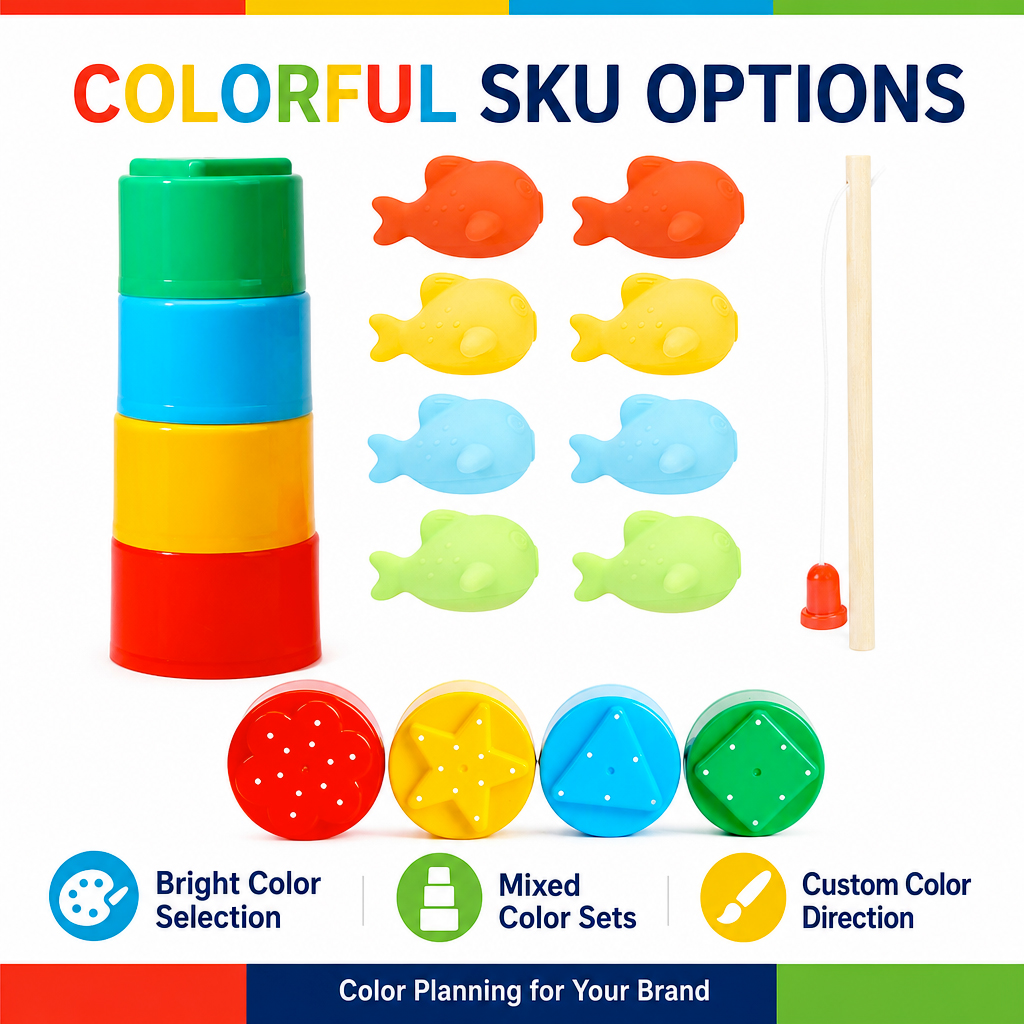
A fishing game does not need to stop when a fish is caught.
Color matching creates another activity using the same components.
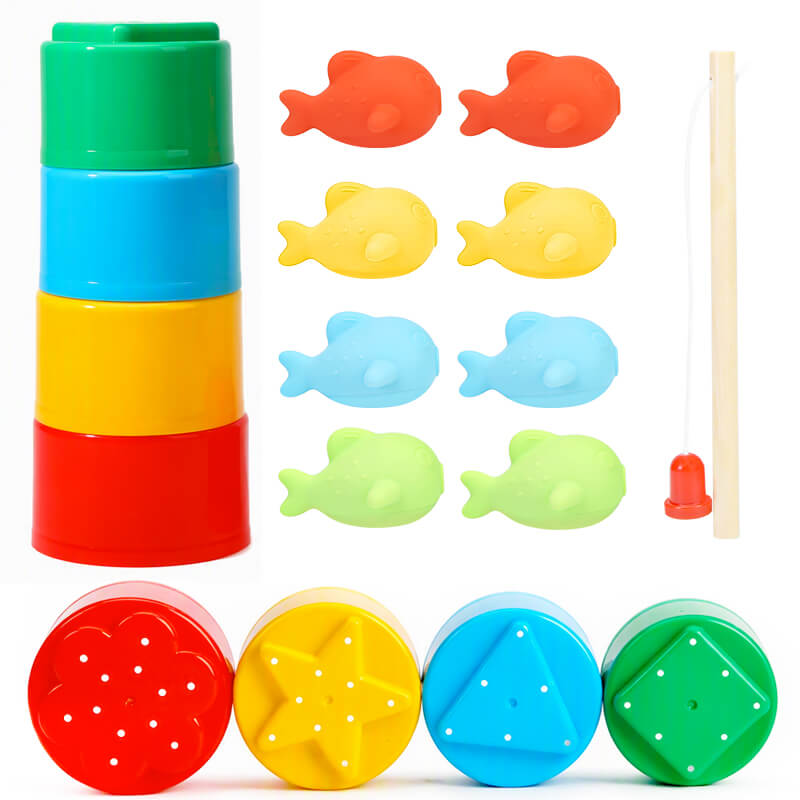
TOY33 includes eight silicone fish in four colors: berry red, light orange-yellow, water blue, and apple green. The set includes two fish in each color.
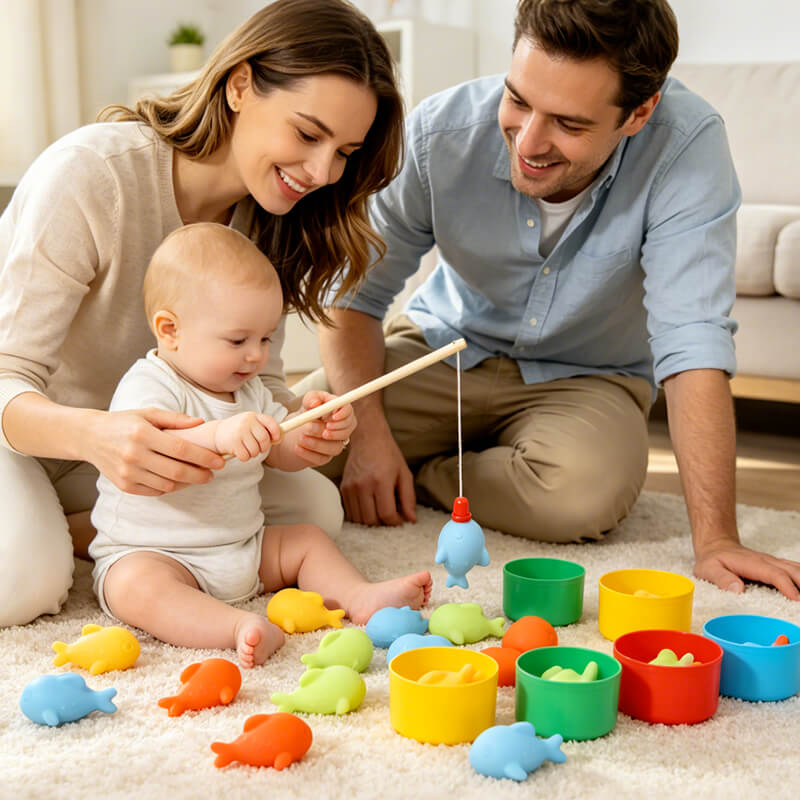
These colors can be used to create simple matching challenges. Children can catch a fish and place it in a bucket with the corresponding color, sort the fish into groups, or follow a parent-led sequence.
The activity therefore moves beyond catching and lifting. It can also support opportunities to practice color recognition, sorting, and hand-eye coordination.
For brands, this matters because it provides additional content for product demonstrations, packaging communication, and educational-play positioning.
Rather than promoting only a fishing toy, the brand can communicate a broader play concept built around magnetic catching, color matching, and parent-child interaction.
The four-color system also provides a practical foundation for product-line development. Brand owners can explore custom color palettes, coordinated packaging, and complementary products while retaining the core fishing concept.
Why the Buckets and Fishing Net Matter
Accessories can easily become secondary details in a toy design. In TOY33, however, the buckets and fishing net contribute to the range of interactions available within the set.
The product includes four polypropylene buckets. They can be used to collect the fish, separate colors, or support simple sorting activities. In a bath-time scenario, they can also serve as water-play accessories.
The fishing net introduces another way to collect and move the fish. Instead of relying exclusively on the magnetic rod, children can use the net as an alternative tool during play.
This creates a more flexible set without requiring an entirely different toy mechanism.
For B2B product development, it is useful to distinguish between adding components and adding functional value. An accessory is more commercially meaningful when it changes what the user can do with the product.
In TOY33, the buckets support collection and matching, while the net adds an alternative interaction. Together, these elements help extend the play possibilities of the basic fishing set.
The Key Manufacturing Challenge: Encapsulating Magnets Inside Silicone Fish
Product Process:https://youtube.com/shorts/_pKu0So1sdo?si=5-k39_JhIaGHbid4
The product's most important manufacturing consideration is the integration of magnets into the silicone fish.
This is where a simple-looking toy requires careful engineering.
Each fish needs to maintain its intended external shape while positioning an internal magnet correctly. The surrounding silicone structure must be formed consistently, and the encapsulation must remain intact under the product's intended conditions of use.
Several development factors are relevant:
Magnet positioning. The magnet needs to be located consistently so the catching interaction performs as intended.
Encapsulation integrity. The construction must prevent the magnet from becoming exposed during normal intended use. This is particularly important because loose or swallowed magnets can create serious hazards.
Mold and geometry design. The internal placement of the magnet must be compatible with the fish's outer geometry and the chosen manufacturing process.
Dimensional consistency. Variation in the position of the magnet or the shape of the finished fish can affect the interaction between components.
Finished-product inspection. Quality control should address construction integrity, appearance, dimensional consistency, and the relevant requirements for magnetic toys.
These are not details that can be left until packaging. They should be addressed during product engineering, sample evaluation, and production validation.
For brands, this is one of the most important questions to discuss with a manufacturer: not just whether a supplier can produce a magnetic toy, but how the supplier controls the internal construction of the finished product.
Designing for Water Play Requires Clear Use Conditions
A toy intended for bath-time play must be evaluated differently from a toy intended exclusively for a dry environment.
The materials, components, cleaning instructions, and operating conditions all influence how the product should be used and maintained.
TOY33's product information specifies an operating temperature range of -40°C to 60°C because the set contains magnets. The product must not be boiled or exposed to temperatures above the specified limit, as excessive heat may demagnetize the magnets.
This is an important distinction: silicone itself may tolerate temperatures that the complete magnetic assembly cannot.
The product's cleaning instructions recommend using clean water or an appropriate amount of everyday detergent, then drying the product and storing it away from direct sunlight. Damaged products should be removed from use.
The set is specified for children aged three and older. Because it contains magnets, adult supervision is required, and the magnets must never be swallowed. If the product becomes damaged, it should no longer be used.
For B2B buyers, these conditions should be reflected accurately in product instructions, packaging, and market-specific compliance reviews. A bath-time positioning does not mean the product is suitable for boiling sterilization or unrestricted exposure to heat.
A More Distinctive Product Story for Baby and Toddler Brands
In a crowded toy market, a product needs a clear reason to exist.
A listing that says “magnetic fishing toy” identifies the category, but it does not necessarily explain why a buyer should choose one version over another.
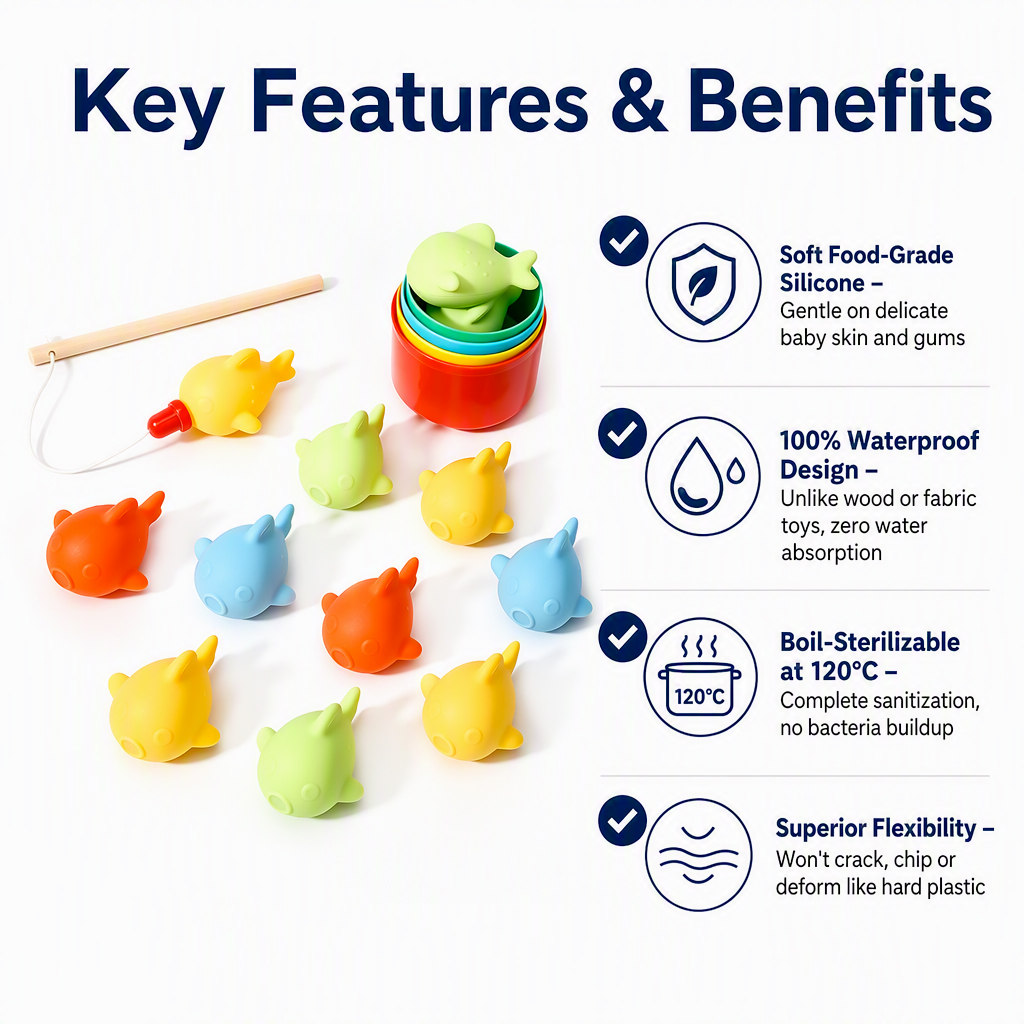
TOY33 offers a more specific combination of features:
Soft silicone fish instead of relying on conventional rigid fish components
Internally encapsulated magnets for the fishing interaction
Four colors for matching and sorting activities
Four PP buckets for collecting and organizing the fish
A fishing net for an alternative play method
A design intended for both dry play and bath-time scenarios
These elements create several ways for brands to communicate the product's value.
The product can be positioned around magnetic fishing, sensory interaction, color recognition, or water-based play. It can also be incorporated into a wider collection of silicone toys.
This gives brand owners more options for product storytelling than a design differentiated only by shape or color.
What B2B Buyers Should Evaluate Before Choosing a Magnetic Fishing Toy
For distributors, retailers, and private-label brands, evaluating a magnetic fishing toy requires more than comparing the number of accessories or the visual appearance.
First, assess the intended play environment. If the product is expected to support bath-time use, confirm that the complete construction, cleaning instructions, and use conditions are suitable for that purpose.
Second, evaluate the catching mechanism. The magnetic interaction should work consistently, and the manufacturer should be able to explain how magnet placement and encapsulation are controlled.
Third, examine material differentiation. Silicone, fabric, wood, and rigid plastic offer different tactile and maintenance characteristics. The appropriate choice depends on the target customer, product positioning, and intended use.
Fourth, evaluate the finished product against the relevant toy safety requirements for the target market. Magnetic toys require particular attention to magnet retention, foreseeable misuse, age grading, warnings, and finished-product testing.
Finally, consider the opportunities for customization. A product with a clear structural concept can provide a foundation for custom colors, packaging, and brand-specific product collections.
The objective is to select a product that has a clear market position and can be manufactured consistently—not simply a toy that looks attractive in a catalog.
Conclusion: The Advantage Is Not Just Silicone. It Is the Combination.
A conventional fishing toy starts with a simple interaction: catch a fish, lift it, and repeat.
TOY33 keeps that familiar activity but changes the product around it.
Silicone provides a softer material option. Internal magnets create the catching interaction. Four fish colors support matching activities. Buckets introduce collection and sorting, while the net adds an alternative way to play. Together, these design decisions expand the product beyond a single fishing mechanic.
For baby and toddler brands, this is the difference between adding another fishing toy to a catalog and developing a product with a more specific reason to exist.
Silicone material + internal magnetic design + color-matching play + bath-time versatility
That combination gives TOY33 a distinctive position among magnetic fishing toys and children's fishing sets.
For KEAN, the product also reflects a broader B2B product-development principle: meaningful differentiation begins by identifying what existing products cannot easily do, then choosing the material, structure, and manufacturing process to address that gap.

Develop Your Next Fishing Toy With KEAN
KEAN supports OEM/ODM product development for baby and toddler toys, including silicone material selection, structural design, color customization, branding, and packaging development.
For brands looking to develop a differentiated magnetic fishing toy, silicone fishing toy, or fishing bath toy, the starting point is not simply a new shape.
It is identifying the experience you want your product to deliver—and engineering the materials and components around that goal.
KEAN Silicone — OEM | ODM | Custom Colors | Custom Packaging | Brand Development
|
|

Technical and Product References
KEAN Silicone, Magnetic Fishing Bath Toy — TOY33: product construction, components, intended scenarios, and customization context.
KEAN Silicone, KEAN Silicone Unveils Its 2026 Autumn New Product Collection: product-development rationale and the positioning of TOY33 as a magnetic learning toy for dry and bath-time play.


