


Understanding the Difference Between Silicone and Forever Chemicals
Introduction
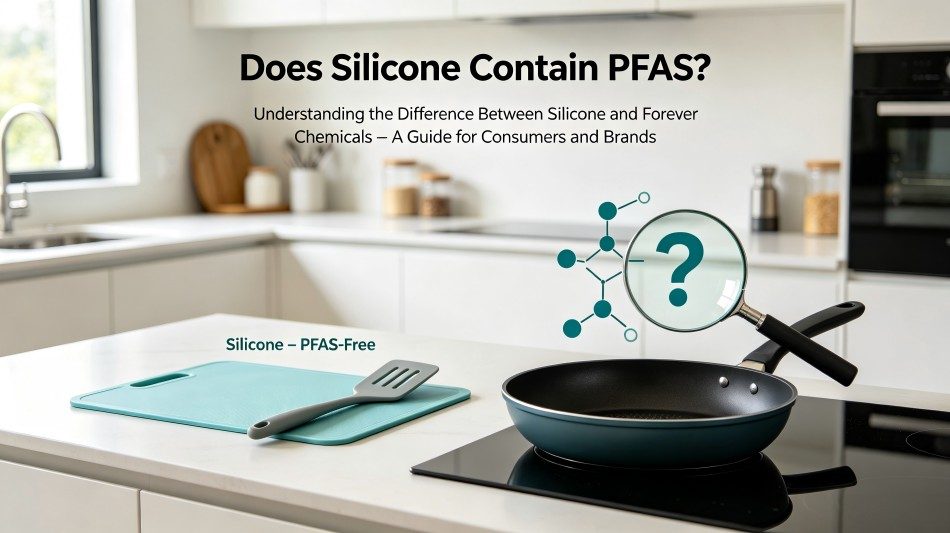
As concerns about PFAS continue to grow across North America and Europe, consumers are increasingly searching for safer alternatives to traditional materials used in kitchenware, baby products, and food-contact applications.
One question appears more frequently than ever:
The short answer is no.
What Are PFAS?
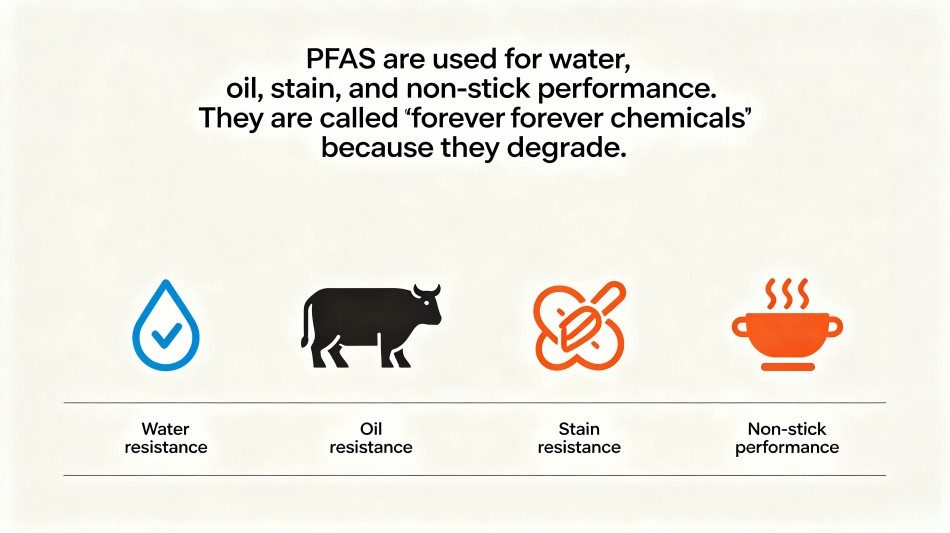
PFAS stands for Per- and Polyfluoroalkyl Substances, a large group of synthetic chemicals often referred to as "forever chemicals."
These substances are commonly used in products requiring:
Water resistance
Oil resistance
Stain resistance
Non-stick performance
Common applications include:
Non-stick cookware coatings
Grease-resistant food packaging
Waterproof textiles
Industrial coatings
PFAS have become a major environmental concern because they degrade very slowly and can accumulate in soil, water, wildlife, and the human body. Scientists have linked PFAS exposure to lower birth weights, elevated cholesterol, increased risk of thyroid disease, reduced immune response, and higher risk of certain cancers .
What Is Silicone Made Of?
Silicone is a synthetic elastomer primarily composed of:
Silicon
Oxygen
Carbon
Hydrogen
Heat resistance (-60°C to 200°C)
Flexibility
Durability
Chemical stability
Food-contact safety
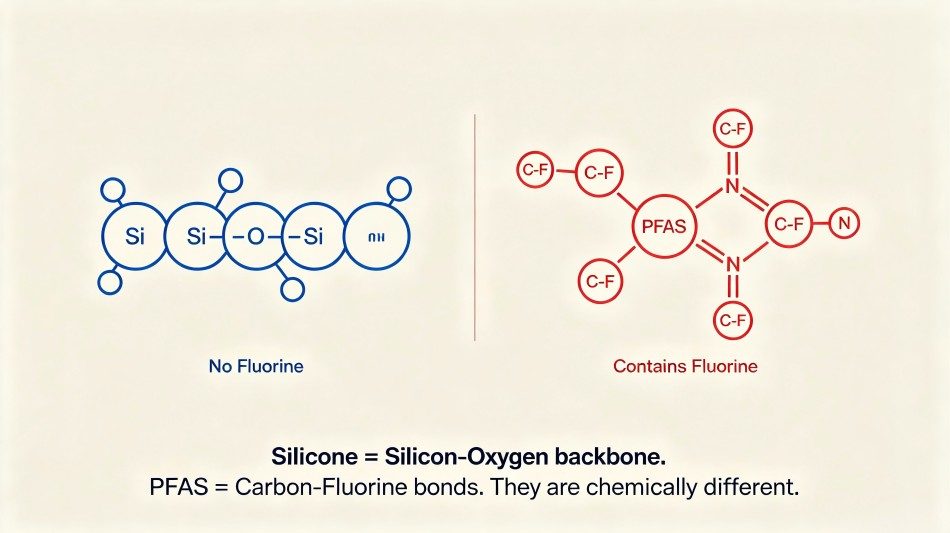
Unlike PFAS, silicone contains no fluorine, which is the key element found in PFAS chemistry. The carbon-fluorine bond in PFAS is extremely strong, making these compounds resistant to degradation — hence the "forever chemicals" nickname. Silicone's silicon-oxygen backbone is fundamentally different and does not carry the same environmental persistence concerns .
Silicone vs PFAS: What's the Difference?
Feature | Silicone | PFAS |
Primary Chemistry | Silicon-Oxygen (Si-O) | Carbon-Fluorine (C-F) |
Contains Fluorine | No | Yes |
Surface Energy | ~20 mN/m | 13-20 mN/m |
Food Contact Applications | Yes (FDA-approved) | Some Applications |
Heat Resistance | Excellent (-60°C to 200°C) | Excellent |
Environmental Persistence | Relatively Low | Very High ("Forever Chemicals") |
Regulatory Pressure | Low | Increasing Worldwide |
In some performance categories, silicone can approach PFAS performance. Organosilicones have a surface energy of approximately 20 mN/m, which is only "beaten" by PFAS compounds at 13-20 mN/m — meaning there are few common surfaces that need less than 20 mN/m to be wetted .
Why Are Consumers Confusing Silicone with PFAS?
1. Both Are Used in Non-Stick Applications
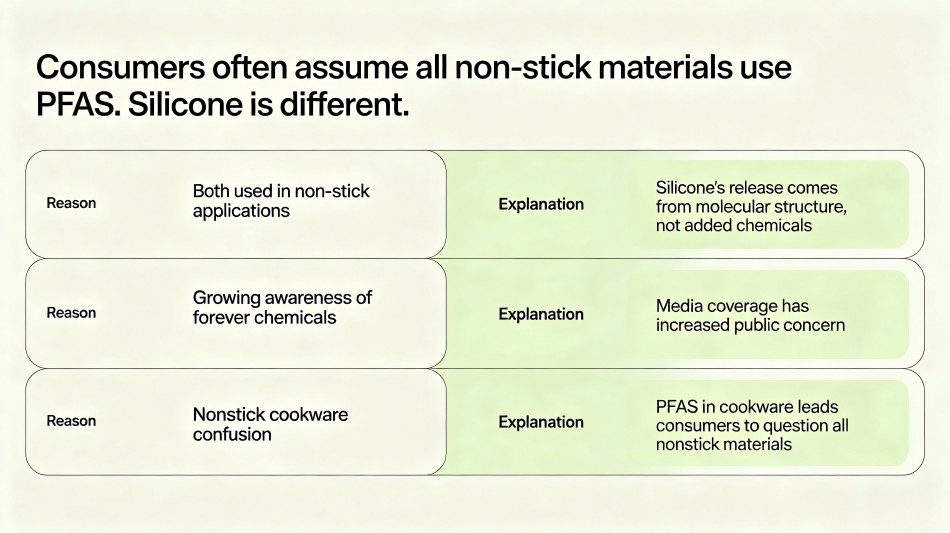
Silicone baking mats, baking molds, and kitchen utensils naturally provide release properties. Consumers often assume that all non-stick materials rely on PFAS-based coatings. In reality, silicone's release performance comes from its molecular structure rather than fluorinated chemicals .
2. Growing Awareness of Forever Chemicals
Media coverage has dramatically increased public awareness of PFAS. CNN reported on California's proposed PFAS ban in cookware, sparking debate between legislators and celebrity chefs. As consumers become more cautious, they naturally question every material used in food-contact products .
3. The Nonstick Cookware Confusion
PFAS are commonly used in nonstick cookware coatings. Even if cookware is labeled PTFE- or PFOA-free, it may still contain other forms of PFAS. This widespread use in the cookware category has led some consumers to question all nonstick materials — including silicone — by association .
Is Food-Grade Silicone Safe?
High-quality food-grade silicone is widely used in:
Baby feeding products
Pacifiers
Teethers
Kitchen utensils
Baking molds
Food storage containers
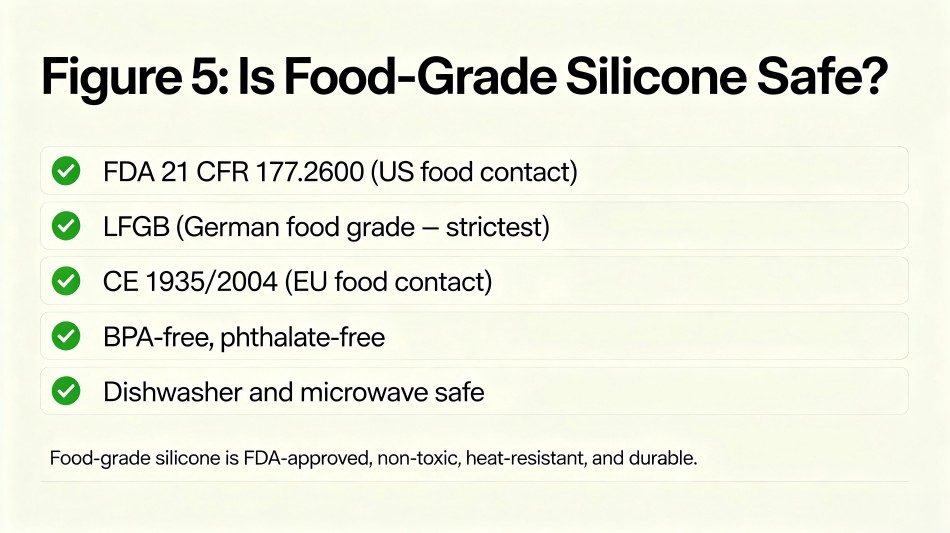
The U.S. Food and Drug Administration (FDA) has approved food-grade silicone for use in a variety of kitchen products . Food-grade silicone is a type of silicone tested and certified by FDA to be safe for contact with food .
When manufactured properly, food-grade silicone is:
Odorless
Non-toxic
Durable
Heat resistant
Suitable for repeated food contact
Dishwasher and microwave safe
However, not all silicone products are created equal. Product quality depends heavily on raw material purity, manufacturing processes, compliance testing, and certification standards .
What Certifications Should Buyers Look For?
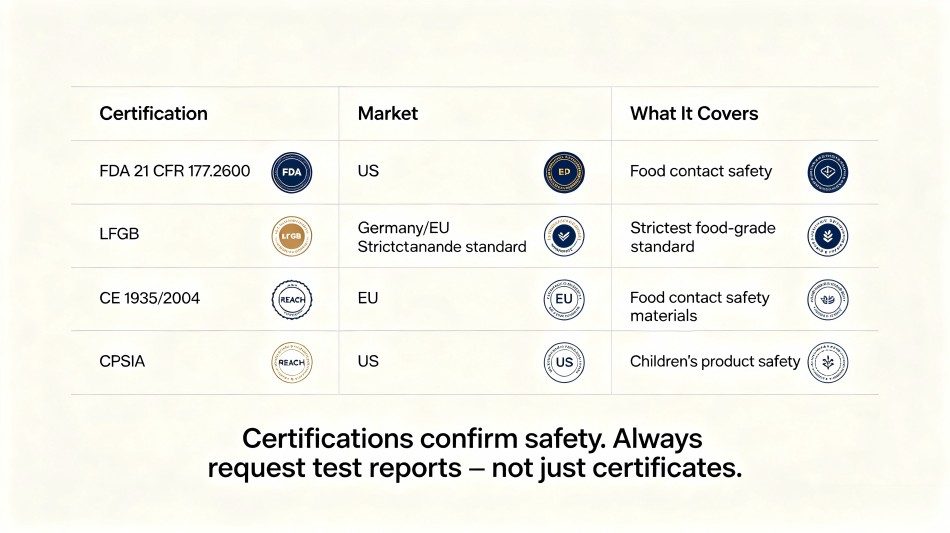
For brands sourcing silicone products, certifications are often more important than marketing claims.
FDA Compliance (US)
FDA has approved food-grade silicone for use in a variety of kitchen products, including baking molds, cupcake liners, ice cube trays, food storage bags, and reusable straws . The FDA's Food Contact Substance notification program evaluates silicone materials for safety .
LFGB Certification (Germany/Europe)
Often considered one of the most stringent food-contact standards in Europe. LFGB requires sensory testing (no odor or taste transfer) in addition to migration limits.
CE 1935/2004 (European Union)
European Regulation CE 1935/2004 for food contact materials. Independent testing bodies like Intertek validate compliance through strict testing protocols, including BfR Recommendation XV, migration analysis, and full traceability review .
REACH Compliance (EU)
Ensures products meet European chemical safety requirements.
CPSIA Compliance (US)
Important for children's products sold in the U.S. market.
FDA 21 CFR 177.2600
The specific regulation for silicone rubber intended for repeated use in contact with food. Some manufacturers certify their silicone sponge to both FDA 21 CFR 177.2600 and CE 1935/2004 for international market access .
These certifications provide evidence that silicone products have been tested for safety and compliance.
Silicone as a PFAS Alternative
The industry is increasingly looking to silicone as a PFAS replacement in various applications:
In Cable and Electrical Applications
Silicone can be a favorable alternative to PTFE, FEP, eTFE, or PFA (PFAS) for cable components when flexibility and heat resistance are crucial. Silicone cables offer similar temperature resistance from -60°C to 200°C and, as a halogen-free material, do not develop toxic gases in a fire. They may also be less expensive than fluoropolymers .
In Surface Coatings
Silicone surfactants are being investigated as PFAS replacements in coatings. While silicone wetters have slightly higher surface tension than fluorinated wetters and require higher loading levels, they can achieve comparable performance in many applications .
In Water Repellency
Silicone materials can achieve water repellency with contact angles up to 115° on glass. In some formulations, silicone treatments have outperformed PFAS-containing products in water repellency tests .
In Oleophobicity (Oil Repellency)
While oil repellency is challenging for silicone, recent developments show promise. Some silicone formulations have demonstrated oleophobicity comparable to PFAS-treated surfaces in specific applications, particularly using high-cross-link-density silicone resins .
Why More Brands Are Switching to Silicone
As consumers move away from PFAS-containing materials and single-use plastics, silicone continues to gain popularity because it offers:
Long Service Life
Reusable for years, reducing product waste. Unlike nonstick coatings that can scratch and degrade, silicone maintains its properties through repeated use .
High Temperature Resistance
Suitable for baking, freezing, sterilization, and dishwashing. Food-grade silicone can go from the freezer to the oven, microwave, or dishwasher without affecting product quality .
Food Safety
Does not require PFAS coatings to achieve flexibility and durability. Silicone's non-stick properties are inherent to its molecular structure, not added chemicals .
Consumer Trust
Increasingly viewed as a safer alternative for baby and food-contact products. With growing awareness of PFAS risks, parents and consumers actively seek PFAS-free alternatives .
How to Choose a Reliable Silicone Manufacturer
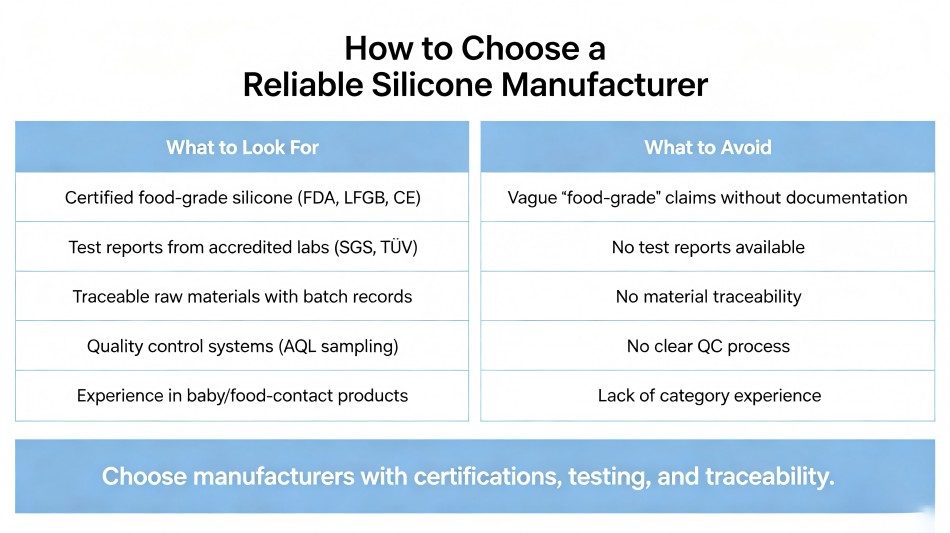
For importers and brand owners, choosing the right manufacturing partner is essential.
What to Look For
Consider suppliers that offer:
Certified food-grade silicone (FDA, LFGB, CE 1935/2004)
Testing reports from accredited laboratories (SGS, TÜV, Intertek)
Traceable raw materials with batch records
Custom manufacturing capabilities (OEM/ODM)
Consistent quality control systems (AQL sampling, in-process inspection)
Experience with baby and food-contact products
Documentation packages for regulatory compliance
Red Flags
Vague "food-grade" claims without certification documentation
No test reports available for review
Unwillingness to share material traceability records
No clear quality control process
Lack of experience in your product category
The Regulatory Landscape: What's Changing
United States
California, Minnesota, Colorado, and Connecticut have passed legislation to phase out PFAS in various products. California's bill proposes a phased-in ban on intentionally added PFAS in cookware, dental floss, food packaging, and ski wax .
European Union
ECHA (European Chemicals Agency) has shown interest in PFAS compounds, with impending new restrictions. EU regulation CE 1935/2004 sets strict standards for food contact materials .
France
France passed a ban on PFAS in a slew of products in February, though cookware was exempted from the final text after industry protests .
The trend is clear: PFAS regulations are tightening globally. Brands that proactively switch to PFAS-free materials like silicone will be better positioned for compliance and consumer trust .
Frequently Asked Questions
Does silicone contain PFAS?
No. Silicone is composed of silicon, oxygen, carbon, and hydrogen, with a repeating Si-O-Si backbone. It contains no fluorine, the key element that defines PFAS chemicals .
Is food-grade silicone safe?
Yes. The FDA has approved food-grade silicone for use in food contact products. It is considered non-toxic, heat-resistant, and durable when manufactured to proper standards .
Can silicone replace PFAS in all applications?
No. While silicone can replace PFAS in many applications — especially where flexibility and heat resistance are priorities — PFAS still outperform silicone in certain areas, particularly oil repellency and achieving very low surface tension. However, ongoing research is closing this gap in many applications .
How can I verify a silicone product is PFAS-free?
Look for certification documentation from the manufacturer, including FDA compliance, LFGB certification, or CE 1935/2004 compliance. These certifications confirm the material has been tested and approved for food contact. A reliable manufacturer should be able to provide test reports from accredited laboratories .
Why do some manufacturers still use PFAS?
PFAS offer unique performance properties — extremely low surface tension, oil repellency, and chemical stability — that are challenging to replicate. However, as regulatory pressure increases and alternative materials improve, the industry is transitioning away from PFAS .
Conclusion
Silicone does not contain PFAS.
While both materials are often associated with heat-resistant and non-stick applications, their chemistry is entirely different. Silicone is built on a silicon-oxygen backbone; PFAS are built on carbon-fluorine bonds. Silicone contains no fluorine and does not carry the same environmental persistence concerns.
As global concern over "forever chemicals" continues to grow — with California, the EU, and other jurisdictions moving toward PFAS bans — high-quality food-grade silicone remains one of the most trusted materials for baby products, kitchenware, and reusable consumer goods.
For brands and importers, the key is not simply choosing silicone — but choosing certified, compliant, and professionally manufactured silicone products that meet the expectations of today's safety-conscious consumers.


