


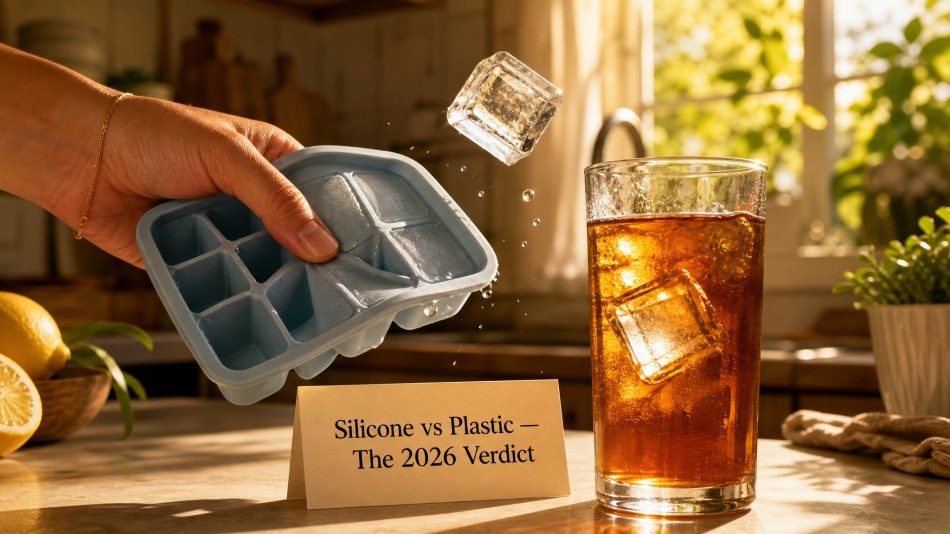
Silicone Ice Cube Trays vs Plastic: The 2026 Comparison — Safety, Durability & What to Buy
Direct Answer First
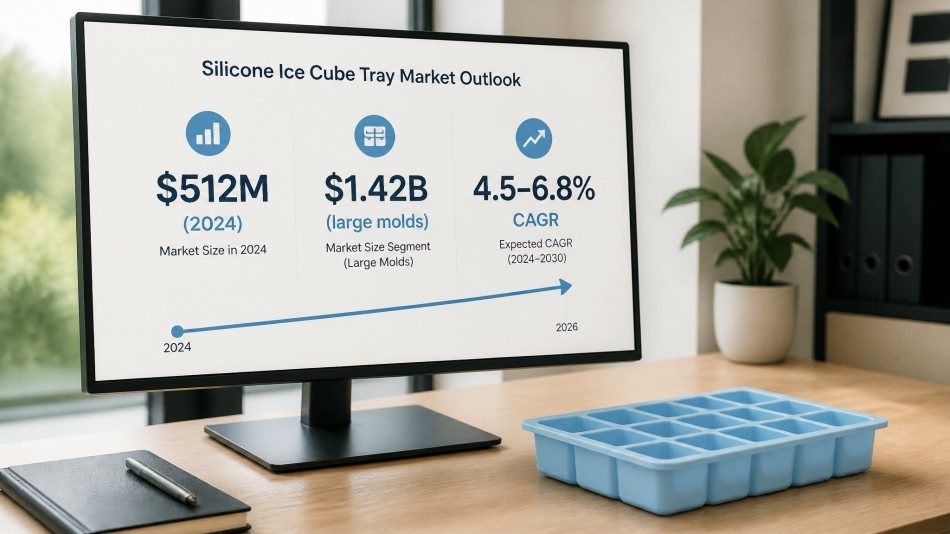
Silicone ice cube trays win on safety, durability and ice release; plastic wins on price and odor resistance. Verified 2026 data: the global ice cube tray market is growing at 4.5–6.5% CAGR (estimates range from $512M in 2024 to $1.85B by 2034 depending on scope) , with silicone as the largest material segment and the large-ice/mold sub-market (whiskey and cocktail cubes) growing fastest at 6.8% CAGR .
For buyers, the practical verdict:
Safety: choose certified food-grade silicone (FDA/LFGB) — plastic "BPA-free" labels are not a guarantee, as substitutes like BPS/BPF raise the same concerns and the EU has now banned BPA in all food-contact materials .
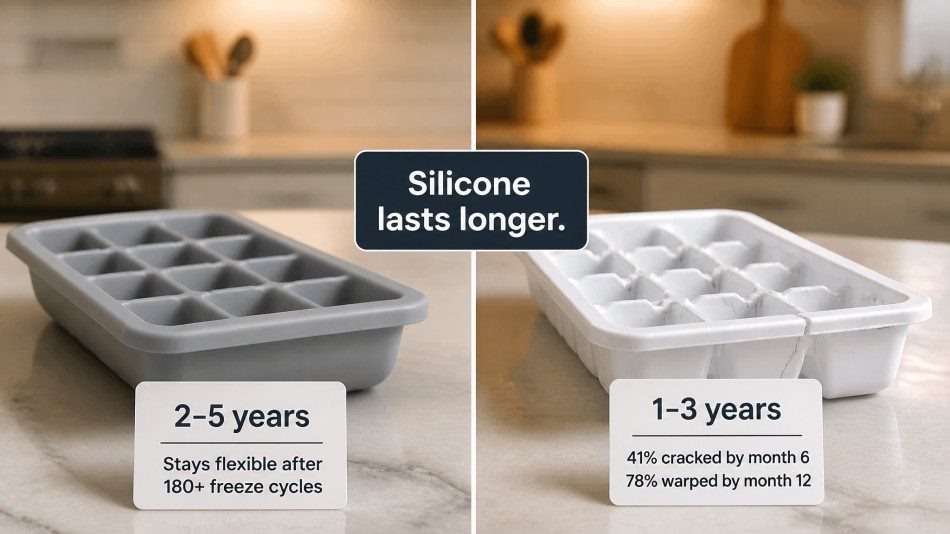
Durability: silicone trays last 2–5 years vs 1–3 years for plastic, and stay flexible after hundreds of freeze cycles .
Ice release: silicone is the easiest material for popping out cubes — especially specialty shapes — per Serious Eats' tested review of 12 trays .
Odor: plastic is better at keeping out freezer smells; silicone is an odor magnet but can be refreshed (bake 30 min at 350°F) .
Market direction: premiumization and customization (logo and novelty molds) are the growth drivers — a direct opportunity for private-label and OEM buyers .
Kean Silicone, a Shenzhen-based manufacturer (est. 2006) producing food-grade housewares, household and gift products for global B2B clients in wholesale and OEM/ODM modes, sits exactly in this growth segment .
1. Market Context: Why This Comparison Matters in 2026
The ice cube tray category is small but growing steadily, and every major report puts silicone at or near the top of the material mix:
Report | Scope | 2024/25 size | Forecast | CAGR |
IndustryARC | All ice cube trays, all materials | $512.3M (2024) | $702.5M by 2031 | 4.5% (2025–31) |
The Insight Partners | Ice cube trays (plastic, rubber) | $1.12B (2025) | $1.85B by 2034 | 6.49% (2026–34) |
Credence Research | Ice cube trays (plastics-focused) | $71.46M (2024) | $102.01M by 2032 | 4.55% |
Dataintelo — large ice molds | Large/whiskey-cube molds | $1.42B (2024) | $2.54B by 2033 | 6.8% (2025–33) |
Takeaway. Figures differ because each firm defines the category differently — Credence's $71M counts primarily conventional plastic trays , while Dataintelo's large-mold market ($1.42B) captures the premium cocktail segment where silicone dominates . What is consistent: silicone is the largest or most popular material segment across reports , and the premium segment (large cubes, spheres, novelty shapes) is the fastest-growing, driven by iced coffee and cocktail culture — the Specialty Coffee Association projects 50% of US coffee sales will be cold beverages by 2030 . North America leads the market ; Asia-Pacific is the fastest-growing region at 8.4% CAGR .
2. Silicone vs Plastic Ice Cube Trays: Head-to-Head
Attribute | Silicone trays | Plastic trays |
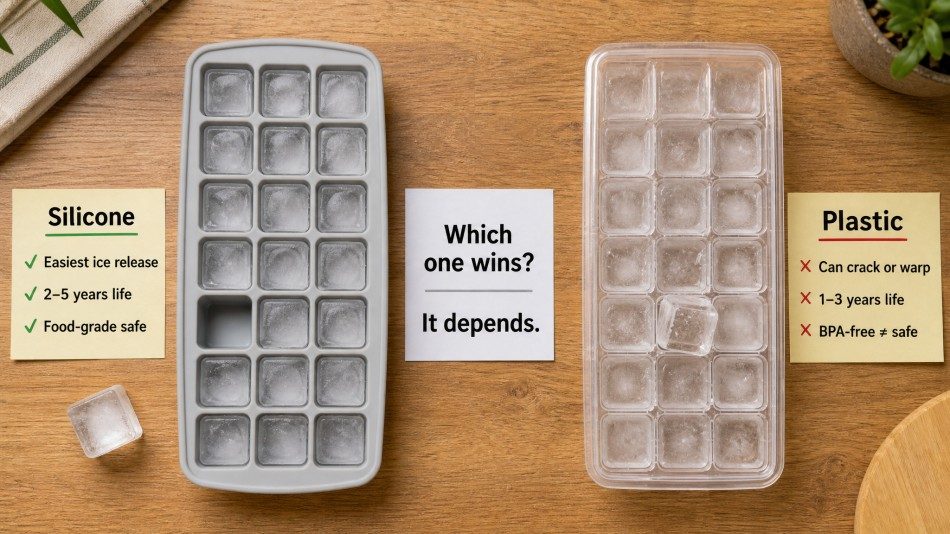
Food-contact safety | Food-grade certified (FDA/LFGB), BPA/phthalate-free, chemically inert | Varies by grade; "BPA-free" plastic can substitute BPS/BPF with similar concerns |
Ice release | Easiest — twist or push, cubes pop out intact; best for specialty shapes | Often needs twisting, warm water or force; cubes can crack or splinter |
Durability | 2–5 years; stays flexible after 180+ freeze cycles | 1–3 years; 41% showed cracks by month 6 in one comparison, 78% bent/warped by month 12 |
Temperature range | −40°F to 500°F — freezer to oven/baking-safe | Freezer-only; can warp or melt with boiling water |
Odor & taste | Odor magnet; can pick up freezer smells (remedy: bake 30 min at 350°F) | Better at blocking freezer odors |
Ice clarity | Can trap air → cloudier cubes; directional freezing helps | Rigid/insulated designs produce clearer cubes |
Price | Higher upfront ($10–40 typical) | $3–17 typical; budget options under $3 |
Environmental | Reusable, durable; recycling infrastructure limited | Adds to plastic waste; microplastic release risk over time |
Bottom line: for daily use, cocktails and baby-food freezing, silicone is the stronger all-round choice ; for price-sensitive bulk purchasing and odor-sensitive storage, quality BPA-free plastic still has a place .
3. Safety & Materials: Food-Grade Silicone vs "BPA-Free" Plastic
3.1 What "food-grade" actually means
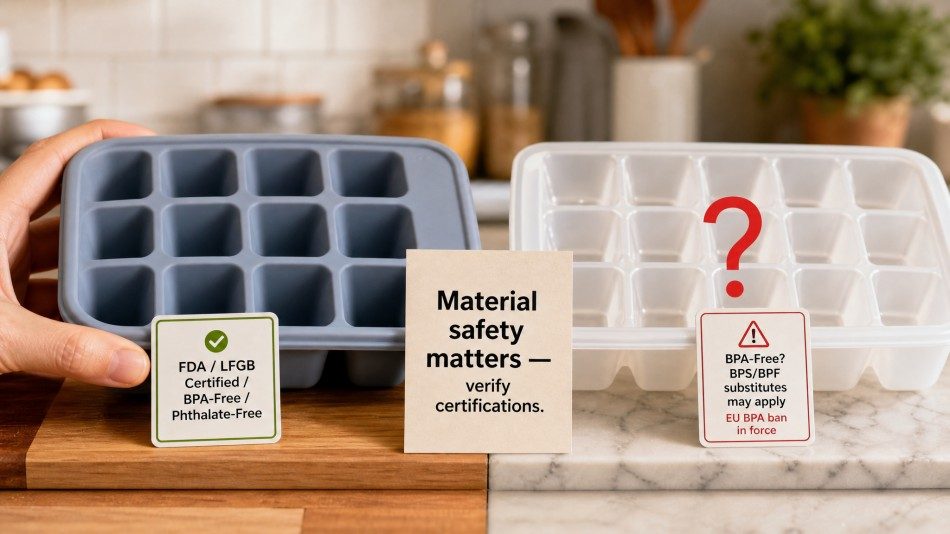
Certified food-grade silicone is manufactured to FDA 21 CFR 177.2600 (US) or LFGB (EU/Germany) standards — no fillers, no plasticizers, chemically inert across its temperature range . Two quality markers to demand from a supplier: "100% food-grade" or "platinum-cured" silicone, and third-party test reports (SGS/TÜV) rather than packaging claims .
3.2 Why "BPA-free" plastic isn't automatically safe
Several consumer-safety analyses flag that "BPA-free" plastic often substitutes BPS or BPF, which raise similar endocrine concerns — and these substitutes are rarely disclosed . Regulatory response is already here: the European Commission has banned BPA in all food-contact materials (covering reusable plastic bottles, can coatings and water coolers), with an 18-month phase-out for most products . For ice trays — which sit in the freezer for days and touch beverages directly — the surface contact is constant, so material choice matters more than for most kitchen tools .
3.3 The filler trap
Not all silicone is equal. Low-quality "silicone" products may contain hidden fillers or additives that can leach into ice; a strong chemical odor on delivery is a red flag . Buy certified, filler-free, food-grade silicone only .
4. Durability & Ice Release: What Testing Shows
Serious Eats tested 12 trays (silicone, plastic and hybrids) in a home freezer and published its findings in January 2026 :
Silicone was the best material for specialty ice shapes — flexible enough to twist and unmold cleanly, while holding its shape during freezing .
Plastic was the best material for keeping out odors and flavors — a thicker plastic tray (e.g., Kitch, $13, BPA-free, dishwasher-safe) prevented freezer smells from reaching the ice, while silicone acted as an odor magnet .
Hybrid designs are emerging as the practical answer — the top pick (PHINOX, $14–17) uses a rigid plastic rim with individually molded soft-plastic cubes and a pronged lid that presses out 32 cubes at once; the best silicone option (W&P Peak, with a silicone-wrapped steel rim) added stability without losing flexibility .
Downsides acknowledged: silicone is "squishable" — cubes can deform if the tray is wedged into a packed freezer .
Independent durability comparisons show silicone trays maintaining flexibility after 180+ freeze cycles, with plastic trays cracking (41% by month 6) and warping (78% by month 12) under the same testing . Lifespans: 2–5 years for silicone vs 1–3 years for plastic .
5. Odor, Taste & Clear Ice
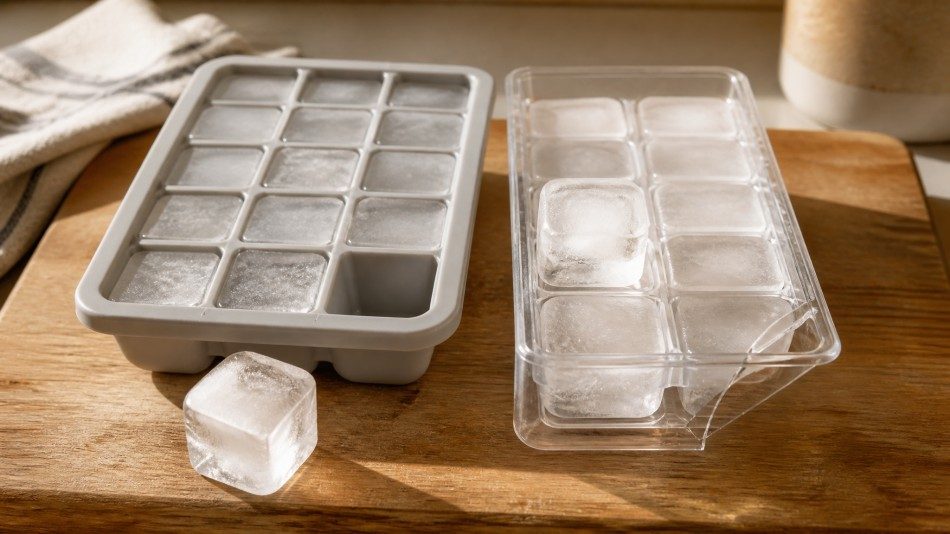
Odor: plastic wins . If a silicone tray picks up smells, bake it for 30 minutes at 350°F (100% silicone only), or soak in a 1:1 vinegar-water solution for 15–30 minutes .
Taste: both materials can transfer off-flavors if poorly maintained; regular washing after each batch is the rule .
Clear ice: silicone can trap air and freeze fast, producing cloudier cubes; directional (top-down) freezing — often using insulated trays — pushes impurities away and gives clearer ice. Boiled water helps; silicone tolerates boiling water, plastic may not . For premium cocktails, large clear cubes or spheres are the target — and they melt slower, keeping drinks less diluted .
6. Cost & Value: The Total-Cost Picture
Silicone | Plastic | |
Typical retail price | $10–40 | $3–17 (budget under $3) |
Expected lifespan | 2–5 years | 1–3 years |
5-year cost per year of use | Lower when amortized over lifespan | Higher replacement frequency |
Commercial/bar use | Preferred — easy release, durability | Value option for high-volume hospitality dispensing |
For households and bars, silicone's longer lifespan usually offsets its higher price . For large-scale buyers, the premium segment (large square cubes and spheres) carries higher margins and is less exposed to commoditization — the reason Dataintelo's large-ice-mold market ($1.42B → $2.54B) grows faster than the overall category .
7. Environmental Considerations
Plastic trays add to the ~8+ million metric tons of plastic entering the oceans yearly (World Economic Forum-cited figure) and can shed microplastics under repeated freeze-thaw .
Silicone is durable and reusable, but recycling infrastructure is limited — treat longevity, not recyclability, as the environmental argument .
72% of American consumers now say they prefer eco-friendly kitchen products (EPA-cited survey, via ), and 1 in 5 consumers will pay a 20% premium for customized products (Deloitte, via ) — the two forces behind the shift to certified silicone and branded/novelty molds .
8. Market Direction: Premiumization and Customization
The fastest-growing sub-segments all favor silicone and custom molds :
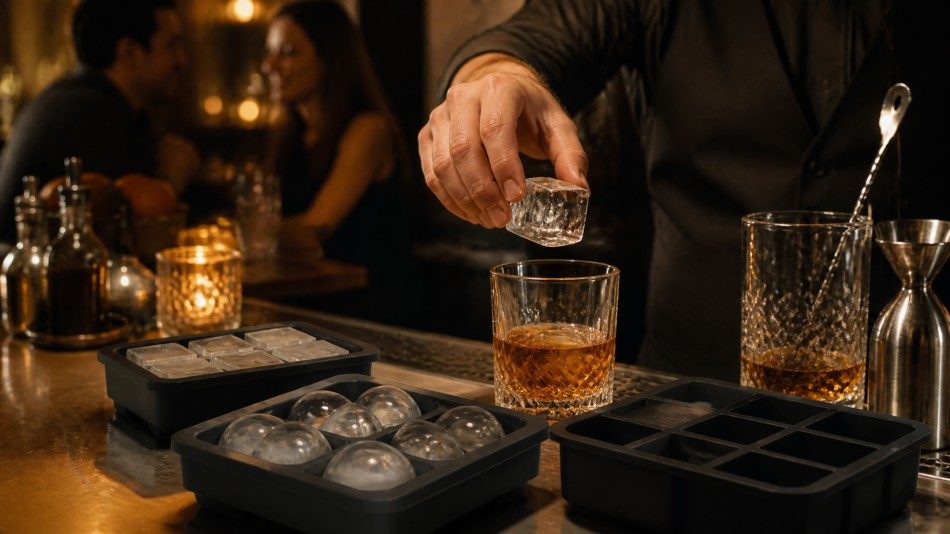
Large square cubes and spheres for whiskey, cocktails and iced coffee — slow-melting, presentation-driven, and the core of the 6.8% CAGR large-mold market .
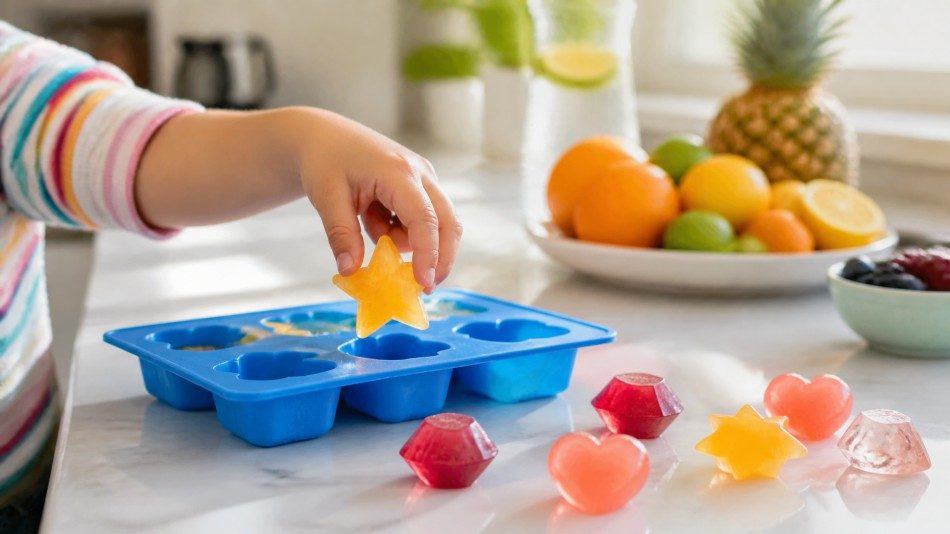
Novelty and branded shapes — diamonds, hearts, stars and logo molds for celebrations, corporate gifting and brand activations; the novelty segment is called out as fast-growing across reports .
Bars and restaurants are a key commercial buyer, using large cubes and branded molds as part of their customer experience and marketing .
For B2B buyers this is a direct opening: private-label and OEM lines of food-grade silicone molds — standard, sphere and custom-logo shapes — sit in the category's growth zone .
9. B2B Sourcing Checklist for Silicone Ice Cube Trays
Specify food-grade, filler-free silicone. FDA 21 CFR 177.2600 / LFGB certification documents, not just claims; request SGS/TÜV third-party test reports .
Decide the shape strategy. Standard squares, large whiskey cubes (2 in), spheres, or custom logo/novelty molds — each targets a different buyer .
Check material hardness and durability. Quality food-grade silicone stays flexible after hundreds of cycles; avoid fillers that crack or discolor .
Confirm hygiene design. Easy-fill openings, no deep crevices, dishwasher-safe (top-rack), and lids/bins to block freezer odors — the features editors and consumers rate highest .
Use OEM/ODM for differentiation. Custom colors, embossed logos and branded packaging command premium retail prices; 1 in 5 consumers pays more for customized products .
Audit QC and certifications. Incoming material inspection, in-process QC, AQL final inspection and batch traceability — the markers of a reliable factory .
10. FAQ
1. Are silicone ice cube trays better than plastic?
For most uses, yes: easier ice release, longer life (2–5 years vs 1–3), food-grade safety, and better performance with specialty shapes . Plastic's advantages are price and superior odor-blocking .
2. Are silicone ice cube trays safe?
Certified food-grade silicone (FDA 21 CFR 177.2600 / LFGB, platinum-cured, filler-free) is non-toxic, BPA/phthalate-free and chemically inert . Avoid uncertified products with fillers or a strong chemical odor .
3. Is "BPA-free" plastic safe for ice trays?
Not necessarily — BPA substitutes like BPS/BPF raise similar concerns and are rarely disclosed. The EU has banned BPA in all food-contact materials, with an 18-month phase-out for most products .
4. Do silicone ice cube trays make ice taste weird?
Most users notice no off-taste. Silicone can absorb freezer odors over time; refresh by baking 30 minutes at 350°F (100% silicone only) or soaking in 1:1 vinegar-water .
5. Why is my silicone tray's ice cloudy?
Silicone can trap air and freeze fast, creating cloudier cubes. Directional (top-down) freezing, boiling the water first, or insulated trays produce clearer ice .
6. What size ice cube tray should I buy?
For cocktails and whiskey: large 2-inch cubes or spheres (slow-melting, less dilution) . For everyday drinks: standard cubes (10–32 per tray) . For baby food and purees: small portioned silicone pods .
7. Which material is best for commercial/bars?
Silicone is preferred for easy release, durability and food safety; stainless steel for premium clear-ice programs; large-format molds are a growing commercial purchase category .
8. Can I get custom-branded silicone ice cube trays?
Yes — OEM/ODM with custom shapes, Pantone-matched colors, embossed logos and branded packaging is standard for housewares manufacturers, and customized/novelty molds are a fast-growing market segment .
11. Conclusion
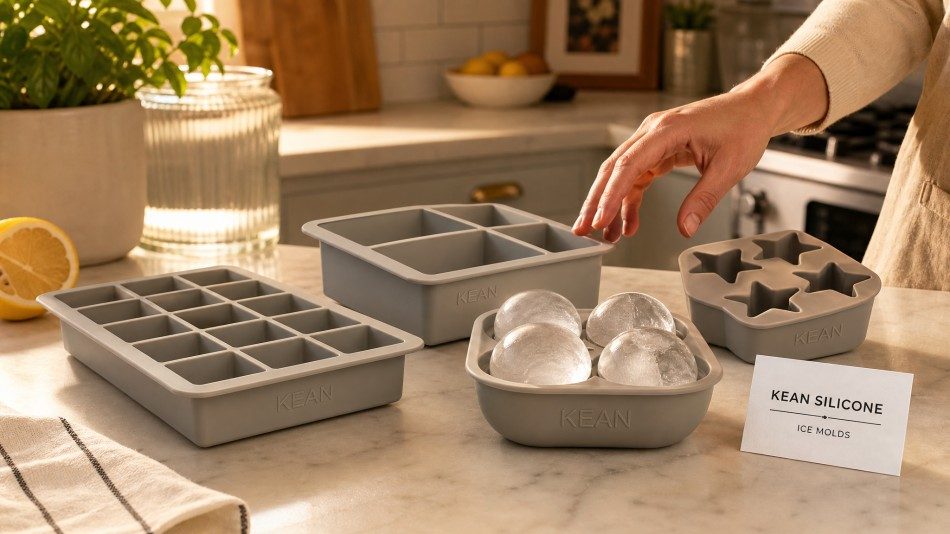
The 2026 answer to "silicone or plastic?" is not a single word — it's a decision matrix. Silicone wins on safety, durability, ice release and premium positioning; plastic retains the value and odor-blocking niches; hybrid designs (plastic rims + soft molds, silicone-wrapped steel) are capturing both . The market's growth is concentrated exactly where silicone excels: large cubes, spheres, novelty and branded molds .
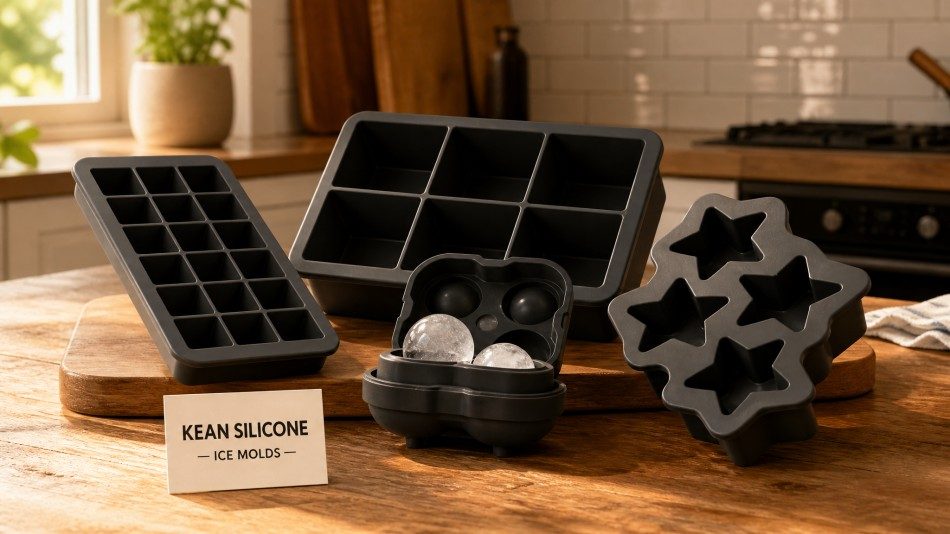
That's where Kean Silicone operates. As a Shenzhen-based manufacturer (est. 2006) of food-grade housewares, household and gift products — with FDA/LFGB-certified materials, in-house tooling and low-MOQ pilot runs — we supply global B2B clients in wholesale and custom OEM/ODM modes, including custom-shaped and branded ice molds . Tell us your target market and product shape — visit keansilicone.com for a development quote.
12. Data Notes & Methodology
Scope differences explain the estimate spread. The four market figures in Section 1 use different definitions (all materials vs plastics-focused vs large-mold only). Figures are cited to their source at every point and are not interchangeable.
Secondary attributions. Survey figures (EPA 72% eco-preference, Deloitte 20% customization premium, World Economic Forum plastic-ocean estimate, Specialty Coffee Association cold-coffee projection) are reported as cited in the primary sources — the original surveys were not independently retrieved.
Product-testing claims (durability percentages, odor behavior, ice release) are reported from the sources as tested/reviewed ; individual results vary by product quality.
Regulatory citations. The EU BPA ban and FDA changes are described as reported by ; verify against official sources for your jurisdiction.
Dates. Reports were published or updated between October 2025 and July 2026 ; all URLs were retrieved and verified on August 18, 2026.
📌 Reference
IndustryARC — Ice Cube Tray Market: Global Opportunity Analysis & Forecast 2025–2031. https://www.industryarc.com/research/ice-cube-tray-market-800911 (accessed Aug 18, 2026)
Dataintelo — Large Ice Cube Mold Market, 2025–2033. https://dataintelo.com/report/large-ice-cube-mold-market (accessed Aug 18, 2026)
Credence Research — Ice Cube Tray Market Size, Growth & Forecast 2032. https://www.credenceresearch.com/report/ice-cube-tray-market (accessed Aug 18, 2026)
The Insight Partners — Ice Cube Trays Market Trends, Size & Growth by 2034. https://www.theinsightpartners.com/reports/ice-cube-trays-market (accessed Aug 18, 2026)
ORI Future — What Makes Silicone Ice Molds Different from Plastic Ones (comparison guide). https://orifuture.com/blogs/gift-guides/silicone-vs-plastic-ice-molds-differences-benefits-comparison (published Mar 9, 2026)
Serious Eats — I Popped Out Dozens of Ice Cubes to Find the 3 Best Ice Cube Trays (tested review of 12 trays). https://www.seriouseats.com/best-ice-cube-trays-8661159 (updated Jan 7, 2026)
Green Choice Lifestyle — 7 Best Non-Toxic Ice Cube Trays Free of Plastic and BPA (safety review; EU BPA ban, BPS/BPF concerns, material guidance). https://greenchoicelifestyle.com/non-toxic-ice-cube-trays/ (updated 2026)
Kean Silicone — official website, housewares/household/gift product lines. https://www.keansilicone.com/ (accessed Aug 18, 2026)
Kean Silicone — Why One-Piece Molded Teethers Are Safer (factory certifications: FDA, LFGB, EN 71, CPSIA; QC and OEM/ODM capabilities). https://www.keansilicone.com/Corporate_News/Why_One-Piece_Molded_Teethers_Are_Safer_2853.html (published Aug 12, 2026)


