


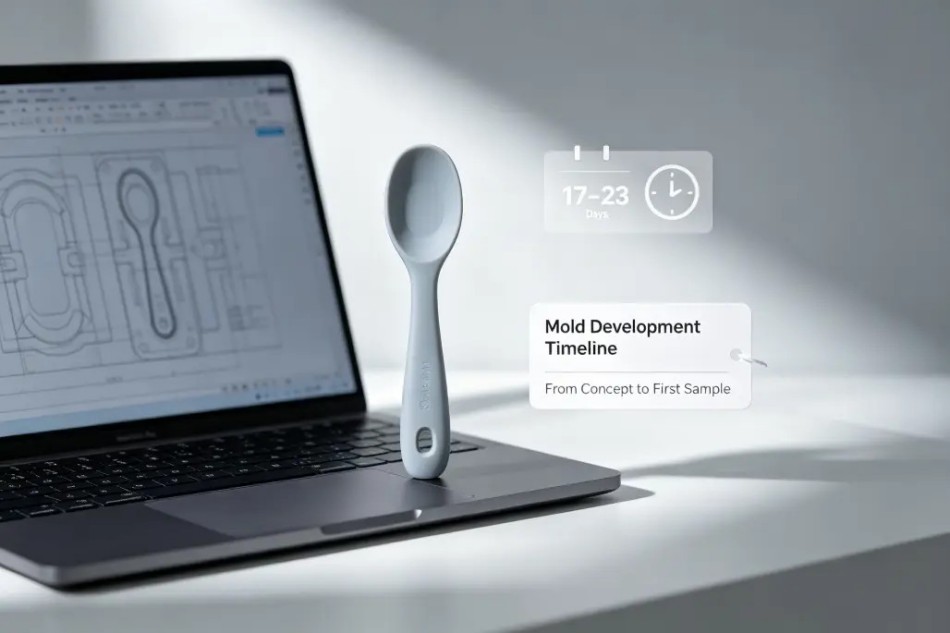
Understanding the timeline for silicone mold development is critical for brands planning product launches, managing supply chains, and setting market expectations. While silicone products appear simple, the mold development process involves multiple precise stages. Here's a comprehensive breakdown of what to expect.
The Standard Mold Development Timeline
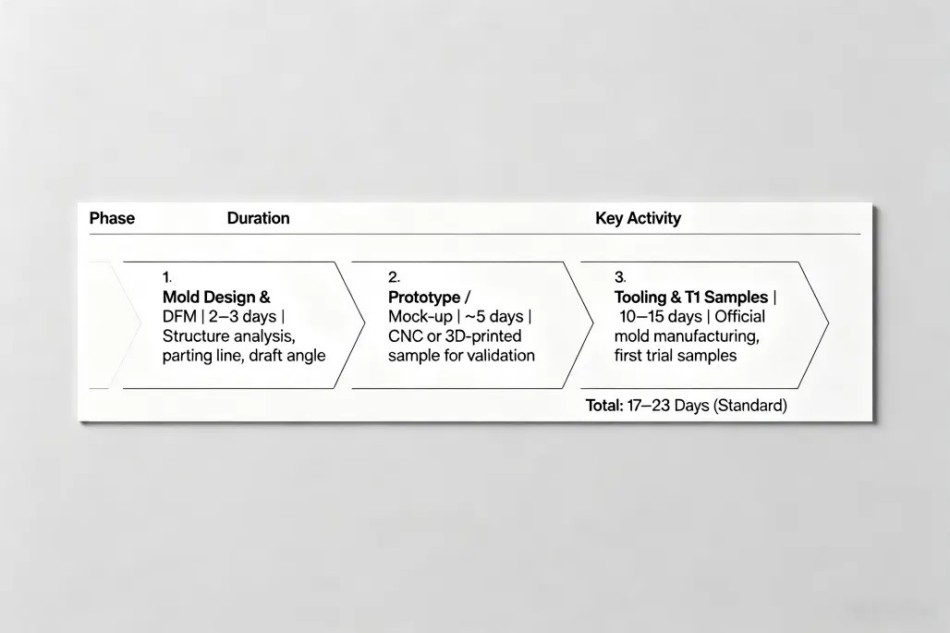
For a typical custom silicone product, mold development follows a structured process. Based on established manufacturer workflows, the total standard timeline from concept to first samples is approximately 17–23 days, broken down into three key phases :
Phase | Duration | Key Activities |
Mold Design & DFM | 2–3 days | Product structure analysis, parting line confirmation, draft angle & wall thickness verification, complete mold design drawings |
Prototype / Mock-up Sample | ~5 days | CNC or 3D-printed prototype for structure verification, dimension check, and functional testing |
Tooling & T1 Samples | 10–15 days | Official mold manufacturing, first trial samples ready for certification and pilot production |
This accelerated timeline is achievable with in-house tooling and experienced engineering teams . However, actual lead times vary based on product complexity, size, and specific requirements.
Factors That Extend or Shorten Development Time
Complexity of Design
Product structure significantly impacts timeline . Intricate geometries, tight tolerances, undercuts, or multi-cavity molds require more engineering time and precision machining. Simpler designs progress faster through each stage.
Prototyping Method
The choice between 3D printing and CNC machining for masters affects speed. 3D printing can produce master patterns same-day or next-day, compared to 3–7 days for CNC machining, and enables instant design iterations . FDM printed patterns can reduce time by up to 79% compared to machined patterns (3 days vs. 14 days) .
Manufacturing Technology
Advanced facilities achieve faster lead times. For rapid prototyping:
Prototype molds can be completed in 3–7 days
Production molds typically take 1–2 weeks
Complex molds (e.g., cold runner injection rubber molds) may take up to 30 days
Supplier Capabilities
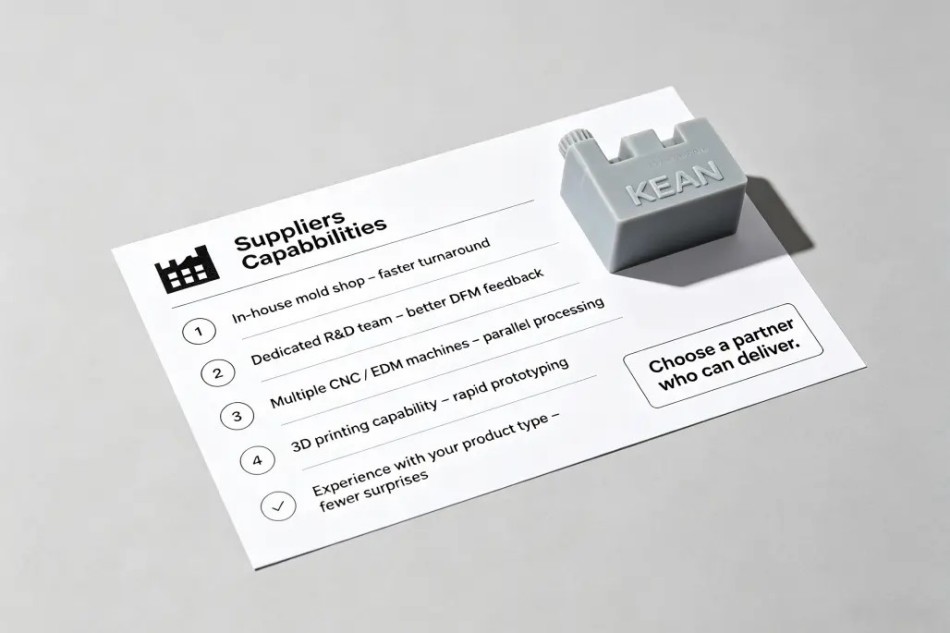
Manufacturers with in-house mold shops and dedicated R&D teams can significantly accelerate development. Suppliers with multiple CNC machines and EDM equipment can handle over 100 sets of rubber molds per month, enabling faster turnaround .
Standard vs. Rapid vs. Complex Timelines
Timeline Type | Duration | Best For |
Rapid / Prototype Mold | 3–7 days | |
Standard Production Mold | 2–3 weeks (10–15 days) | |
Complex / Multi-cavity Mold | Up to 30+ days | Automotive components, intricate designs, cold runner injection molds |
3D-Printed Master Approach | As low as 3–10 business days |
Why 3D Printing Is Accelerating Mold Development
The integration of 3D printing with silicone molding is transforming development timelines :
Rapid pattern creation: High-resolution master patterns produced within hours, not days
Design freedom: Complex organic geometries and freeform shapes are possible without additional tooling cost
Risk reduction: Prototypes can be tested and validated before committing to production tooling
Cost efficiency: Zero tooling cost for master patterns; ideal for early-stage R&D
What This Means for B2B Buyers
When planning your product development schedule, consider that:
Design finalization is critical — changes after tooling begins add significant time and cost. Ensure DFM (Design for Manufacturing) review is complete before mold production starts .
Prototype validation saves time — investing in prototype samples (approx. 5 days) helps identify issues before mass production, preventing costly delays later .
Supplier capability matters — manufacturers with in-house mold shops, engineering teams, and modern CNC/EDM equipment consistently deliver faster, more reliable timelines .
Production scale affects timeline — for larger volumes (e.g., 500+ units), multiple molds may be required, each taking curing time. A skilled manufacturer will advise on the optimal number of molds to balance speed and cost .
Total cycle time includes more than mold making — factor in material procurement, trial runs, certification testing, and final production when planning your overall product launch timeline.
The Bottom Line
For most custom silicone products, expect 3–4 weeks from design approval to first samples. 3D printing and rapid prototyping services can shorten this to 3–10 days for initial validation. Complex projects may require 4–6 weeks.
Partnering with a manufacturer that offers in-house engineering, DFM review, 3D prototyping, and production-grade tooling under one roof minimizes handoffs and accelerates your go-to-market timeline .
Contact KEAN Silicone to discuss your project timeline, request DFM feedback, and get a custom development schedule for your silicone product.


