


Platinum Silicone vs. Peroxide Silicone: Which Is Safer for Baby Products?
A Complete Guide for Parents, Brands, and Product Developers
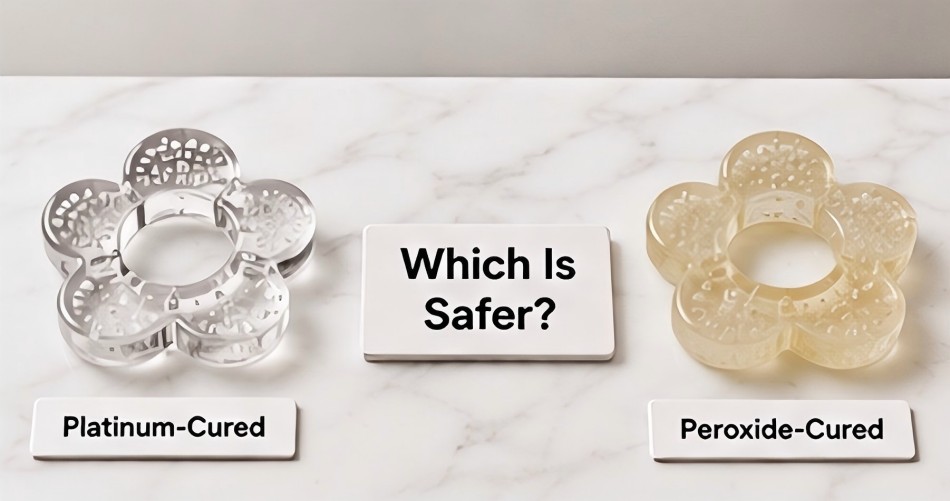
Introduction: Not All Silicone Is Created Equal
Many parents buying teethers, pacifiers, feeding spoons, bibs, and bottle nipples focus on labels like "BPA-Free" and "Food Grade" . These are important, but they don't tell the whole story. There's a critical question that is often overlooked:
How was the silicone itself cured?
The curing process—the chemical reaction that transforms liquid silicone into a solid, durable elastomer—directly affects the material's purity, odor, clarity, long-term stability, and safety. Two curing methods dominate the industry: platinum cure and peroxide cure. They produce materials that look and feel similar but are chemically distinct.
Understanding this difference is essential for making informed decisions about baby products. This guide explains what each method involves, how they compare, and why platinum-cured silicone has become the preferred choice for premium baby brands worldwide.
Part 1: What Is Silicone?
Silicone is a synthetic elastomer composed of silicon, oxygen, carbon, and hydrogen [0†L12-L14]. Its unique molecular structure gives it exceptional properties: it is soft, flexible, heat-resistant (from -60°C to +250°C), cold-resistant, and inherently free of BPA, phthalates, and latex.
These characteristics make silicone ideal for baby products that must withstand repeated sterilization, daily use, and direct contact with a baby's mouth and food, including bottles, teethers, pacifiers, and feeding utensils.
Part 2: What Is Peroxide-Cured Silicone?
How It Is Made
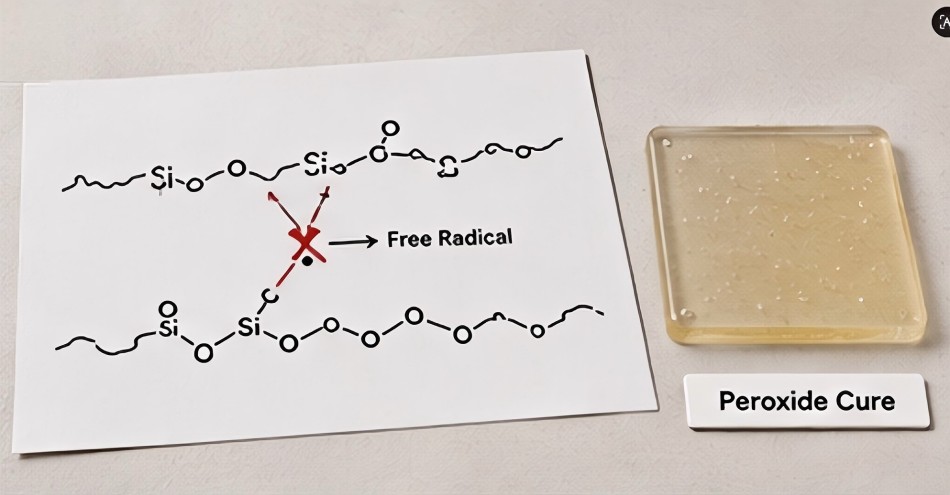
Peroxide-cured silicone uses organic peroxide compounds (such as dicumyl peroxide) to initiate cross-linking. When heated, these peroxides decompose and generate free radicals that bond polymer chains together.
Advantages of Peroxide Silicone
Lower Manufacturing Cost
Peroxide-cured silicone is generally 10%–30% less expensive than platinum-cured silicone. The raw materials are cheaper, and the process is more forgiving.
Suitable for Many Consumer Products
It is commonly used in industrial parts, automotive components, construction materials, and general consumer goods where extreme purity is not required.
Superior Mechanical Properties
In some applications, peroxide-cured silicone offers greater mechanical strength and a longer service life, which is why it remains popular for peristaltic pump tubing and durable industrial seals.
 Limitations of Peroxide Silicone
Potential Residual Byproducts
Peroxide curing produces volatile organic compounds (VOCs) and acid residues as byproducts. While a high-heat post-curing process can drive out many impurities, trace amounts may remain, reducing purity compared to platinum-cured silicone.
Odor Issues
New peroxide-cured products may have a slight chemical or vinegar-like odor. This is a common source of consumer complaints, especially for baby products where any smell can cause feeding refusal.
Lower Transparency
Peroxide-cured silicone is typically translucent rather than crystal clear. It may also have a slight yellow tint and can yellow further over time.
Regulatory Limitations
While peroxide-cured silicone can pass FDA food-contact testing with proper post-curing, it often fails the stricter LFGB sensory tests required for the premium European market. It is not recommended for medical applications or prolonged contact with food.
Part 3: What Is Platinum-Cured Silicone?
How Platinum Curing Works
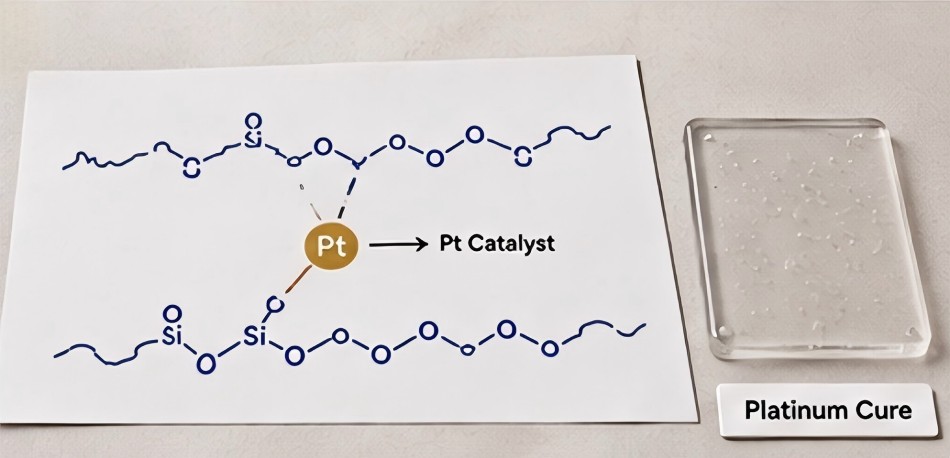
Platinum-cured silicone (addition-cure silicone) uses a platinum catalyst to initiate cross-linking through an addition reaction. Part A contains a vinyl-terminated silicone polymer with a trace platinum complex; Part B acts as a hydride-functional crosslinker. When mixed, they form stable, permanent bridges.
This process requires more precise control and higher-grade materials but produces a material of exceptional purity.
 Advantages of Platinum Silicone
No Curing Byproducts
The addition reaction produces virtually no volatile byproducts. This is the single most important difference from peroxide-cured silicone. Platinum-cured silicone yields an "extremely pure, stable, and chemically inert material with virtually no volatile by-products".
No Residual Odor
Platinum-cured silicone is odorless, even when new. This is essential for baby products, where even a faint smell can be off-putting to both babies and parents.
Exceptional Transparency
Platinum-cured silicone offers crystal-clear transparency. This optical clarity is particularly valued for products like bottle nipples and clear teethers, where visual inspection is important.
Excellent Long-Term Stability
Platinum-cured silicone resists yellowing and degradation over time. It maintains its mechanical properties across a wide temperature range and withstands repeated sterilization.
Superior Biocompatibility
Platinum-cured silicone meets the strictest safety standards, including FDA, LFGB, USP Class VI, and ISO 10993. It is the material of choice for medical devices and pharmaceutical applications.
Limitations of Platinum Silicone
Higher Cost
Shorter Shelf Life
Catalyst Sensitivity
Platinum catalysts can be "poisoned" by contaminants like sulfur, nitrogen, or tin compounds, which can stop the curing reaction. This requires careful handling and clean manufacturing environments.
Part 4: Platinum Silicone vs. Peroxide Silicone — Side-by-Side Comparison
Feature | Platinum-Cured Silicone | Peroxide-Cured Silicone |
Curing Mechanism | ||
Byproducts | ||
Purity | ||
Odor | ||
Transparency | Translucent, may yellow | |
Color Stability | Excellent, resists yellowing | |
Biocompatibility | ||
Baby Products | ||
Mechanical Strength | ||
Cost | ||
Regulatory Compliance | FDA, LFGB, REACH, RoHS | FDA possible with post-cure; LFGB difficult |
Data compiled from multiple industry sources
Part 5: Which Silicone Is Safer for Baby Products?
The Short Answer
Both can be safe when manufactured correctly — but for baby products, the industry standard is clear: platinum-cured silicone is the preferred choice.
Platinum-cured silicone is purer, more stable, and less likely to leach substances than peroxide-cured silicone. It has no odor, no byproducts, and no residual chemicals — making it the safest option for products that go into a baby's mouth.
Why Premium Baby Brands Prefer Platinum Silicone
Factor | Why Platinum Silicone Wins |
Infant Safety | |
Premium Positioning | Odorless, crystal-clear, and color-stable |
Consumer Trust | Parents increasingly understand the "platinum" difference |
Global Compliance | Meets FDA, LFGB, REACH, and RoHS standards |
A major brand explains its choice: "We use advanced platinum silicone which is even though cost consuming but offers benefits far and above the standard normal food grade peroxide-cured silicone often used".
Part 6: Which Baby Products Benefit Most from Platinum Silicone?
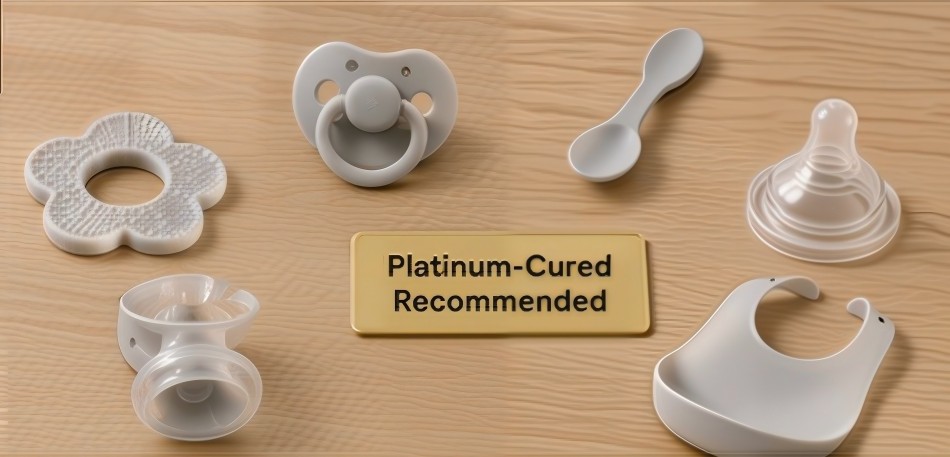
Platinum-cured silicone is particularly recommended for products that involve prolonged contact with a baby's mouth, food, or sensitive skin:
Product | Why Platinum Is Preferred |
Teethers | Mouthed constantly; exposed to saliva |
Pacifiers | Direct oral contact; repeated sterilization |
Feeding Spoons | Food contact; heat exposure |
Bottle Nipples | Direct oral contact; milk contact |
Breast Pump Parts | High hygiene requirements |
Feeding Sets (Bowls, Plates) | Direct food contact; repeated washing |
Silicone Bibs | Skin contact; food exposure |
Products like the Yooforea Platinum Silicone Baby Suction Plate are marketed as "far and above the standard normal food grade peroxide-cured silicone often used", highlighting that platinum silicone represents a step up from the industry norm.
Part 7: Is Peroxide-Cured Silicone Unsafe?
No — But with Qualifications
Peroxide-cured silicone that meets FDA 21 CFR 177.2600 and LFGB standards is still considered food-safe. It undergoes post-curing to remove residual byproducts and is used safely in many food-contact applications.
When Is Peroxide Silicone a Good Choice?
Peroxide-cured silicone is appropriate for:
Cost-sensitive products where margins are tight
Large-volume items where production efficiency matters
Non-mouth-contact products like bath toys, placemats, or storage containers
The Key Distinction
As one industry expert notes: "Peroxide-cured silicones offer very good mechanical properties, high heat resistance and a wide range of applications in industrial environments". But "platinum-cured silicones, on the other hand, are characterised by their physiological harmlessness, absence of residues and excellent transparency — ideal for sensitive applications where no outgassing or residues are permitted".
For baby products, the standard is clear: choose platinum.
Part 8: How to Identify High-Quality Silicone Baby Products
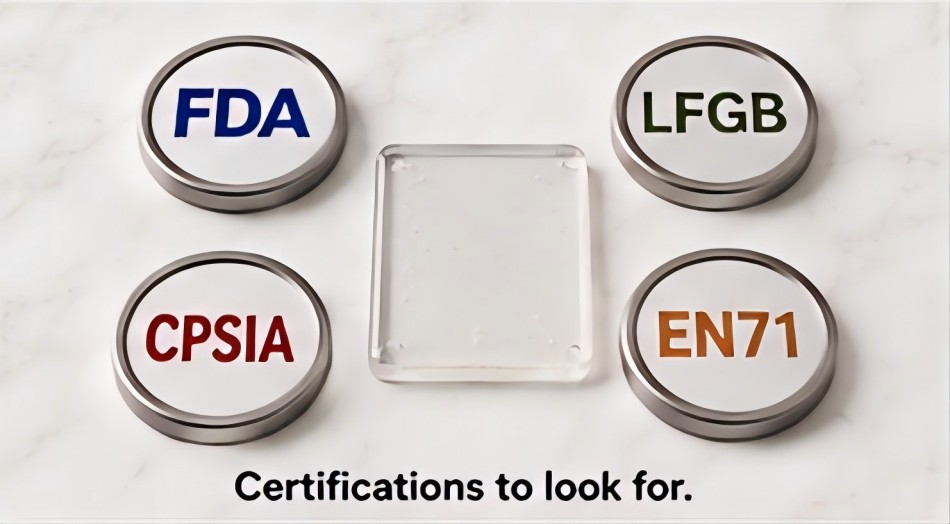 Check Certifications
Look for products that clearly display:
Certification | What It Means |
FDA 21 CFR 177.2600 | US food-contact compliance |
LFGB | Premium German food-grade standard |
CPSIA | US children's product safety |
EN71 | European toy safety standard |
ISO 10993 / USP Class VI | Biocompatibility (medical-grade) |
Ask About the Curing Process
Reputable brands should be able to confirm whether their products are platinum-cured. If a supplier cannot answer this question, consider it a red flag.
Look for Odor-Free Products
A chemical or vinegar-like smell often indicates peroxide-cured silicone with inadequate post-curing. Platinum-cured silicone has virtually no odor.
Choose Reputable Manufacturers
Look for manufacturers that provide:
Material traceability — documentation of raw material sources
Third-party testing — lab reports from SGS, TÜV, or Intertek
Clear safety claims — "100% food-grade silicone" with supporting evidence
As one baby product brand states: "We use advanced platinum silicone ... beyond industry standards — no fillers, no contaminants, non-allergenic, purer, safer, soft-to-touch, medical grade".
Part 9: Why More Baby Brands Are Switching to Platinum Silicone
Several converging trends are driving the shift toward platinum-cured silicone in the baby product market:
Driver | Impact |
Premiumization | Brands compete on quality, not just price |
Safer Material Claims | "Platinum" is a tangible differentiator |
Stricter Regulations | LFGB and EU standards increasingly require higher purity |
Consumer Awareness | Parents research materials before buying |
Social Media Influence | Parenting influencers educate followers on "platinum vs. peroxide" |
As one industry source explains: "Platinum-cured silicone is the better option for baby products because it is purer, more stable, and less likely to leach substances than peroxide-cured silicone".
FAQ
Is platinum silicone safer than peroxide silicone?
Yes, for baby products. Platinum-cured silicone has no curing byproducts, no odor, higher purity, and better biocompatibility. It is the preferred choice for products that come into contact with a baby's mouth or food.
Is peroxide silicone food safe?
Yes, when properly manufactured and post-cured. However, it has higher extractables and potential odor compared to platinum-cured silicone.
Why do some silicone products smell?
A chemical or vinegar-like smell usually indicates peroxide-cured silicone with residual byproducts. Platinum-cured silicone is virtually odorless.
Which silicone is best for baby teethers?
Platinum-cured silicone is the best choice for teethers because it is purer, odorless, and free from residual chemicals.
Is platinum silicone BPA-free?
Yes. Both platinum- and peroxide-cured silicone are inherently BPA-free, as silicone contains no plasticizers or endocrine-disrupting chemicals.
Does platinum silicone contain toxins?
No. Platinum-cured silicone is non-toxic, physiologically harmless, and residue-free. It meets the strictest safety standards, including FDA, LFGB, and USP Class VI.
Why is platinum silicone more expensive?
Platinum is a precious metal catalyst, and the process requires more precise manufacturing control. The higher cost reflects superior purity and safety.
Can peroxide silicone pass FDA testing?
Yes, with proper post-curing. However, it may not pass LFGB sensory testing and is not recommended for premium baby products.
Conclusion: The Cure System Defines the Safety
Both platinum-cured and peroxide-cured silicone can be food-safe when properly manufactured. However, for baby products that involve prolonged contact with food or a child's mouth, platinum-cured silicone is the premium choice due to its:
Higher purity — no curing byproducts
Odor-free performance — no chemical smell
Superior transparency — crystal clear
Excellent biocompatibility — meets USP Class VI and ISO 10993
The differences are not cosmetic. They are chemical. Peroxide-cured silicone leaves behind byproducts that can migrate, leach, and cause odor. Platinum-cured silicone produces virtually no byproducts, making it the purer, safer choice for products that go into a baby's mouth.
For B2B buyers, brand owners, and product developers, the choice is clear:
Platinum Silicone = Premium Safety + Premium Market Positioning
This is the primary reason leading EU and US baby brands are increasingly adopting platinum-cured silicone for their most sensitive product lines.
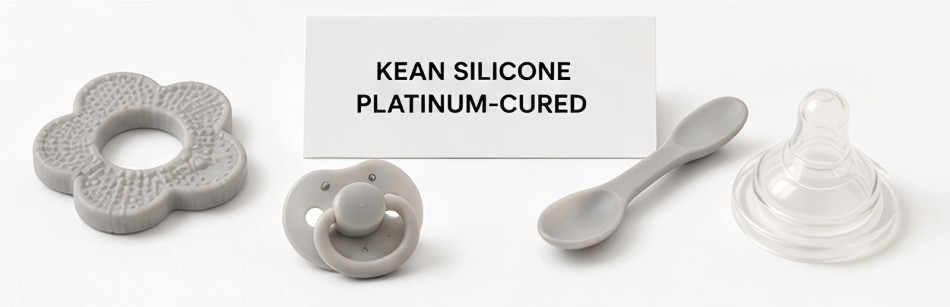
KEAN Silicone offers platinum-cured silicone solutions for baby feeding products, teethers, pacifiers, and accessories — with full FDA, LFGB, and REACH compliance, material traceability, and third-party testing documentation. Contact us for samples and wholesale inquiries.


