


At first glance, some silicone products may seem to be in good condition. But, the real problem is hidden under the surface and most people overlook details.
A baby teether may appear smooth, until a hidden bubble pops out during use. The kitchen spatula may seem solid for two weeks, then it cracks. The seal may seem fine, until it breaks under pressure.
The frustrating thing is that these defects were evident from the beginning. But, it was not obvious until you knew what to look for.
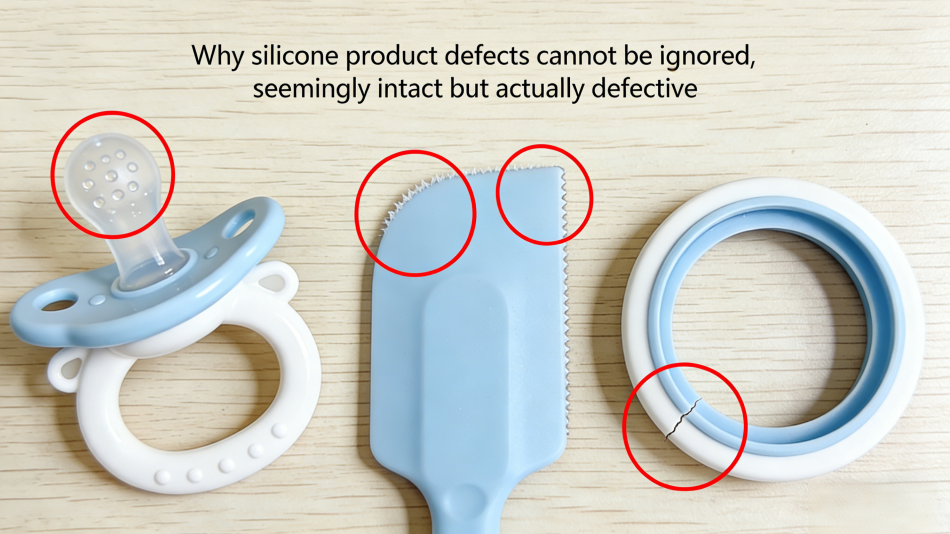
Why Silicone Defects Are Tricky to Spot
Silicone isn’t like plastic or rubber. Due to its transparency, flexibility and curing, standard inspection methods are not reliable. It can be difficult to detect internal problems in the material until it fails due to stress or heat.
Defects are usually caused by several factors including poor mixing ratios, incorrect curing temperatures and times, impure raw materials, contaminated molds, rough demolding, or cheap catalysts. It is important to understand where the problem begins so you can know what to check.
The 7 Critical Silicone Products Defects You Need to Recognize
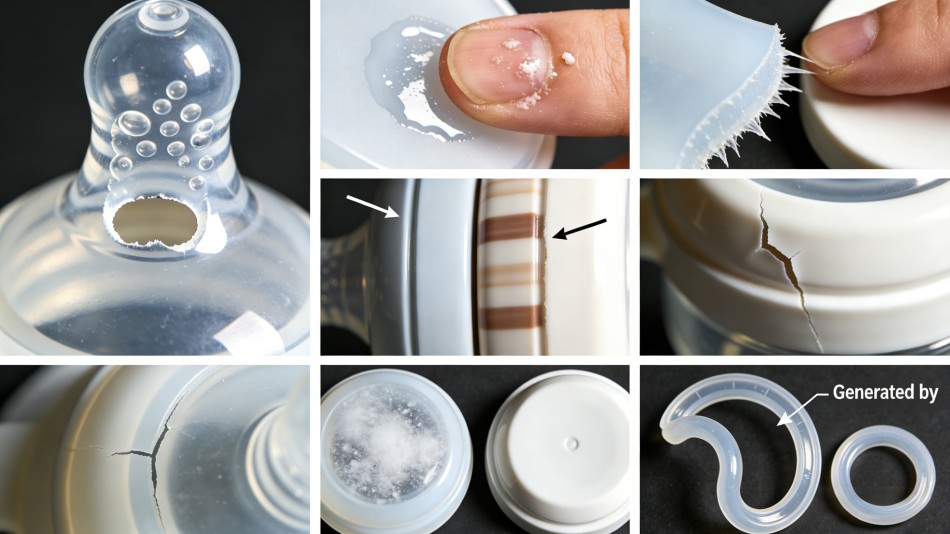
Air Bubbles and Voids
Look for raised bumps or press hard to find areas that are softer than the rest of the area. These are usually trapped air bubbles.
This happens when gas is trapped during pouring, curing, or when material is injected too rapidly creating turbulence.
Why does it matter, you may ask? Bubbles cause weak points. Products tend to tear first in these areas. Bubbles indicate that the product will not last, especially if it’s under constant stress or frequent use.
Incomplete Curing
When touching the surface of the product, it should feel smooth and dry. It will feel sticky, tacky, or oily if the silicone is not properly cured.
It can occur when the curing temperature or tie is incorrect, or if the ratios are wrong. When production is rushed, this area can be compromised.
Why it matters: Uncured silicone degrades fast. It's a dirt magnet, is difficult to clean, and does not meet food safety standards. The material simply isn't finished.
Flash Lines and Excess Material
Run your fingers along the product’s edges and seams. If you feel rough edges, sharp spots, or thin ridges that are flash, excess material squeezed out of the mold.
This can happen when the molds are aligned correctly, pressure is high, or the mold edges have worn.
Why does it matter? Flash is a sign of poor process control. This is a sign that the manufacturer doesn't maintain equipment, or control dimensions properly.
Color Inconsistency
Look at the product under a bright light for streaks, blotches, and swirls. The pigment amounts may be inconsistent between batches, due to poor pigment icing or contamination from previous production.
What does it mean? Color problems for medical or food-grade products could indicate that the mixing is not controlled. This would mean other properties may be inconsistent.
Tearing and Cracking
Check for white residue on the surface, or a hazy, chalky appearance that dulls the finish. When chemicals migrate to the surface due to an incompatible filler or improper formulation, this can occur.
What does it mean? Blooming can make customers think the product is unsafe or degraded, even if they don't see any signs of degradation. If the product is food-contact, this raises valid questions about what leaches out.
Dimensional Problems or Shrinkage
If you see products that have warped or bent, they may not be in their original form. When something isn’t fitting right or looks twisted, measure it against the specifications.
Inconsistent processing temperatures, improper cure cycles or formulation issues can cause uneven shrinkage.
What does it mean? Even small shrinkage in seals and gaskets can lead to leaks or assembly difficulties. When it comes to consumer products, warped goods don't function as intended.
How to Catch Silicone Product Defects Early
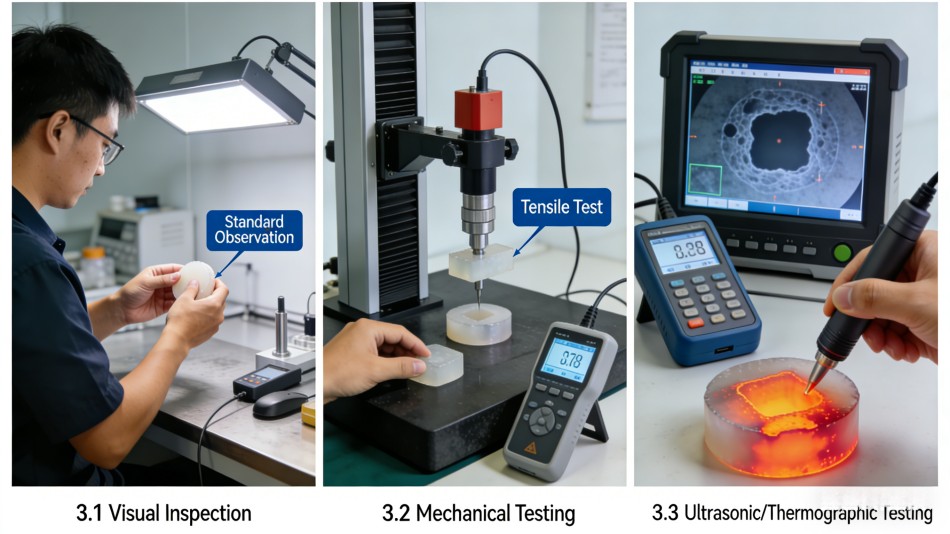
Visual Inspection
Our eyes are able to detect obvious surface issues, such as color streaks, tears, and contamination. However, they miss subtle changes in dimensions, internal voids and deep-layer curing problems.
Consistent angels of inspection and good lighting are essential. Referencing samples that show good and bad will also help. Don’t just rely on visual inspection only.
Mechanical Testing
Test the samples to destruction to unleash internal problems. Tensile strength is determined by pulling tests. Tear tests measure crack resistance. On the other hand, hardness tests detect issues such as undercuring and formulation.
Advanced Testing Methods
Infrared thermography usually measures heat patterns and identifies curing inconsistencies. On the other hand, ultrasonic testing is a non-destructive way to map the internal structure of a product and identify voids. These methods are more expensive but they catch all the problems and preserve the whole batch.
Sample Retention
Label samples from each production batch with all the information you need, date, materials, molds, and process parameters. You can then investigate the root cause of any defects that may occur later.
Digitally link products to specific conditions of production. When you spot a pattern, you can quickly identify which other batches that may be affected.
Supplier Audits
Prevent production problems by checking the process of suppliers. Verify that raw materials are in compliance with specifications. Check the condition of the mold. Review the process controls. Moreover, check equipment calibration records.
Catch problems at their source instead of discovering them thousands of units later.
Building a Reliable Quality Assurance System
Select Certified Materials
Choose silicone compounds that are tested by reputable suppliers and offer stable performance. Require complete certification documentation for food-grade or medical applications. Switching suppliers to save minimal costs can lead to more defects.
Strict Mold Maintenance
Regularly clean molds, check venting systems to prevent air traps, and replace worn parts before they cause defects. Most flash, dimensional, and surface issues originate from poor mold maintenance.
Full Process Monitoring
Automatically track curing temperatures to ensure each cycle meets requirements; digitally link products to process conditions; achieve stability by monitoring injection pressure and speed. Process deviations can cause gradual defect accumulation that goes unnoticed until problems become severe.
KEAN
With over a decade of experience in silicone product manufacturing, KEAN Silicone has always held itself to the highest standards, ensuring that every product delivered to customers achieves perfect condition.
Systematic Mold Maintenance System
We have established a comprehensive mold maintenance process to ensure production equipment is always in optimal condition:
Deep cleaning after daily production: Using professional tools to thoroughly remove residual material and prevent contamination
Weekly performance checks: Inspecting venting systems, alignment accuracy, and surface finish
Preventive part replacement: Proactively replacing key components before visible mold wear occurs
Full-Process Real-Time Monitoring
We utilize advanced IoT technology to digitally control the entire production process:
Precise temperature control: Curing temperature deviation controlled within ±1°C
Real-time pressure adjustment: Automatically optimizing injection pressure curves based on material characteristics
Precise time management: Time control for each curing stage accurate to the second
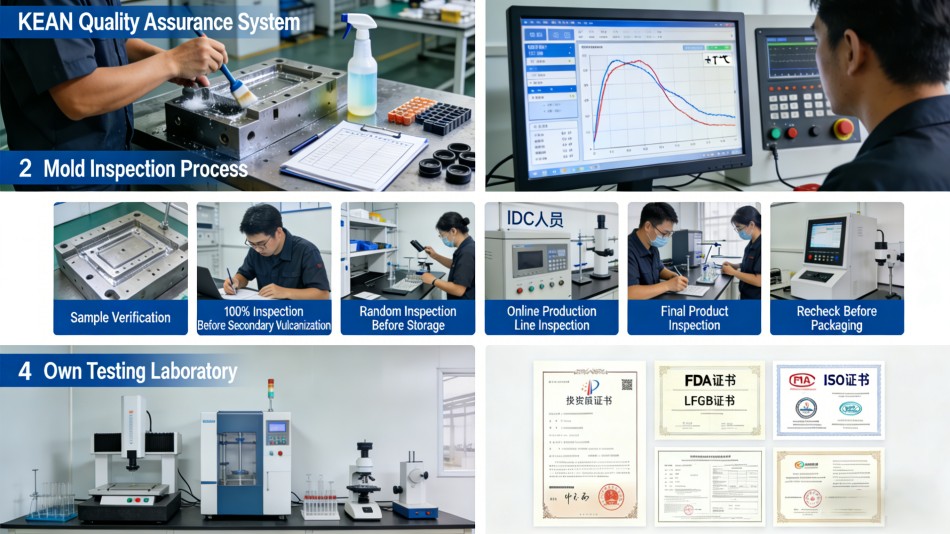
Six-Stage Quality Inspection System
Six Quality Checkpoints: A Full-Process Defense Line
We have established six independent quality checkpoints throughout the entire production process, ensuring every step from raw materials to finished products meets standards.
Initial Product Verification
Samples are taken during the product description phase to verify design feasibility.
Full Inspection Before Secondary Curing
A comprehensive inspection is conducted before secondary vulcanization to prevent early-stage defects from flowing into subsequent processes.
Sampling Inspection Before Warehousing
IDC performs sampling inspections before non-finished goods enter the warehouse, controlling the quality of semi-finished products.
In-Line Production Inspection
Each production line conducts real-time on-site inspections for leaks, surface defects, etc., ensuring manufacturing stability.
Final Finished Product Inspection
After completion, OQC performs the final inspection, covering function, safety, and performance metrics.
Pre-Packaging Quantity and Status Review
Before finished products enter the warehouse, packaging inspection is carried out, and FQC verifies product quantity and packaging status to ensure accurate shipment.
Own Testing Laboratory
KEAN:
KEAN is equipped with a professional testing laboratory with comprehensive self-testing capabilities:
Physical Performance Testing: Tensile strength, tear strength, hardness, resilience, etc.
Chemical Safety Testing: Heavy metal content, extractables, volatile substances, etc.
Durability Testing: Fatigue testing, aging testing, service life evaluation, etc.
Complete Certification System
We possess complete qualification certificates, ensuring products meet international standards:
Through these five core measures, KEAN has built a comprehensive quality assurance system for customers, ensuring that every silicone product possesses excellent quality and reliability.
Final Thoughts
Early detection of defects can save entire product lines, and reduce safety risks. Failure costs money, but prevention costs pennies. Choose quality suppliers,conduct thorough inspections and test regularly. The signs are always visible, you just have to know what to look for. Do not wait until products fail.


