


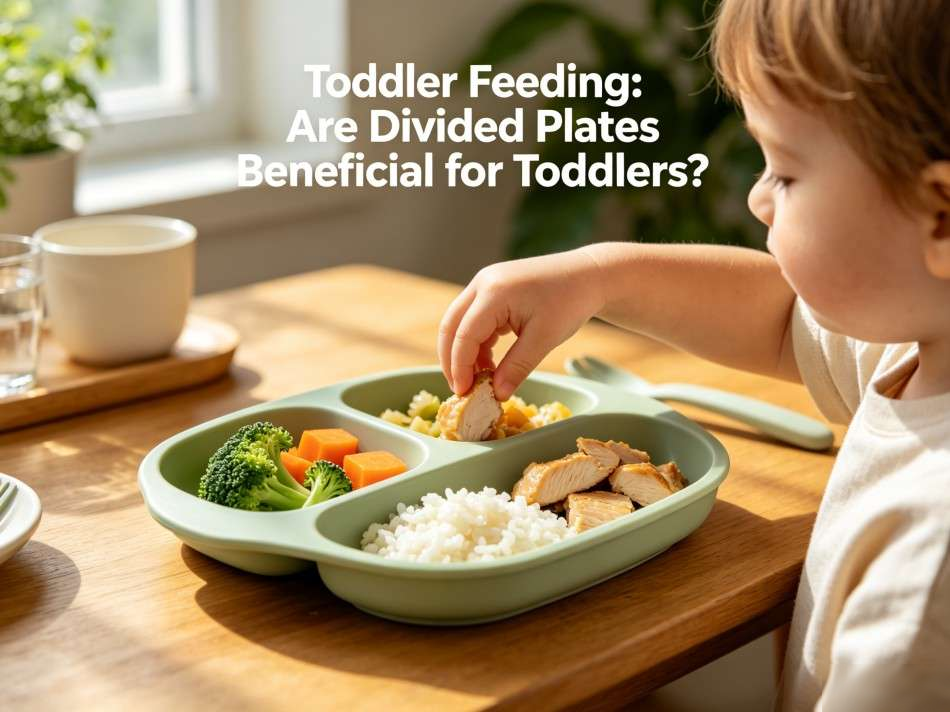
Mealtime with a toddler is often a blend of discovery, development, and, at times, a bit of mess. As parents seek tools to promote healthy eating habits, the divided plate or the sectional plate has become a staple in children's utensils.
But are they genuinely beneficial, or simply a matter of convenience? Let’s take an evidence-based look at the divided plate. We’ll explain what they are, how they can be used effectively, and how they perform compared to traditional undivided plates.
What is a Divided Plate?
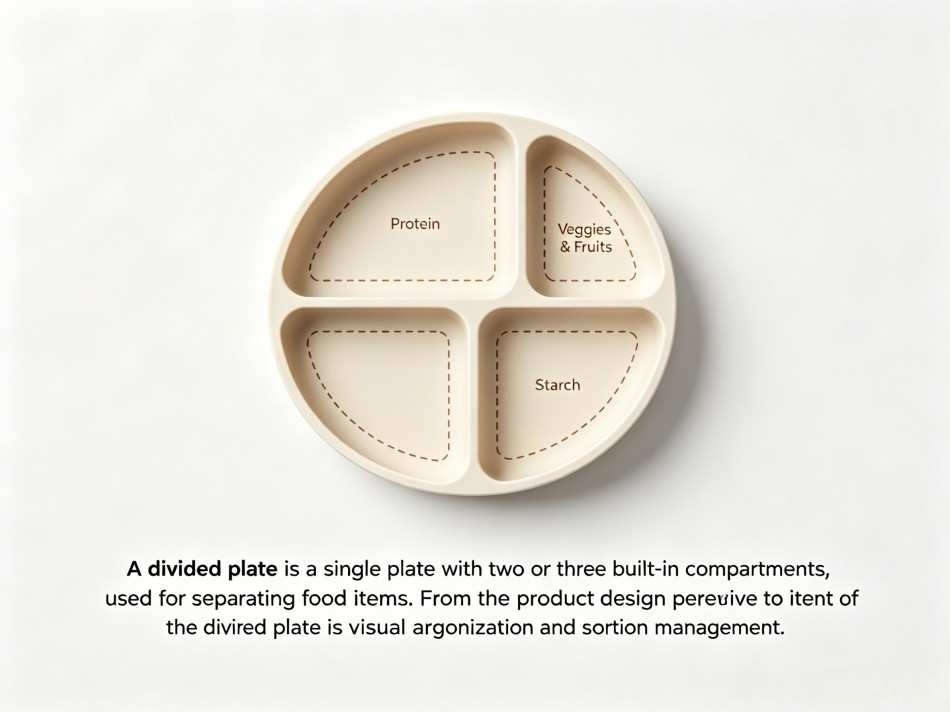 A divided plate is a single plate with two or three built-in compartments, used for separating food items. These divisions are fixed and form part of the plate’s structure, unlike removable bowls or accessories.
From a product design perspective, the intent of the divided plate is visual organization and portion management. Creating separate, bounded spaces helps the caregiver in planning a balanced meal and the toddler in processing what's on their plate. It also inherently encourages the inclusion of multiple food groups—making it especially relevant for brands targeting early childhood feeding solutions.
Key Advantages for Development
While there is a lot of anecdotal praise from parents, the divided plate design also has empirical evidence from pediatric nutritional research, lending it credibility.
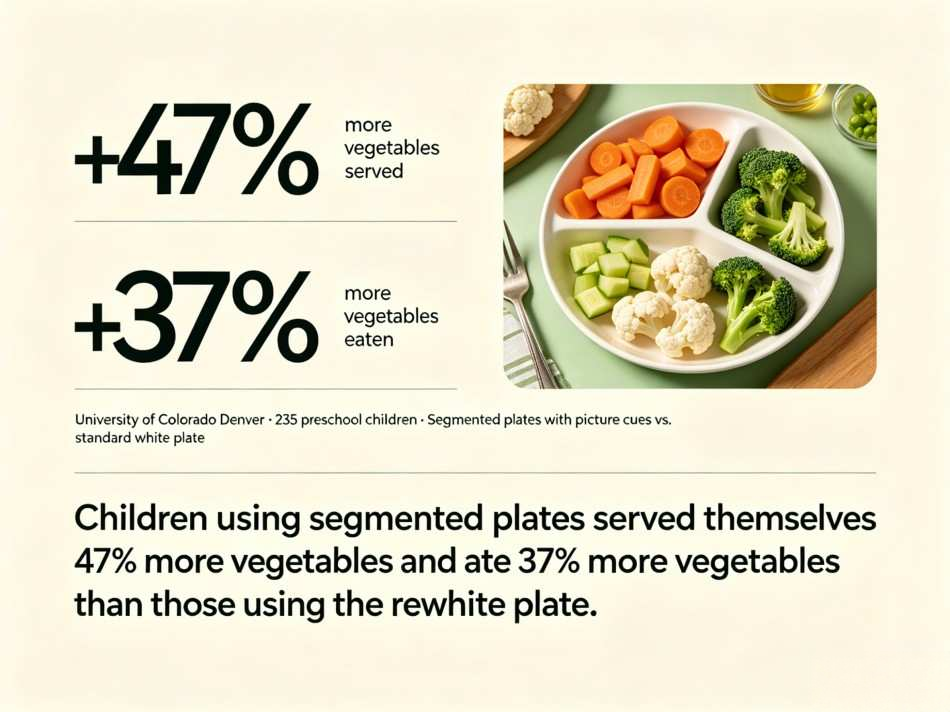
Researchers at the University of Colorado Denver conducted a field experiment involving 235 preschool children to determine if segmented plates—specifically those with pictures designating the fruit and vegetable compartments would increase consumption compared to a standard white plate.
The results were compelling:
Children using the segmented plates served themselves 47% more vegetables and ate 37% more vegetables than those using the regular plate. Which are significant statistically. While fruit intake also increased slightly.
These findings suggest that plate design, the visual arrangement, and better the picture cues on the plate can positively influence vegetable consumption in young children. This would automatically lead to healthier behaviors among children without incentives and pressure.
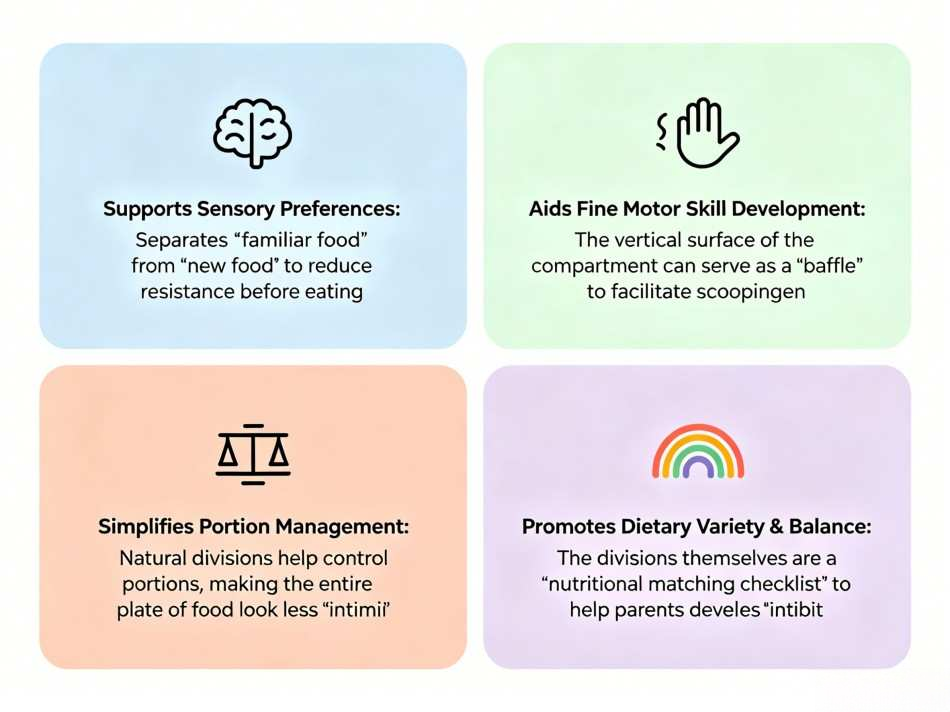
Apart from that, divided plates have a number of practical and developmental advantages to the growing toddler:
1- Supports Sensory Preferences:
Many toddlers experience "food neophobia," in other words, they become sensitive to trying new food. Divided plates respect these boundaries by keeping "known" foods separate from "unknown" foods, reducing refusal before eating even begins.
2- Aids Fine Motor Skill Development:
For a toddler mastering utensils, the vertical walls of each compartment provide a necessary "backstop." This allows them to push food against a surface to load their spoon, fostering self-feeding independence.
3- Simplifies Portion Management:
While not a measurement tool, divided sections act as informal portion cues, helping to prevent over-serving and making a complete meal look less daunting to a child.
4- Promotes Dietary Variety & Balance:
The compartments act as a built-in checklist for parents, as well. They’re reminded to give a variety of food on the plate. As a result, their kids establish healthy eating patterns over time.
Potential Disadvantages of Divided Plates
Despite their benefits, divided plates are not without debate. The main criticism is that the separated plates may theoretically strengthen the inherent neophobia (fear of new things) of a child by confirming the need to ensure that all foods remain totally separate. This side of the conversation implies that children may not be able to learn to tolerate mixed foods such as casseroles or salads later on.
However, there is no conclusive support that divided plates as a direct cause of picky eating. Many experts point out that:
Food preferences are heavily influenced by temperament and repeated exposure.
Sensory sensitivity often exists independently of plate design.
Even when children have been using divided plates for an extended period, most of them naturally shift to regular plates as they grow up.
It is on these grounds that divided plates should be regarded as a supportive, stage-appropriate, rather than a long-term need or a remedial measure.
Divided Plates vs. Undivided Plates
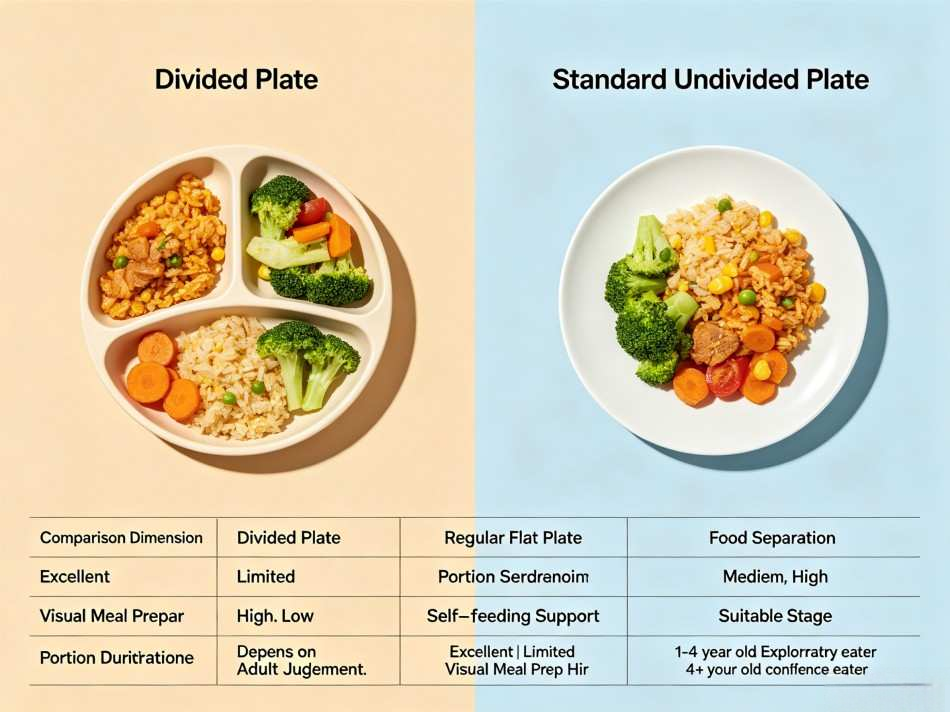
Let’s do a side-by-side neutral breakdown of how they compare:
Feature | Divided Plate | Standard Undivided Plate |
Food Separation | Excellent. Keeps items distinct, ideal for picky or texture-sensitive eaters. | Limited. Foods can mix, which may be unappealing to some toddlers. |
Visual Meal Planning | High. Compartments visually prompt a balanced assortment of food groups. | Low. Requires more conscious effort from the caregiver to present variety. |
Portion Guidance | Built-in. Sections suggest natural limits and proportions for small appetites. | Self-determined. Relies entirely on the server's judgment. |
Support for Self-Feeding | Moderate. Compartments can aid scooping but may be restrictive for larger items. | High. Offers an open space for easier maneuvering of utensils. |
Best For | The Exploratory Eater (Ages 1-4): Manages food sensitivities, encourages tasting diverse foods, reduces mealtime friction. | The Confident Eater (Ages 4+): Suited for children who no longer mind foods touching and are mastering utensil use on open dishes. |
Transition Value | Serves as a helpful training tool to introduce balanced meals and independent eating. | Represents the "next step" in a child's dining independence and adaptability. |
Should You Choose a Divided Plate or a Regular Plate For Your Child?
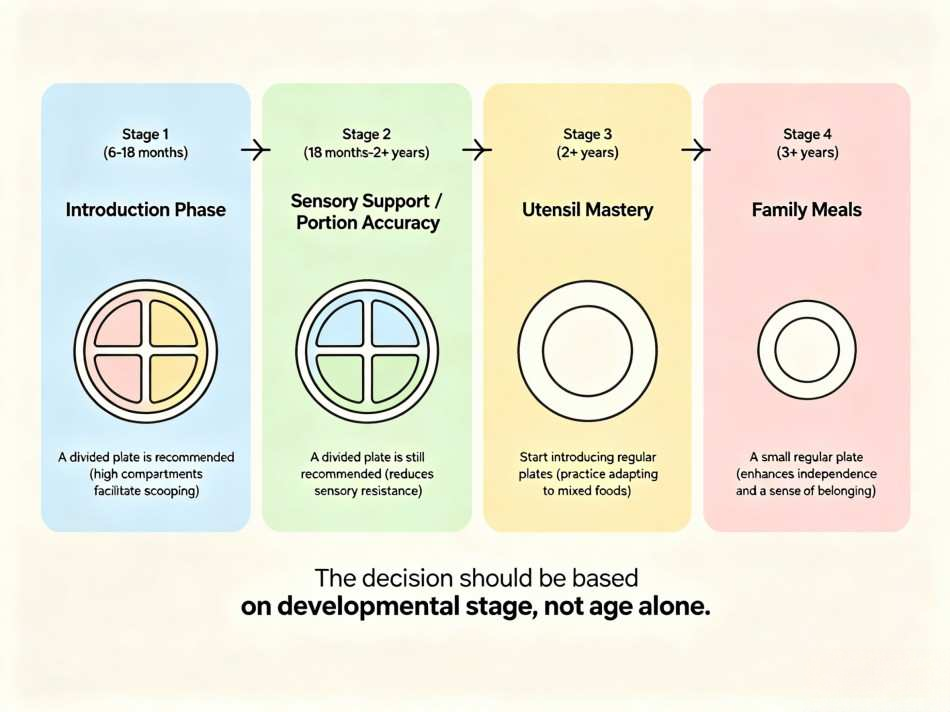
The decision between a divided and an undivided plate is not usually one of which is superior in an absolute sense, but that which is better in the particular stage of development of the child.
Prioritize Divided Plates:
The Introduction Phase (6–18 months): When infants are first exploring solids via Baby-Led Weaning (BLW), the high walls of a divided plate are critical for developing the "scooping" motion.
Sensory Processing Support: For toddlers who exhibit early signs of sensory sensitivity—where touching textures may lead to total meal rejection—divided plates act as a bridge, allowing them to tolerate new foods on the same plate without "contaminating" safe foods.
Portion Accuracy: For brand owners, marketing divided plates as a tool for "balanced nutrition" is a powerful selling point, as the sections naturally prompt caregivers to include a protein, a carb, and a vegetable.
Transition to Regular Plates:
Mastery of Utensils (Approx. 2+ years): Once a child has learnt to scoop and stab food without needing the support of vertical separation, transition them to a standard plate to train their spatial awareness of eating as an adult.
Encouraging Food Tolerance: Pediatric dietitians usually suggest switching to undivided plates in order to make children accustomed to the notion that different foods can be mixed. This exposure helps prevent extreme "pickiness" later in life.
Inclusion in Family Meals: A small, regular plate like the ones adults using on the dinner table can help increase the sense of independence and belonging to a toddler.
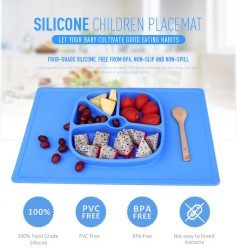
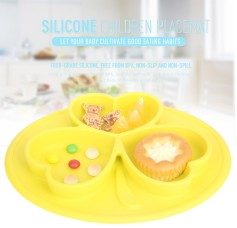
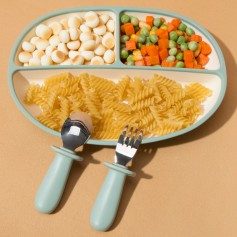
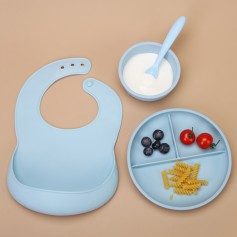
KEAN Divided Plates
|
|
|
|
|
|
|
|
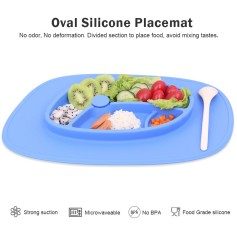
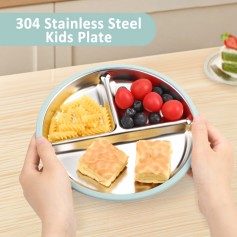
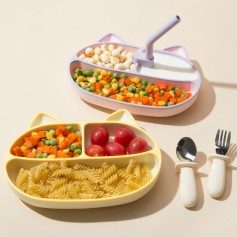
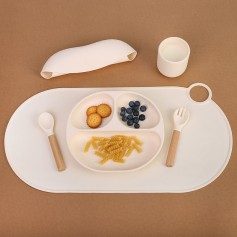
Common Questions and Misconceptions
With the increase in the popularity of these products, a number of myths have emerged concerning their effects on childhood development. Let’s address a few.
Q: Won’t my child become dependent on Divided Plates?
A: Transition is natural. Children will graduate out of divided plates just as they graduate out of bottles to cups. The acquired skills, such as trying various foods, self-feeding, and identifying a balanced meal, are the long-term lessons. The plate is a frame; after the skill has been constructed, the frame is taken away.
Q: Does using a suction-base divided plate hinder table manners?"
There is concern that suction bases "baby" the child too much, preventing them from learning how to steady a plate. However, during the peak mess-making ages (12–24 months), a suction base actually assists learning. The child can concentrate on the complicated motor activity of using a fork or spoon while the plate is held still. The suction feature can be phased out later as their coordination is enhanced.
Q: Should I stop using divided plates once my child starts preschool?"
There is no hard deadline for moving to regular plates. In fact, many school-aged children still prefer divided lunchboxes (Bento boxes) because they keep food fresh and appetizing. The shift must be grounded on the level of comfort of the child with mixed food and not a particular birthday.
Q: Are divided plates harder to wash?"
While there are more "walls" to scrub, modern silicone designs often feature rounded internal corners specifically to prevent food trapped in 90-degree angles. So when a divided plate is designed with hygiene in mind, it is just as easy to clean as a standard flat plate. Plus, high-quality, 100% food-grade silicone plates are also extremely heat-stable and dishwasher safe.
Q: What materials should I look for in a quality divided plate?
There is no bargain on safety and durability in babycare products, which also makes it a key value proposition to brand owners. The market leaders are concerned with:
Food-Grade, BPA-Free Silicone or Plastic: Ensures no harmful chemicals leach into food.
Heat & Cold Resistance: For versatility in serving.
Sturdy, Suction Base: Prevents enthusiastic toddlers from flipping the plate.
Dishwasher Safe: For easy, sanitary cleaning.
Conclusion
Divided plates are a scientifically supported instrument that is meant to facilitate the special sensory and motor-skill requirements of early childhood. Although the normal plates will ultimately train a child to eat like an adult, the orderly nature of a sectional plate provides the stability and visual structure that most toddlers require to establish a healthy relationship with food.
For brand owners, the key is to offer high quality, safe and ergonomically correct solutions that enable the parents to sail through these development milestones with confidence.
Partner with a Leader in Silicone Safety
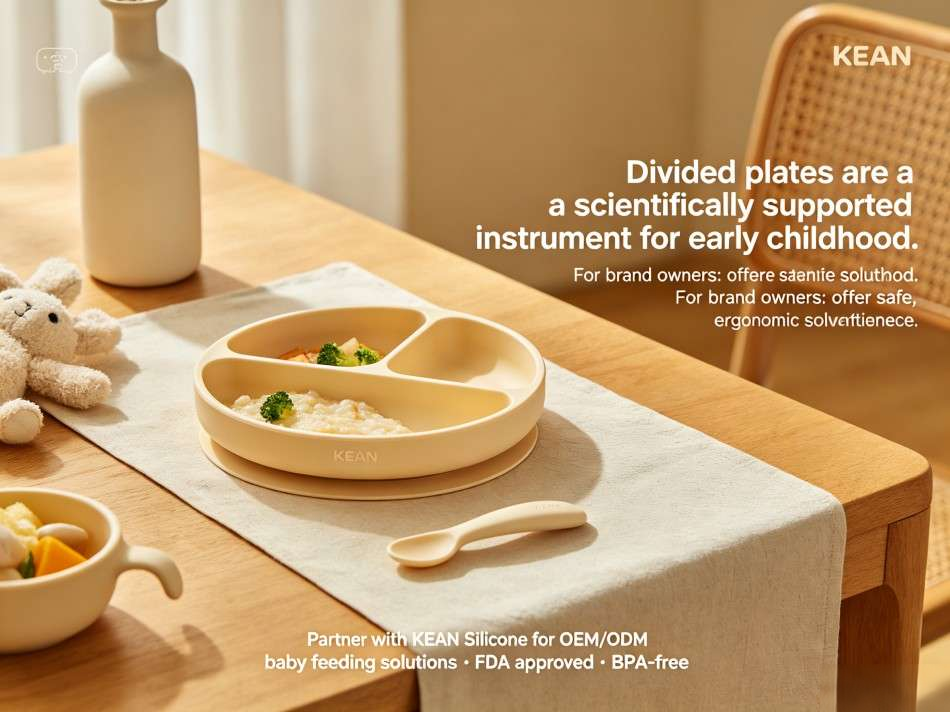
Ready to expand your product line with silicone tableware? Kean Silicone is your premier partner. We specialize in OEM and ODM services, offering BPA-free, FDA-approved silicone solutions ranging from suction-base divided plates to complete baby feeding sets.


