


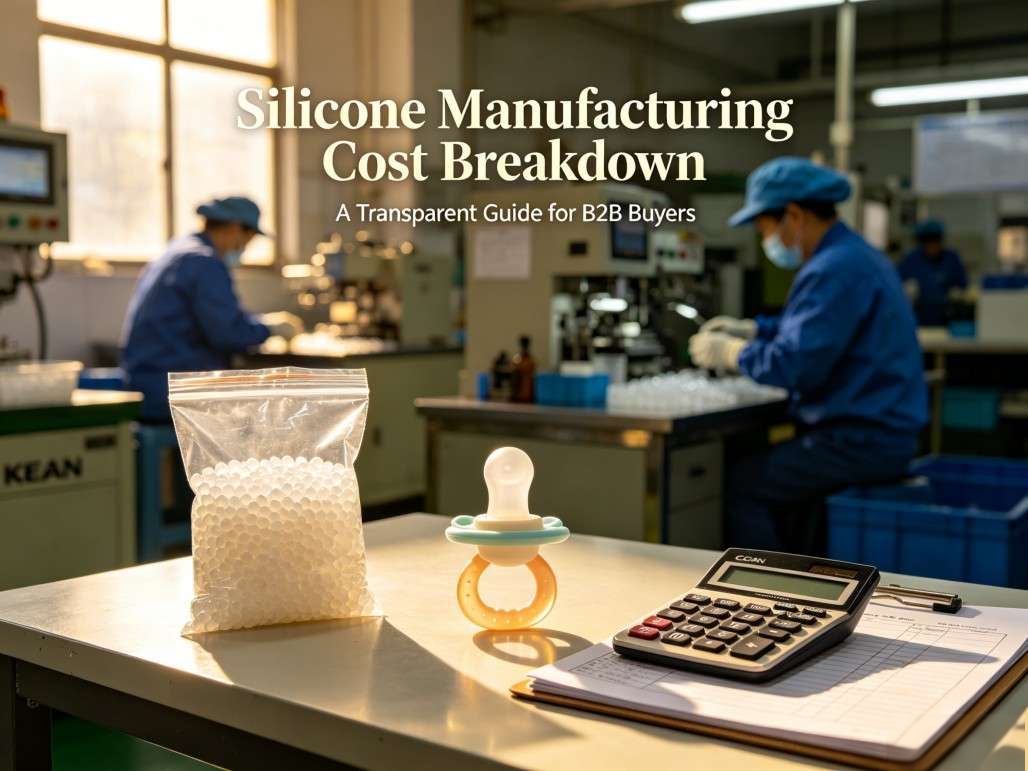
KEAN Silicone makes silicone products like baby teethers/feeders and foldable travel bottles. Each one costs us about 0.50 to 5 RMB in manufacturing. Raw materials make up 40% to 60% of the total manufacturing price, and this cost goes up or down by 10 to 15 percent each year. This is an honest and brief cost summary of our silicone manufacturing process.
If you own a brand and want silicone products for your online store or supermarket, you can slash these costs by 60 to 70 percent. How? You have to buy these products in bulk. Pick the right method of silicone manufacturing/production and then partner with your suppliers for free prototypes and full transparency. This guide will share real examples and case studies with you on this topic. You’ll learn proven strategies from industry data as well.
If you’re a retailer, importer, trader, or distributor, streamline your supply chains for better profits.
What Do Raw Materials Cost? A Variable Foundation for Product Quality
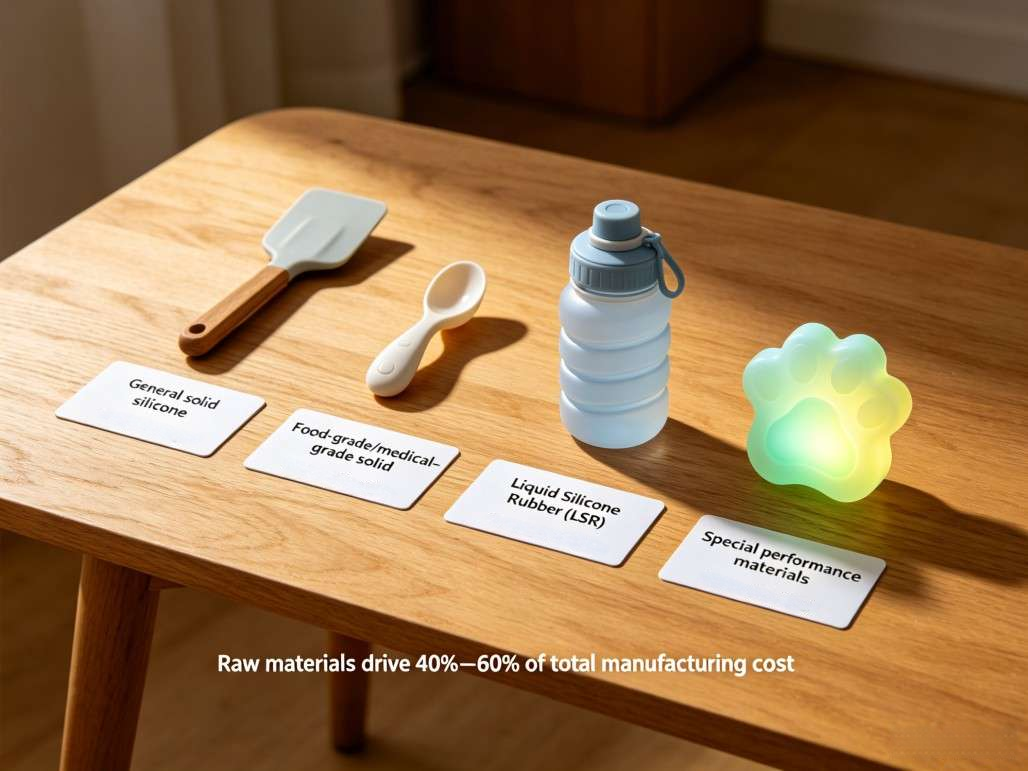
Experts believe that silicone market prices are declining since March 2025. The total cost of making a silicone product depends on different factors. Raw materials drive one-fourth or one-half of the total cost. They vary by grade for KEAN Silicone’s baby, household, pet lines, etc. Additives like silica and color mixes boost the quality of silicone products. But they add 5% to 15% to the total cost.
Titanium dioxide makes baby bibs opaque & UV-resistant. They can up the price by 8%. Also, brand owners dodge price swings (like 2024's 12% jump from energy costs). If you make long-term deals or buy items in bulk, you can keep costs steady for big supermarket orders for your company!
Material Type | Typical Applications | Cost Range (RMB/kg) |
General solid silicone | Kitchenware, seals, and luggage straps | 30 to 80 |
Food-grade or medical-grade solid products | Teethers, bibs, feeding sets, etc. | 80 to 200 |
Liquid silicone rubber (dubbed LSR) | Baby pacifiers and travel bottles | 100 to 300 |
Special performance materials | Flame-retardant pet toys and glow-in-the-dark items | 200 to over 500 |
The Cost of Customization
When you create custom designs, they may cost RMB 10,000 to RMB 50,000 (upfront) for R&D and prototyping. But customized products pay off quickly when you spread them across 50,000 units for your brand.
Cost Component | Description | Influencing Factors |
Mold design fee | 3D modeling, DFM, and structural analysis | Complexity includes multi-cavity for feeding sets, and 2 to 5 rounds (multiple iterations) |
Mold material cost | P20/718/S136 (hot runners) | Size is around 300mm, and the lifespan is around 100k to 1 million cycles |
Machining and finishing | CNC, EDM, polishing, and texture etching | Mirror finish (over 30%) and precision (±0.01mm) |
Trial and modification | Materials and labor (20 to 50 hours) | Design maturity and LSR complexity |
Mold lifespan extension | Maintenance for corrosive materials | Cycles supported (KEAN’s 500k+ average) |
Production Costs: How Do We Select Processes for Efficiency?
We at KEAN Silicone have compression for simple bibs and LSR injections for precision teethers. That is why we balance automation with cost. Post-processing adds 10% to 20% to costs, such as trimming edges (RMB 0.5-1.5/unit), laser logos (RMB 0.8/unit), assembly (RMB 1-2 for toys), and checks (RMB 0.5/unit, cut 25% by machines). However, most importers love LSR silicone because it gives them twice as fast production on baby feeding sets.
Process | Suitable Products (by KEAN) | Advantages | Cost Characteristics |
Compression molding | Large bibs, high-hardness seals, etc. | Low mold and strong properties | High labor and efficiency (500 units daily) |
Injection molding (LSR) | Teethers, multi-color pacifiers, etc. | Better automation and fine details | High setup (RMB 100k+ equipment) and low labor costs |
Extrusion molding | Pet tubes, luggage strap profiles, etc. | Continuous and high-volume solutions | Simple molds (RMB 10k) and fixed sections |
Labor, Quality, Logistics, & Additional Costs
Let’s not forget about the cost associated with labor and logistics. They go something like:
Labor (15% to 25%): Workers make RMB 40 to 80 per hour. Skilled experts make about RMB 60k a year. Employee training reduces mistakes and boosts their productivity.
Quality Checks (7% to 10%): Basic inspections cost RMB 0.3 per item. If you want to get big certifications (like FDA for the US or LFGB for Europe), run RMB 30k to 100k (taking 3 months to half a year).
Shipping & Storage (10%): A full container ships for RMB 20,000. Add RMB 0,2 per item for warehousing (each month). Tariffs hit 5% to 25% (like 10% on baby products).
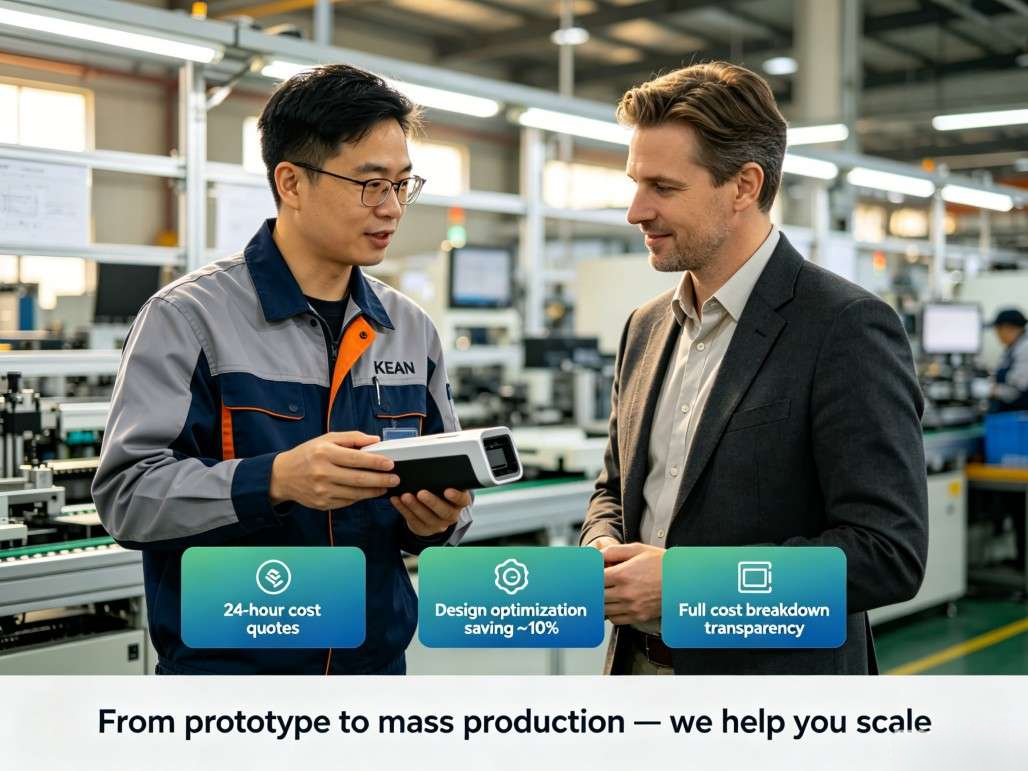
Other costs are like accessories (suction bases, for example). When you buy from KEAN Silicone, we offer you 24-hour cost quotes and design tweaks that save 10%. You’ll also get a full and clear cost breakdown. That’s why you should order silicone baby products from our website only!
Case Study: Food-Grade Silicone Collapsible Bowl
A brand owner ordered silicone collapsible bowls. Here’s a breakdown of the cost:
Brand Owners’ Big Win: Grew from 1k prototype bowls (RMB 8 each) to 100k wholesale units (RMBD 2.5 each (a 69% cost drop)
Cost Breakdown:
Materials: 25%
Mold: 8%
Production: 35%
Profit Power: Sells at RMB 15 retail, delivering 35% margins
KEAN Silicone’s Edge: Free prototyping allowed 2 quick design tweaks to save RMB 20,000 in fixes.
Your Typical Silicone Product Cost Structure
Cost Item | Percentage | Description |
Materials | 25% | Food-grade LSR & colorants |
Mold Amortization | 8% | 100k units (RMB 50,000 mold) |
Production | 35% | Molding, post-processing, and energy |
Quality Control | 7% | Inspections and scrap reduction |
Certification | 5% | FDA/LFGB fees |
Packaging and Logistics | 10% | Blisters and shipping/tariffs |
Management/Operations | 7% | Support and customization |
Profit | 3% | Sustainable margins |
Cut Costs & Build a Stronger Business with Smart Silicone Choices
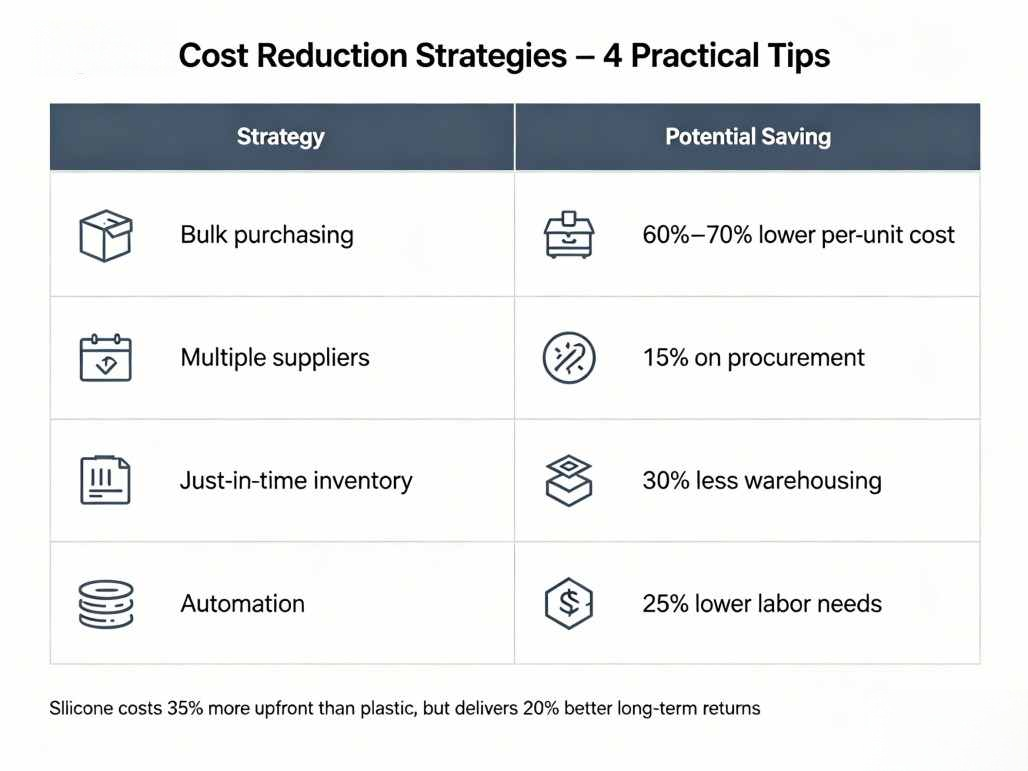
Many small brand owners complain that the recent tariffs have made it difficult for them to order products from China. You can remedy this situation by switching to multiple suppliers and save 15% on buying costs. Use “just-in-time” inventory to shrink your shortage expenses by 30%.
Automation cuts your labor needs by 25%. Did you know that silicone costs 35% more than plastic (upfront)? But it lasts longer and delivers you 20% better returns over time. That’s why you should team up with KEAN Silicone’s 15 years of know-how for products that meet rules and scale pretty easily. So, ask for free benchmarks and turn your ideas into high-profit items in 2026.


