


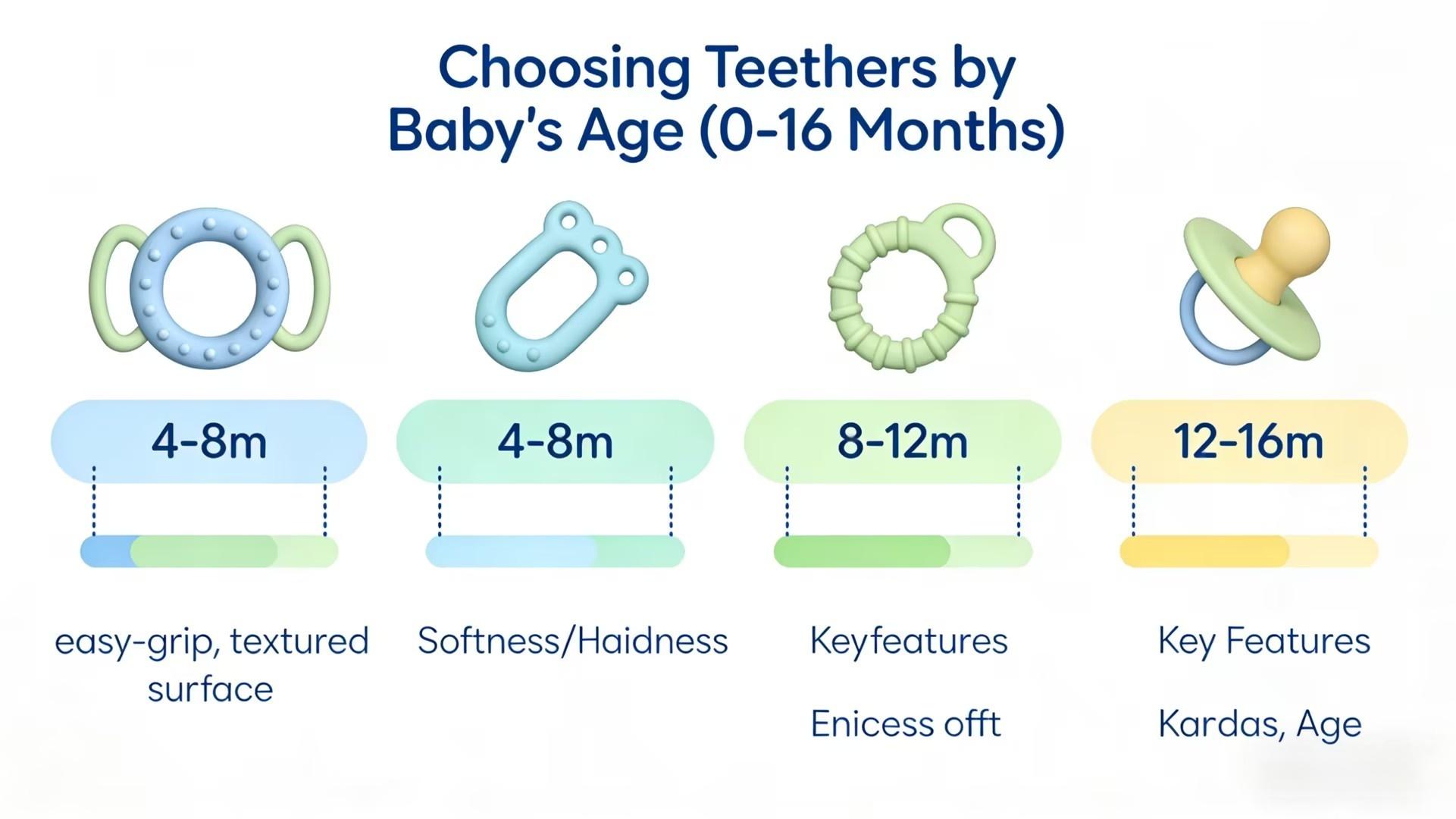
In early infancy, teething is a natural developmental stage that can cause drooling, irritability, and discomfort in babies. To help and soothe their gums, teethers provide relief and allow babies to chew their food safely and less painfully.
When choosing the best teether for the baby and ensuring its safety, the baby's age is taken into account. Keeping all these factors in mind, teethers are made based on their softness and the materials used. Silicone teethers are preferred in the baby product industry for their ease of cleaning, durability, and softness.
The following guide will provide information on teething stages, appropriate teethers for each stage, and considerations regarding their hardness. Some general misconceptions and ideal use of silicone theaters will be discussed.
This guide will help parents and caregivers understand the different stages of teething and select appropriate teething items that meet developmental needs while balancing safety and comfort.
Teething Stages Following Age
Teething stages are associated with specific ages and the types of teeth coming in. Each stage and kind of teeth requires specific teething items to meet babies' needs. To ensure comfort and effectiveness of theether, identifying theether hardness is important. The relevant ages, stages, and recommendations are outlined below accordingly.
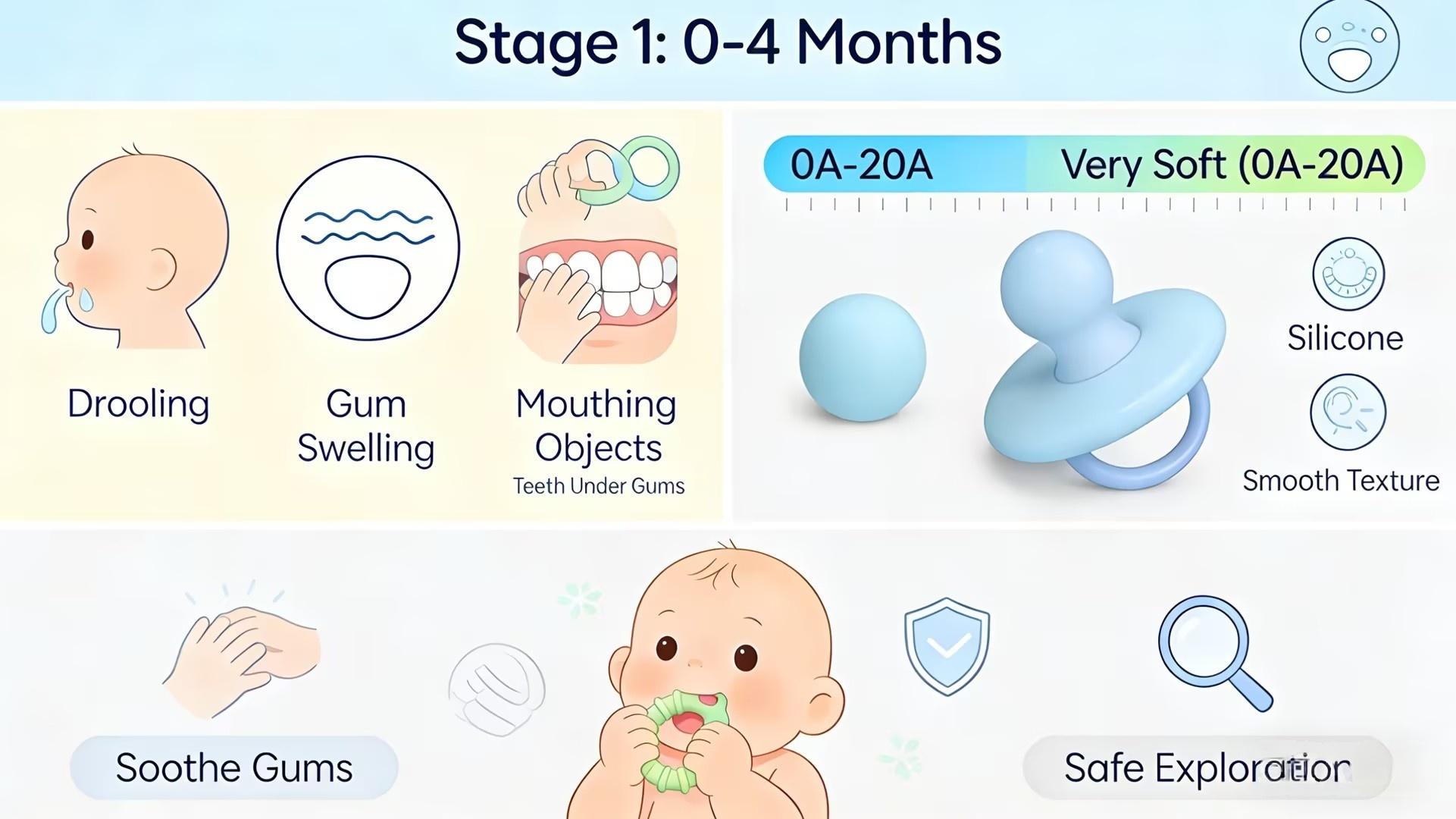
Stage 1: 0-4 Months (Early Teething)
Developmental Characteristics:
Babies drool, experience mild gum swelling, and frequently mouth objects during this stage. Teeth start to develop under the gums but do not emerge. Sensitivity is minimal.
Recommended Hardness:
Very Soft (0A - 20A)
Material & Shape:
Flexible, soft silicone teethers are often designed for this stage, with rounded edges and a small size. The size and textures are kept smooth and gentle to ensure safe mouthing.
Core Function:
These teethers soothe babies’ soft gums and avoid discomfort. It gently massages gums and provides light stimulation, while encouraging protection against injury or risk and delivering safe oral exploration.
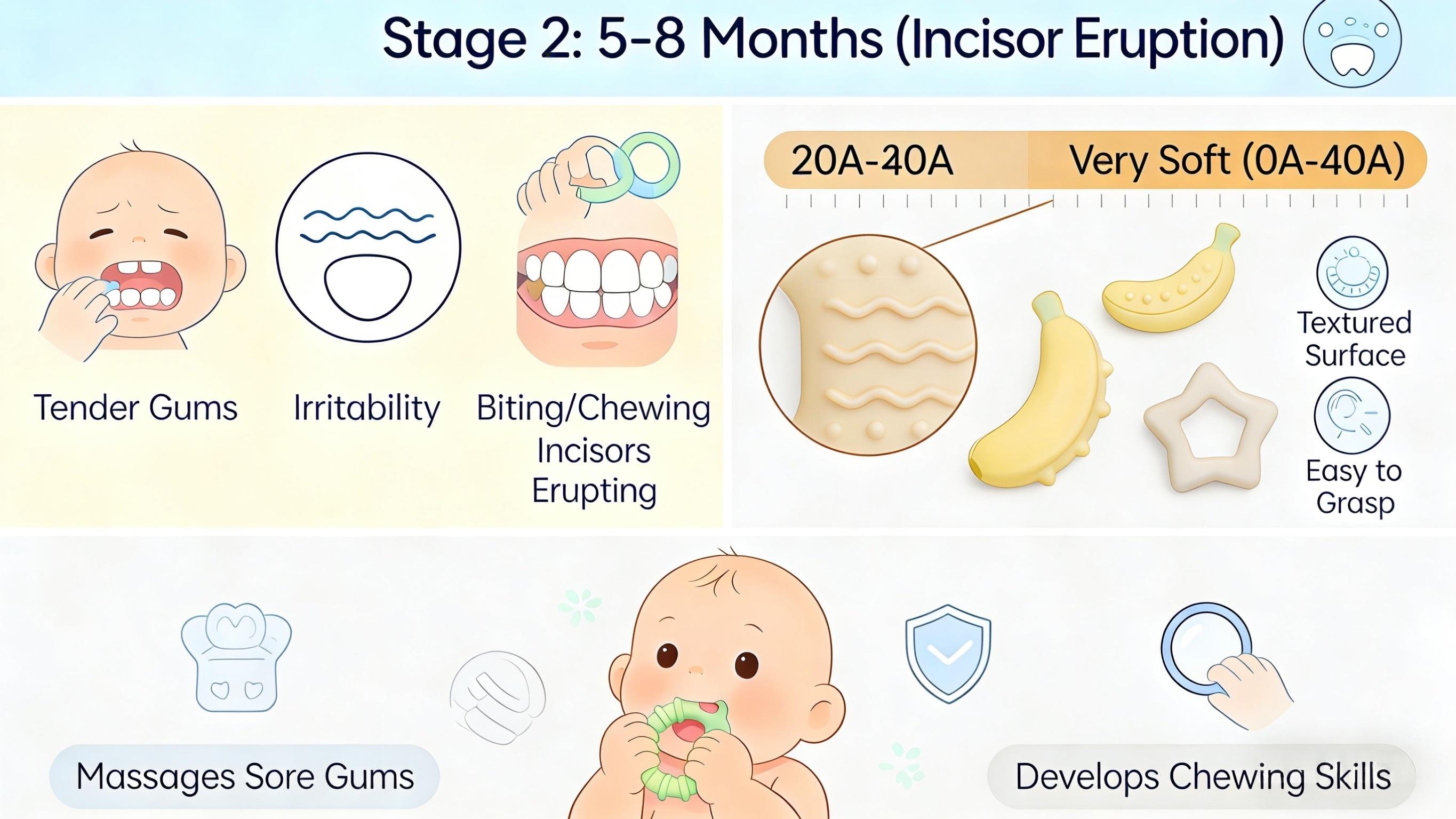
Stage 2: 5-8 Months (Incisor Eruption)
Developmental Characteristics:
Gums become tender in this stage as babies' front teeth, especially the upper and lower incisors, start to emerge. Babies show irritability, biting, and gum chewing.
Recommended Hardness:
Soft to Medium (20A - 40A)
Material & Shape:
Silicone teethers for this stage are made slightly firmer yet gentle. To help relieve pressure on emerging teeth, textured surfaces coordinate. Ergonomic designs make it easy for babies to hold.
Core Function:
Silicone teether promotes oral sensory development, massages sore gums, and ensures safe chewing habits.
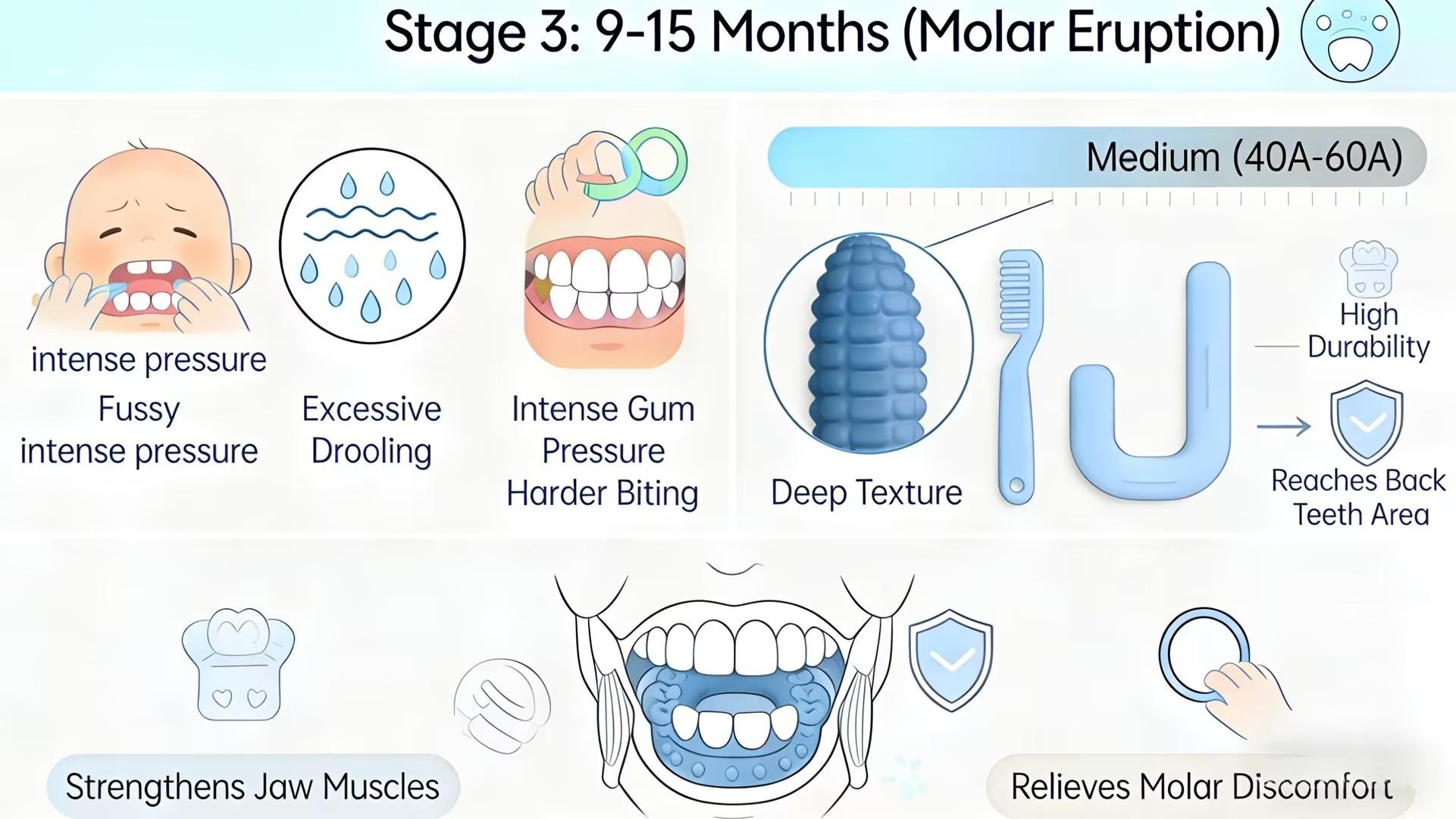
Stage 3: 9-15 Months (Molar Eruption)
Developmental Characteristics:
With the emergence of Molars, babies are more fussy, drool more, and face intense pressure on their gums and discomfort. Babies bite harder and show mood swings during feeding.
Recommended Hardness:
Medium (40A – 60A)
Material & Shape:
Silicone teethers are designed to reach molars, with deeper ridges and textures safely. At this stage, teethers are durable, textured, and thicker.
Core Function:
To promote jaw muscle development and support strong biting motions, these teethers help reduce pain from larger teeth.
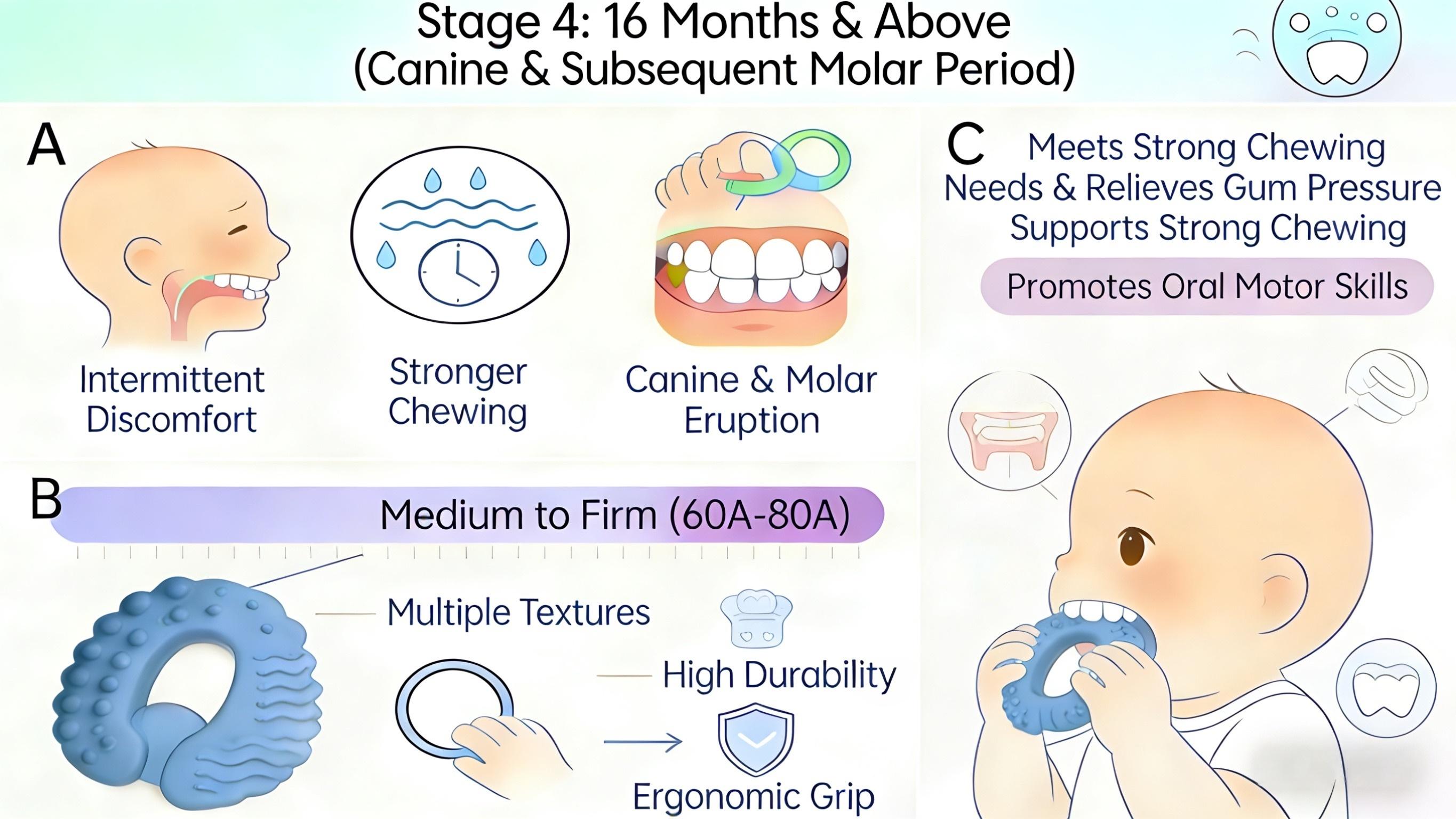
Stage 4: 16 Months & Above (Canine & Subsequent Molar Period)
Developmental Characteristics:
Later molars and canines develop at this stage. The emergence of teeth causes intermittent teething discomfort. Babies may prefer harder surfaces as chewing becomes stronger.
Recommended Hardness:
Medium to firm (60A – 80A)
Material & Shape:
Silicone teethers have varied textures, are slightly firmer, and are robust enough to reach different areas of the gums effectively. Ergonomically designed for a better grip.
Core Function:
To support chewing needs for larger teeth, these teethers enhance oral motor development safely and relieve gum pain.
Why is Silicone the Best Choice for a Teether?
To ensure babies’ safety and to help select the right teethers for their teething stage, silicone teethers are ideal. These teethers provide a balance of softness and durability. Hardness levels vary by teething stage. Soft teethers allow gum stimulation, while firmness supports the eruption of canines and molars.
Silicone is a better choice for teething; it is easy to clean, resistant to bacteria, and safe for long-term use. It ensures consistent quality across different teether stages and designs, making them ideal for teething babies.
Controlled Shore Hardness (Shore A):
Shore helps manufacturers measure the hardness of teethers. Teethers are designed to be soft enough to protect against injury and firm enough to meet babies and deliver effective pressure relief.
Food-Grade Safety:
Silicone teethers are BPA-free and non-toxic. They are made to fulfill food safety standards, making them ideal for babies to suck and chew continuously.
Temperature & Chemical Resistance:
Silicone teethers can withstand chilling and boiling, making them ideal for use at both high and low temperatures. They maintain safety and hygiene by resisting cleaning agents and chemicals.
Durability & Tear Resistance:
Silicone teethers last throughout the teething stage, due to their high durability and resistance to tearing and breaking.
Hypoallergenic Properties:
Babies’ gums are highly sensitive and may cause irritation and allergic reactions to foreign objects. Silicone teethers are hypoallergenic and non-reactive, thus minimizing the risk of any allergic reaction or irritation.
Understanding Silicone Shore Hardness
To determine the hardness of teethers, Shore hardness is used to measure the resistance of a material to the intended firmness. For silicone teethers, Shore A is used as standard. Shore A consistency in teethers makes them balanced in terms of softness and hardness. Teethers are made not so soft that they tear easily, nor are they so hard that they cause any injury. Silicone teethers prioritize safety and gain parents' confidence.
Scale Type | Measurement Object | Typical Applications | Indenter Shape | Hardness Range |
Shore A | Medium-Hardness to Soft Elastomers | Most Common, e.g., Silicone Products (Teethers, Kitchenware), Tire Treads, Shoe Soles, Seals, Phone Back Cases. | Blunt Round Tip | 0A - 100A |
Shore C | Harder Elastomers | Materials harder than Type A, e.g., hard rubber, plastic sheets, resin. | Sharp Cone Tip | 0C - 100C |
Shore O / OO | Very Soft Foam, Gel | Memory Foam, Gel Cushions, and Extremely Soft Silicone Toys. | Spherical Ball Tip | Very Soft Range |
Shore A
Explain about Shore A as a hardness measuring standard, its safety matching, the impacts of too hard to too soft, and quality consistency across manufacturers. All should be covered in 2 paragraphs; each paragraph must have a length of 3 to 4 sentences.
0A – 20A:
Extremely soft, suitable for very young infants (0-4 months). Provides gentle gum stimulation and minimal resistance to biting.
20A – 40A:
Soft, ideal for incisor eruption (5-8 months). Relieves mild gum discomfort while being easy to chew.
40A – 60A:
Medium, suitable for molar eruption (9-15 months). Firm enough for effective chewing and gum massage without causing harm.
45A – 50A:
Moderate softness for mixed-stage teethers. Balances comfort and pressure relief for emerging molars and incisors.
60A – 80A:
Medium to firm, suitable for later teething stages (16+ months). Supports stronger chewing and helps relieve pressure from larger teeth.
80A – 100A:
Firm, generally not recommended for young babies. It may be used as a specialized teether for older toddlers who require stronger gum massage.
Common Misconceptions
Harder teethers are unsafe: Properly measured Shore A hardness ensures firm teethers are safe and effective.
Bigger teethers are safer: Size must match the baby's age and grip ability to prevent choking hazards.
Softer is always better: Extremely soft teethers may not provide effective relief for molars.
All silicone is the same: Quality, hardness, and food-grade safety vary across manufacturers.
Chilling teethers is harmful: Cold teethers can safely soothe sore gums if designed for temperature resistance.
KEAN Solutions
KEAN manufactures scientifically designed teethers that meet babies’ teething developmental stages and match hard or soft teethers. Each of our products undergoes extensive research before manufacturing to ensure the shape, texture, and teether’s material meet consumers’ expectations and the target age range.
KEAN, with over 15 years of experience, offers brands extensive customization variety, including logos, unique designs, and colors, to help them stand out from competitors. This method delivers safe, functional, and appealing teethers for babies and parents alike.
Additionally, KEAN supports promotional graphics, educational content, and copy that highlights product benefits through marketing. This combined effort helps brands communicate the innovation, safety, and effectiveness of their silicone teethers to safety-conscious customers. Businesses and Brands can trust KEAN for quality products and after-sales services.
FAQ
Q1: Can a silicone teether be boiled or sterilized?
A: Yes, as per the formulation, the silicone teethers are heat-resistant and can be boiled or sterilized safely without losing shape, hardness, and actual performance.
Q2: How do I know which Shore hardness is suitable for my baby?
A: Refer to the teething stage and age-based hardness recommendations, e.g., 0A-20A for 0-4 months, 40A-60A for 9-15 months. The parents can easily choose the relevant teether with the required hardness.
Q3: Are chilled teethers better for teething pain?
A: Yes, teethers are designed to bear temperature (both high & low), so they can be safely chilled to soothe sore gums more effectively.
Q4: Should we choose Teethers based on age or teething stage? What is Recommended?
A: In general, both factors must be considered important, but parents should focus more on the teething stages. Babies may progress through different teething stages at various ages.
Q5: Slicone Teethers Vs. Rubber (latex) Teethers? Which one stands on top?
A: Silicone teethers are generally safer, hypoallergenic, and odorless than latex rubber. The rubber material can cause allergic reactions and is prone to odors.


