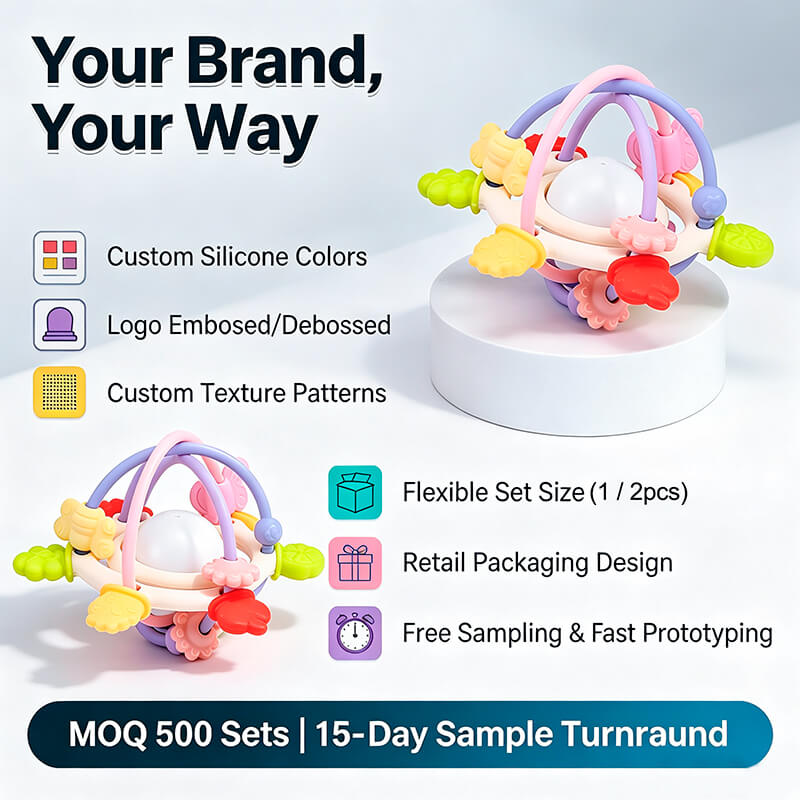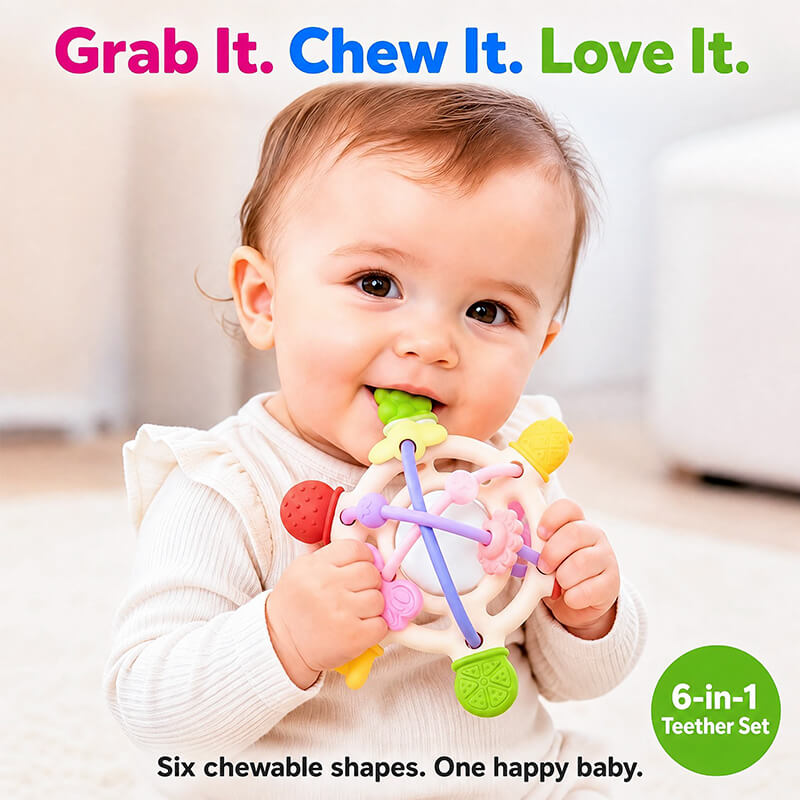
From a familiar grasping structure to a fruit-inspired sensory experience: a closer look at design innovation, color strategy, and manufacturing details for baby-product brands.
The Manhattan-style teether has earned a place in the baby sensory toy category through its distinctive open structure, flexible loops, and multiple grasping points. Yet as more brands introduce similar sensory balls and teething toys, the challenge is no longer simply to offer the familiar shape. It is to give buyers and consumers a clear reason to choose one design over another.
For baby-product brands, this creates a product-development question: how can a familiar toy structure be made more distinctive without losing the interaction that makes it useful?
KEAN’s new TR110 Fruit Manhattan Teething Toy approaches this challenge by combining the recognizable Manhattan structure with a coordinated fruit-and-garden theme. Instead of relying on a random mix of bright colors, it uses a soft milk-white body, fruit-inspired chewing elements, and movable butterfly, bee, and flower accessories to create a more intentional visual and sensory experience.
Compared with a conventional multicolor Manhattan ball, the new design offers a different product story—one that connects tactile exploration, grasping, sound, and visual recognition. For brands seeking to expand their baby teether collections, it also builds on KEAN’s existing Manhattan teether development experience.
The Challenge: Many Manhattan Teethers Look Similar
The classic Manhattan sensory ball is recognizable because of its open, loop-based structure. Flexible silicone strips create multiple points for babies to hold, pull, and explore. Many versions also combine silicone with a plastic component and incorporate a rattle for sound feedback.
This familiar format offers practical design advantages, but it can also create a differentiation challenge for product buyers. When competing products share similar structures, a change in color alone may not be enough to establish a distinctive identity for a brand.
A conventional multicolor design can provide visual stimulation, but numerous colors competing for attention may also make the overall appearance feel busy. A basic fruit-shaped teether, meanwhile, may communicate a recognizable theme without offering the wider grasping structure and additional interaction points associated with a Manhattan-style toy.
For product developers, the opportunity is to combine the strengths of both concepts: the recognizable grasping structure of a Manhattan toy and the more coherent storytelling potential of a fruit-inspired design.
That is the thinking behind KEAN’s TR110. It retains the multi-directional structure while developing the product around a clearer visual hierarchy, coordinated fruit colors, and small movable garden-themed accessories.
New TR110 vs. the Classic Manhattan Teether: What Has Changed?
KEAN’s earlier TR070 Manhattan Teether established a foundation around an open grasping structure, silicone loops, and an internal rattle. The new TR110 Fruit Manhattan builds on this familiar product concept by introducing a more developed fruit-and-garden theme.
The two products serve different positioning opportunities rather than representing a simple replacement of one design by another.
Design dimension | Classic Manhattan-style teether, such as TR070 | New TR110 Fruit Manhattan |
Core concept | Open-loop sensory and grasping toy | Fruit-and-garden sensory toy |
Visual identity | Multicolor Manhattan structure | Soft milk-white body with coordinated colorful elements |
Chewing elements | Multiple silicone contact points | Fruit-inspired chewing elements in recognizable colors |
Additional details | Focus on the core loop structure and sensory interaction | Movable butterfly, bee, and flower accessories |
Play interaction | Grasping, pulling, chewing, shaking, and sound feedback | Grasping, chewing, shaking, sound feedback, and exploring movable details |
Brand storytelling | Classic sensory teether | Nature-inspired sensory collection with fruit and garden imagery |
Assortment strategy | Core Manhattan-style product | Themed extension for a differentiated baby-product range |
The key distinction is the design language. TR110 does not abandon the familiar Manhattan structure; it gives that structure a more specific visual identity.
For a brand owner, this means the product can be presented not only as another Manhattan teether, but also as part of a broader collection built around fruits, flowers, butterflies, and bees.
A Fruit-and-Garden Theme That Gives Every Detail a Purpose
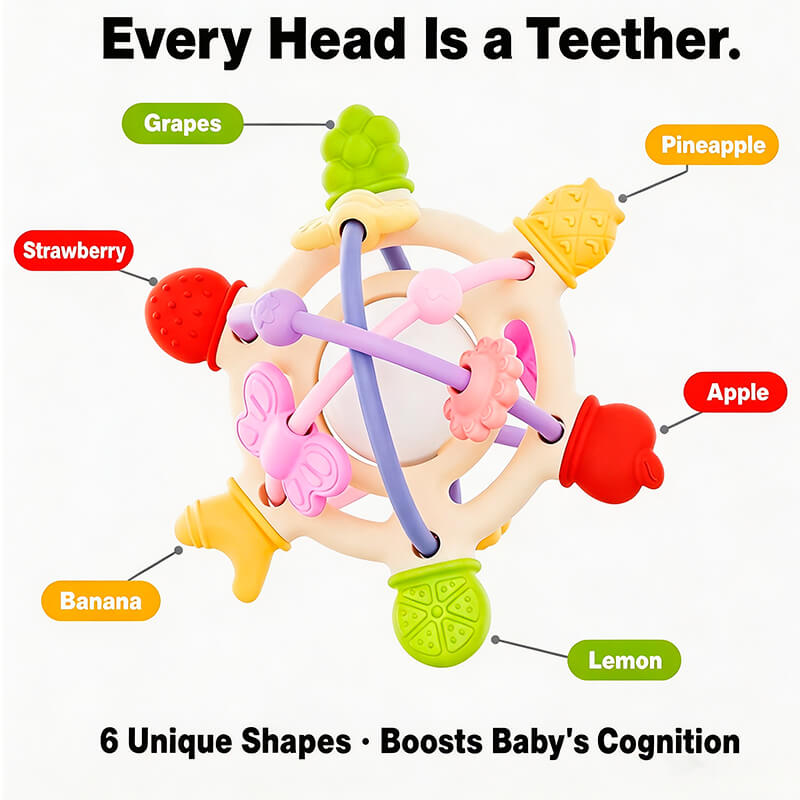
A strong product theme should be visible in the product itself, not just in its packaging or marketing copy.
TR110 uses recognizable fruit forms—including grape, strawberry, apple, lemon, banana, and pineapple—to establish its central theme. Its silicone chewing elements use coordinated colors that correspond more closely to familiar fruit colors, helping the different components feel connected rather than randomly mixed.
The main body uses a soft milk-white color. This creates visual contrast with the colorful fruit elements and helps establish a clearer hierarchy between the overall structure and the areas intended to attract attention.
The design also introduces movable bee, butterfly, and flower accessories. These elements extend the garden concept beyond the fruit shapes and create additional details for babies to explore through supervised handling.
For product designers, this is a useful example of how a themed sensory toy can be developed as a coordinated system:
Shape communicates identity: Fruit forms make the product concept easier to recognize.
Color supports visual organization: Coordinated colors help distinguish the different chewing elements.
The main body creates contrast: A lighter base allows the colorful elements to stand out.
Movable details add interaction: The bee, butterfly, and flower introduce additional points of exploration.
This design approach also supports more consistent marketing. Product photography can focus on the fruit elements, the movable accessories, the open-loop structure, and the overall color palette without needing to invent a separate story for each component.
For brands planning a new baby sensory collection, this provides a clearer starting point for packaging, product-page visuals, and coordinated color development.
Beyond Chewing: Grasping, Sound, and Sensory Exploration
|
|
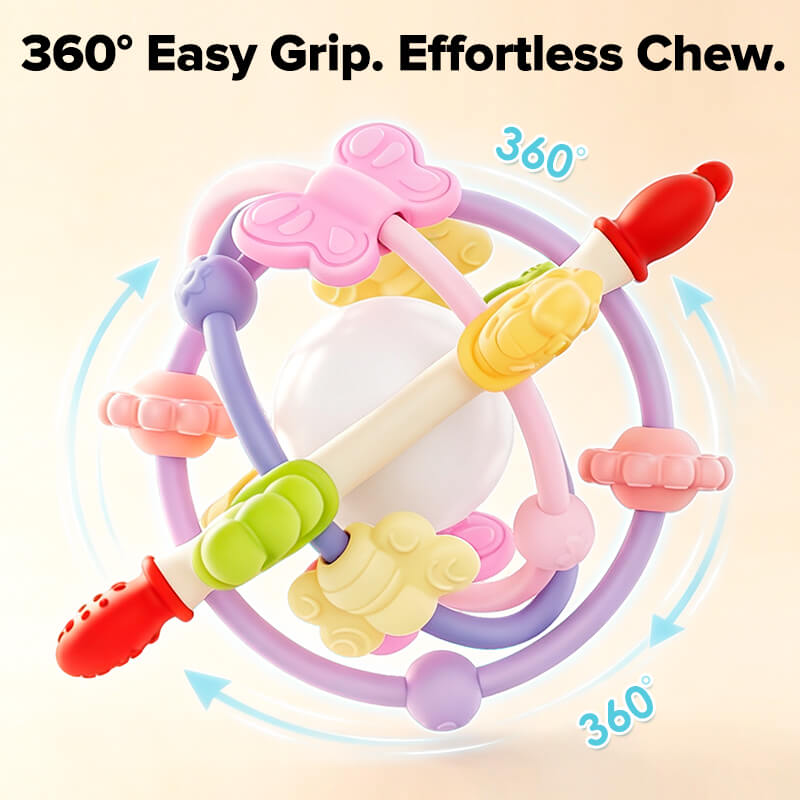
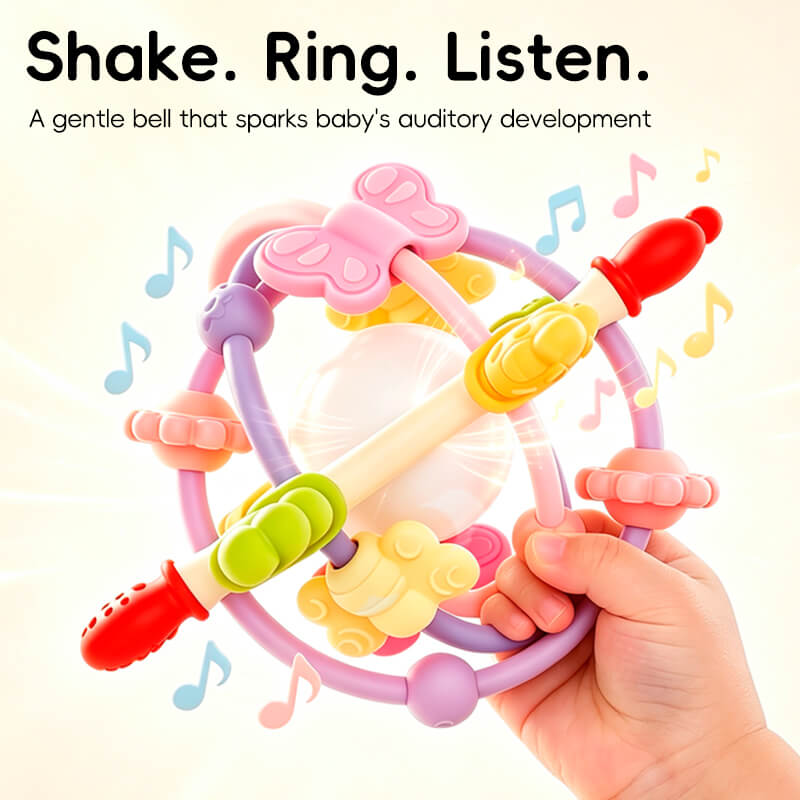
A teether is often marketed primarily around its chewing function. However, a multifunctional sensory toy can offer a broader interaction sequence.
With TR110, the open Manhattan structure provides multiple grasping positions. The silicone loops and fruit-shaped elements create different forms to hold and explore. The internal rattle produces sound feedback when the toy is shaken, while the movable garden-themed accessories introduce additional details for supervised interaction.
The resulting play sequence can include:
Grasp → Touch → Chew → Shake → Listen → Explore
Each action reflects a different aspect of the product’s design. The open structure supports grasping from different directions; the fruit elements provide recognizable shapes and tactile surfaces; and the internal rattle adds an auditory element.
These features create opportunities for sensory exploration and hands-on interaction. They should not be interpreted as a guarantee of a specific developmental outcome, and the product’s suitability should always be assessed against its specified age grading and safety requirements.
For B2B buyers, the commercial benefit is a more complete product proposition. Rather than relying on a single function, TR110 can be presented through several visible features that are easy to demonstrate in product images and short promotional videos.
The Manufacturing Details Behind the Design
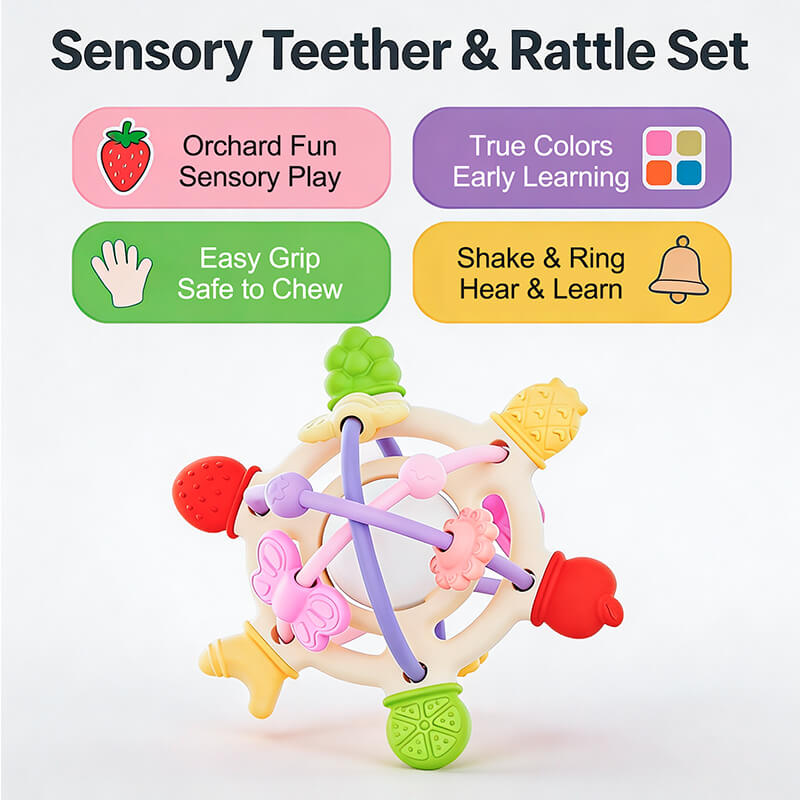
The visual simplicity of a sensory toy can conceal a complex combination of components, materials, and production requirements. For a fruit-themed Manhattan teether, consistency matters not only in the overall structure but also in the relationship between the silicone elements, plastic components, colors, and movable accessories.
TR110 uses silicone for its main body and fruit-inspired elements, alongside ABS components associated with the internal rattle structure. Its design also incorporates separate silicone cords and movable decorative pieces.
Several manufacturing considerations are particularly relevant to this configuration.
Silicone molding and shape consistency
The open-loop structure needs to maintain its intended geometry while providing the flexibility associated with the product concept. Fruit-shaped chewing elements also require consistent contours and finishing so that each piece remains visually recognizable.
During production, mold design, dimensional checks, surface quality, and part-to-part consistency all contribute to the finished appearance.
Multi-color control
TR110 includes multiple silicone colors across the main body, cords, fruit elements, and decorative accessories. The product specification defines Pantone references for these color groups, giving the development process a more precise basis for color approval.
For B2B customers, color consistency is especially important when the product is part of a larger collection. Differences between approved samples and mass-produced components can affect the overall visual balance of the finished product.
A structured color-development process should therefore include reference confirmation, sample approval, and appropriate production checks.
Integration of the internal rattle
The rattle adds sound feedback to the toy, but it also introduces a different material and internal structure. The ABS component needs to be evaluated as part of the finished product, including its retention, durability, and interaction with the surrounding construction.
This is important because a product made primarily from silicone is not necessarily a one-piece, all-silicone product. Buyers should understand the complete material configuration and the requirements that apply to each component.
Movable accessory design
The bee, butterfly, and flower details help distinguish TR110 from a more conventional Manhattan ball. Their dimensions, movement, attachment, and resistance to foreseeable use need to be considered during design validation and finished-product evaluation.
For products intended for babies, movable elements must be assessed carefully to ensure that they do not create unacceptable detachment or small-part hazards. The finished product—not just the individual material components—must meet the applicable safety requirements for its intended market.
For manufacturers, the challenge is to preserve the intended interaction and visual design while maintaining repeatable production quality.
Material and Care Requirements: What Buyers Should Know

TR110’s product information specifies silicone with a temperature range of -40°C to 200°C and ABS with a temperature range of -30°C to 80°C. These are material specifications, not a statement that the entire assembled product can safely undergo every high-temperature cleaning method.
Because the toy incorporates an internal ABS rattle structure, care instructions should account for the complete assembly rather than only the silicone body. KEAN’s product information recommends cleaning with water or a mild detergent and avoiding prolonged soaking; the product should be thoroughly dried after cleaning.
Buyers should confirm the final care instructions and applicable testing documentation for the intended market before publishing product claims. In particular, the presence of silicone should not be used to imply that the entire product is automatically suitable for boiling or steam sterilization.
The product information also recommends adult supervision, inspection before use, and discontinuing use if damage, cracks, or loose components are found. These points should be reflected in the final product documentation and consumer-facing instructions.
For B2B brands, clear material and care information is part of responsible product development. It also helps prevent mismatches between the product’s actual construction and the claims made on packaging or online listings.
Building a Manhattan Teether Collection, Not Just a Single SKU
|
|
|
|
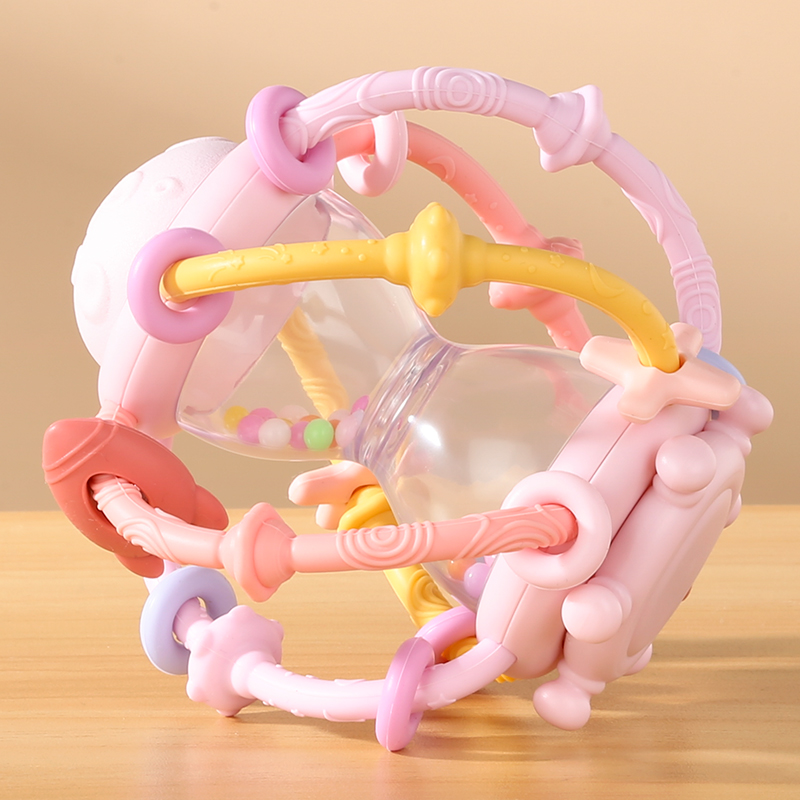
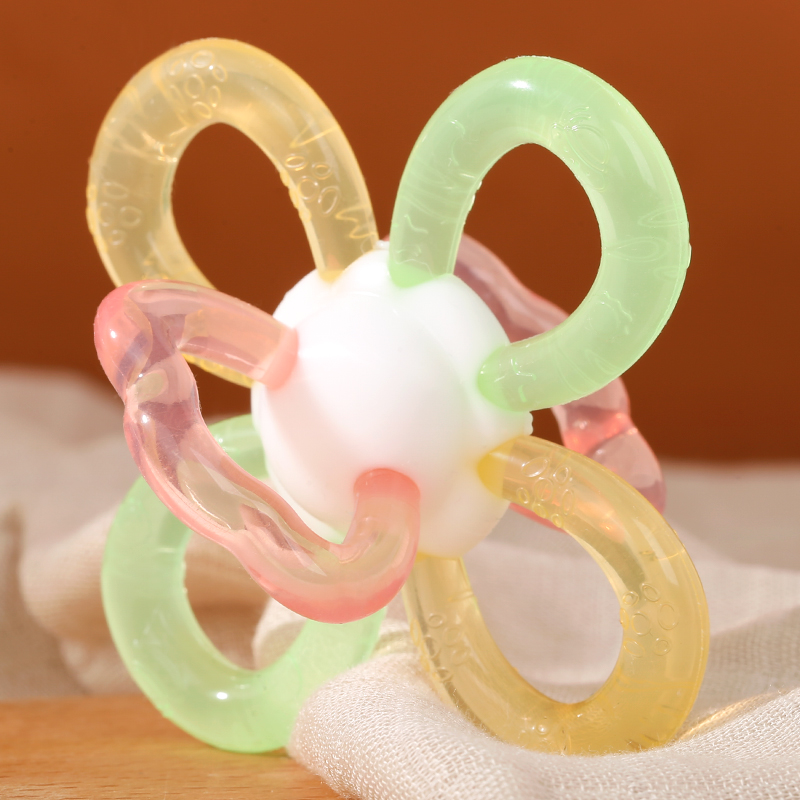
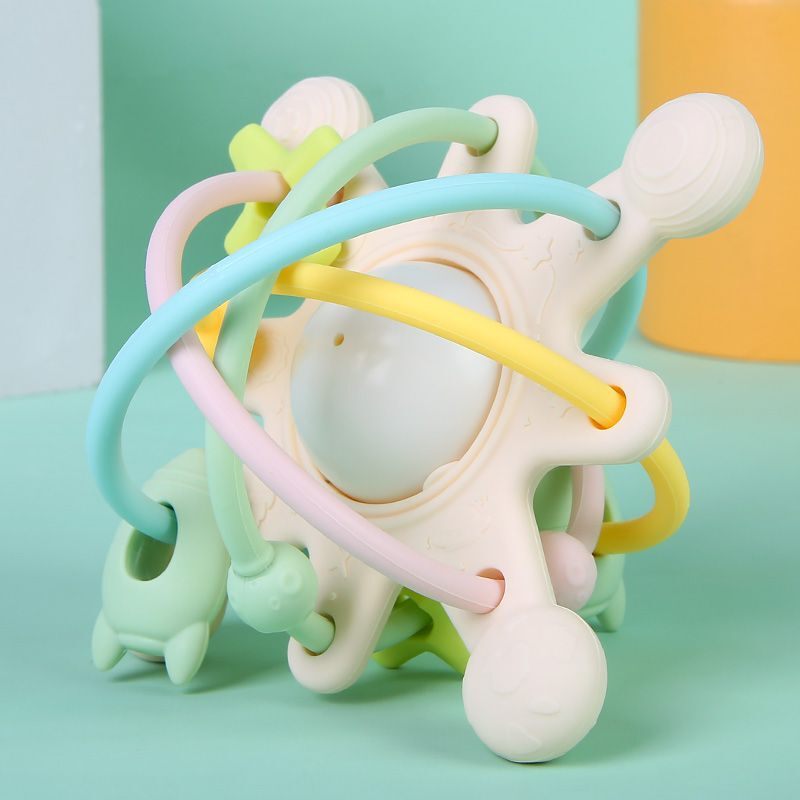
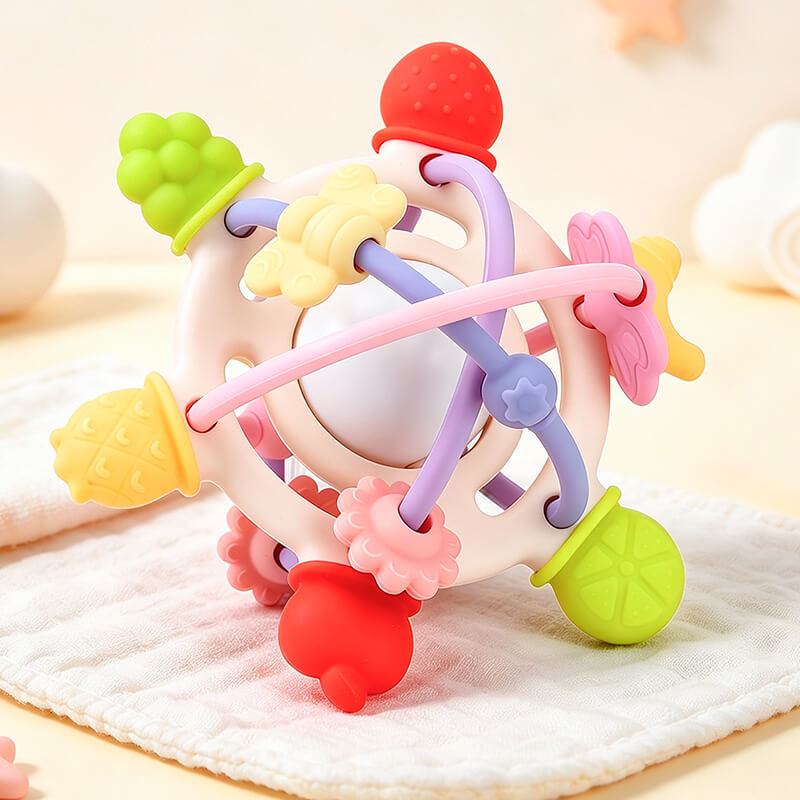
The new TR110 can be positioned alongside KEAN’s existing TR070 Manhattan Teether as part of a broader sensory teether assortment.
The classic TR070 provides a more traditional Manhattan-style product option, while TR110 introduces a fruit-and-garden theme with coordinated colors and movable details. Keeping both design directions available allows brands to consider different visual preferences and merchandising strategies without treating them as identical products.
For example, a brand may choose the classic Manhattan design as a core sensory-toy item and use TR110 as a themed extension. Alternatively, the two designs can be evaluated as part of a wider collection that includes fruit-shaped teethers, rattles, and other silicone baby sensory products.
This approach creates several opportunities for product planning:
Portfolio differentiation. Different designs can address distinct visual identities while remaining within the broader teether and sensory-toy category.
Coordinated color development. Brands can explore a consistent color language across selected products, subject to product-specific design requirements.
Private-label customization. Logo placement, color development, packaging, and other customization options can be evaluated according to the structure of each product.
Content diversification. The classic Manhattan design can be promoted around its recognizable open structure, while TR110 can be presented through fruit recognition, garden-themed details, and multi-sensory interaction.
The goal is not simply to increase the number of SKUs. It is to give each product a clear role within the collection.
OEM/ODM Opportunities for Baby-Product Brands
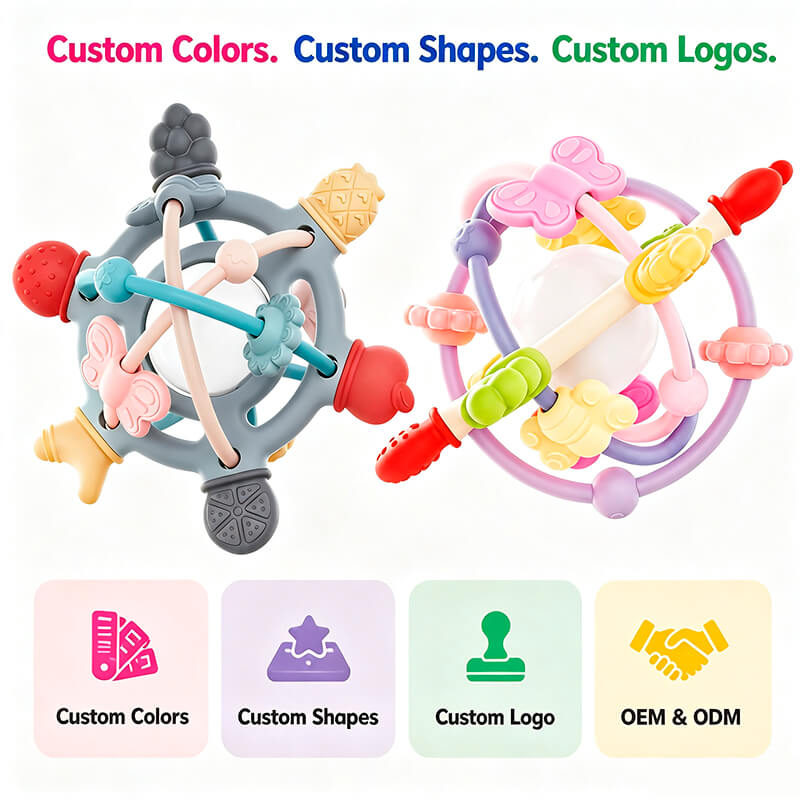
For brand owners, importers, distributors, and sourcing teams, product differentiation must connect to a practical development and manufacturing plan.
KEAN supports OEM/ODM discussions around silicone product development, including custom colors, logo solutions, product-shape development, and packaging options. For TR110, buyers can begin by evaluating the existing design, confirming the required market documentation, and identifying any changes needed for their own product range.
A development discussion should cover the intended market and age grading, final material configuration, color references, logo and packaging requirements, quality-control expectations, and the applicable testing needed for the finished product.
The product specification lists a suggested OPP-bag package. Brands requiring retail-ready packaging should confirm the available options and final requirements before production.
For customers considering both TR070 and TR110, it is also worth discussing how the two products could be presented as distinct items within one coordinated assortment.
Explore the new product: TR110 Fruit Manhattan Teething Toy
Explore the classic design: TR070 Manhattan Teether Toy
Conclusion: Familiar Structure, More Distinctive Product Identity
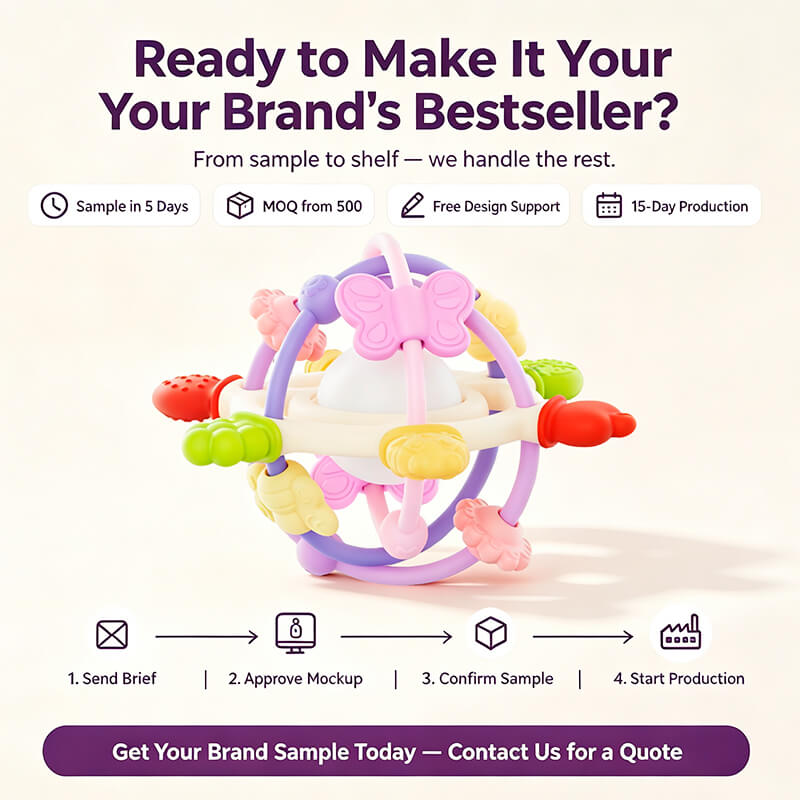
The next step in Manhattan-style teether development is not necessarily to change the entire structure. It can be to rethink the visual language, the arrangement of sensory elements, and the way each component contributes to the overall experience.
KEAN’s new TR110 Fruit Manhattan Teething Toy combines a familiar open-loop structure with a fruit-inspired theme, coordinated natural-color references, movable garden accessories, and internal rattle feedback. Compared with a conventional multicolor Manhattan ball, it offers a more specific design identity and additional storytelling opportunities for baby-product brands.
Alongside the existing TR070 Manhattan Teether, TR110 gives buyers another direction to consider when developing a sensory-toy assortment. With the right material review, design validation, quality controls, and market-specific documentation, the two products can serve different roles within a broader collection.
For B2B customers, the key is to choose a product whose differentiation is visible to the customer, supported by its actual design, and reproducible through a well-controlled manufacturing process.
Frequently Asked Questions
How is the new TR110 Fruit Manhattan different from a classic Manhattan teether?
TR110 combines the familiar open grasping structure with a fruit-and-garden theme, a soft milk-white main body, coordinated fruit-colored chewing elements, movable bee, butterfly, and flower accessories, and an internal rattle. The classic TR070 focuses more directly on the traditional Manhattan-style sensory structure.
What materials are used in TR110?
The product information specifies silicone and ABS. The silicone is used for the main body and associated silicone elements, while ABS is used in the internal rattle structure. Buyers should review the complete material specification rather than describing the assembled product as entirely silicone.
Can TR110 be customized for a private-label brand?
KEAN can discuss OEM/ODM requirements such as custom colors, logo solutions, and packaging options. Final feasibility depends on the product structure, artwork, order requirements, and the applicable production process.
What should buyers check before ordering a baby teether?
Buyers should verify the final product configuration, material specifications, age grading, component retention, applicable safety testing, care instructions, color consistency, and packaging requirements. The finished assembled product should be evaluated for the intended market.