


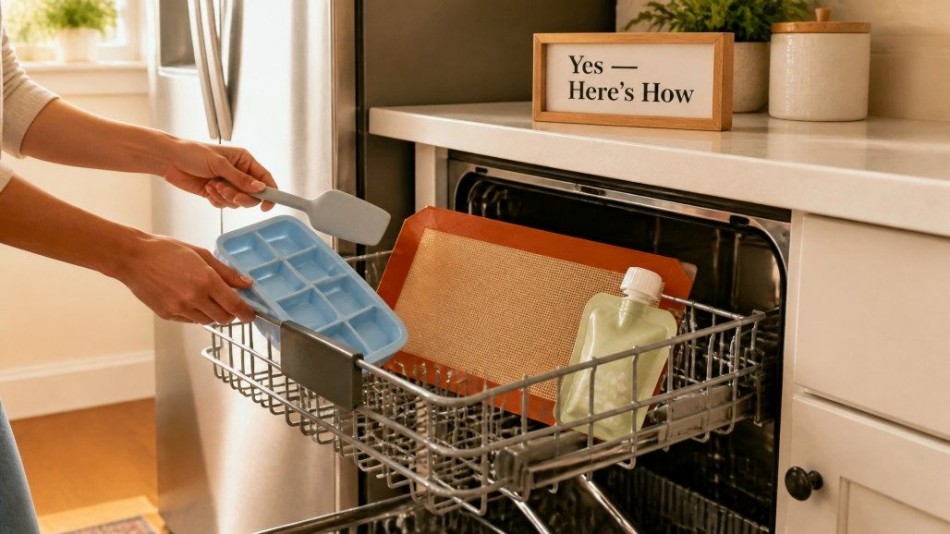
Yes — Here's What's Actually Safe
Direct Answer First
Yes — certified food-grade silicone is dishwasher-safe, with four conditions: use the top rack, choose a gentle cycle, avoid the heated dry cycle, and make sure the product is 100% food-grade silicone. Here's the verified reasoning:
Temperature margin is huge. Dishwashers run at 130–170°F (54–77°C) in wash cycles and up to ~180°F (82°C) drying . Food-grade silicone is rated for continuous use at 400–500°F (204–260°C) under FDA 21 CFR 177.2600 — the regulation governing rubber articles for repeated food contact . KEAN's own manufacturing spec cites heat resistance to 450°F for food-grade PDMS .
Chemical stability. Silicone doesn't react with alkaline dishwasher detergents, enzymes or rinse aids; it comes out the same as it went in .
The real risks are not the dishwasher — they're the product and the placement. Filler-containing "silicone" can discolor and stiffen ; contact with the bottom heating element can cause localized damage ; and the heated dry cycle is flagged by industry guidance as a no-go .
The one honest caveat: odor. Silicone absorbs odors — and some testers report dishwashers can leave a detergent taste or fail to remove freezer smells. The fix is baking (250–350°F, 20–40 min) for 100% silicone items .
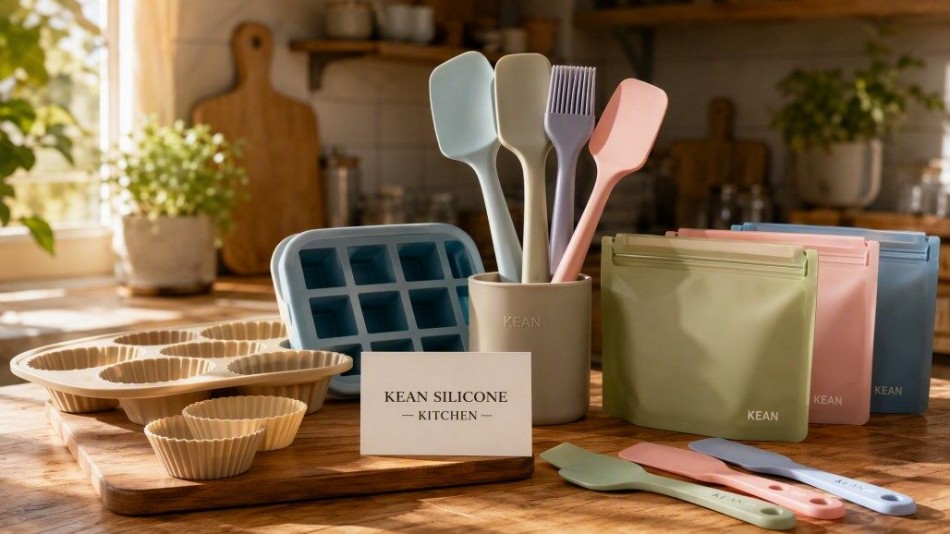
Kean Silicone, a Shenzhen-based manufacturer (est. 2006) of FDA/LFGB-certified food-grade silicone kitchenware — spatulas, baking molds, ice cube trays, food pouches and travel gear — publishes this same guidance for its wholesale and retail customers .
The Science: Why Silicone Survives the Dishwasher
Food-grade silicone is a synthetic polymer (polydimethylsiloxane, PDMS) approved by the US FDA for food contact . Its dishwasher compatibility rests on three verified properties:
Heat resistance far beyond dishwasher temperatures. Wash cycles reach 130–170°F; drying cycles up to 180°F . Silicone is rated to 400–500°F continuous use , with manufacturer specs at 450°F and European sources citing 230–250°C (446–482°F) . Dishwasher heat is nowhere near the degradation threshold.
Chemical inertness. Standard dishwasher detergents are alkaline, designed to break down grease and food residue. Silicone's inert molecular structure means it neither absorbs these chemicals nor has its surface altered by them .
Non-porous surface. Silicone has no microscopic channels to trap food particles, bacteria or oils. The combination of hot water and detergent reaches every surface — including crevices — making the dishwasher a more thorough clean than hand-washing for seamless, one-piece silicone tools . Water at 140–150°F kills the majority of common foodborne bacteria (per NSF food-equipment standards) .
When NOT to Put Silicone in the Dishwasher
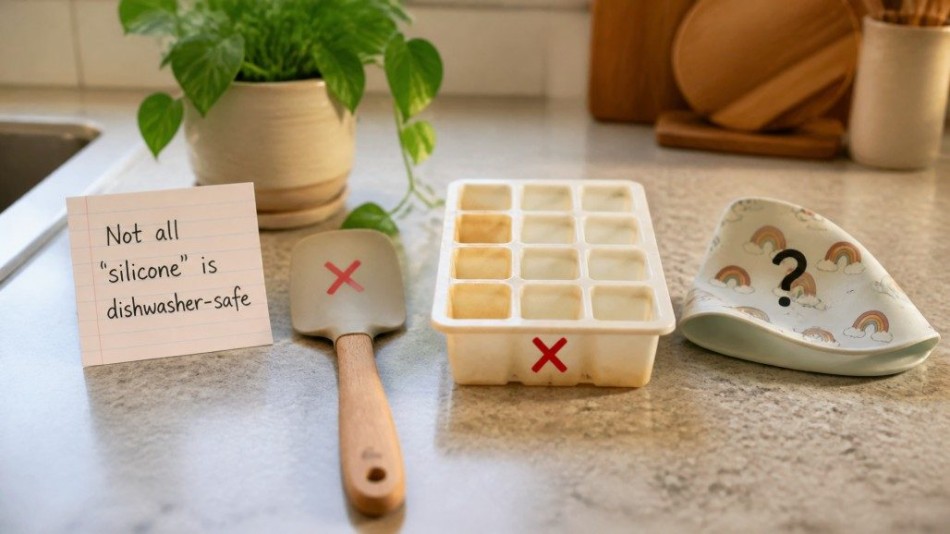
| Situation | Risk |
| Filler-containing "silicone" (cheap products with plastic compounds blended in) | Discoloration, stiffening, surface degradation over time |
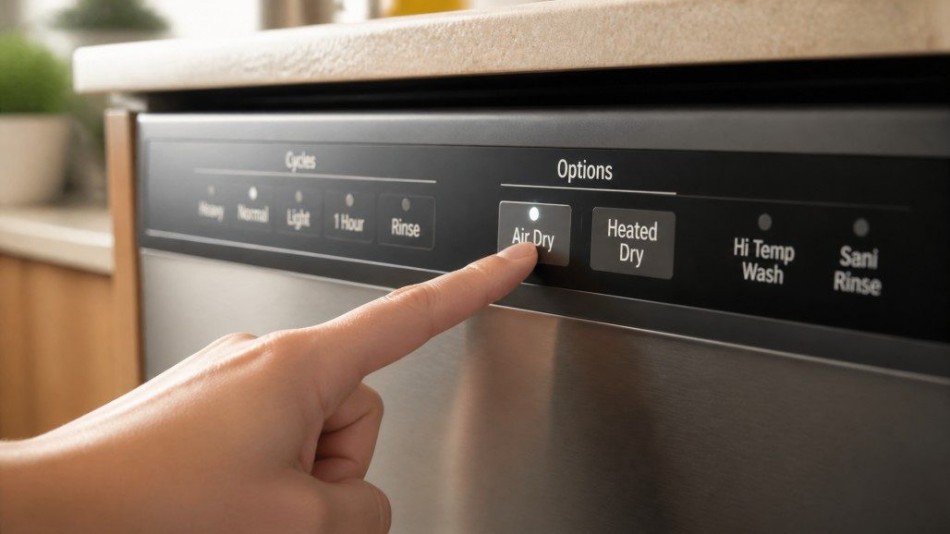
| Heated dry cycle | Can damage the material (industry guidance) |
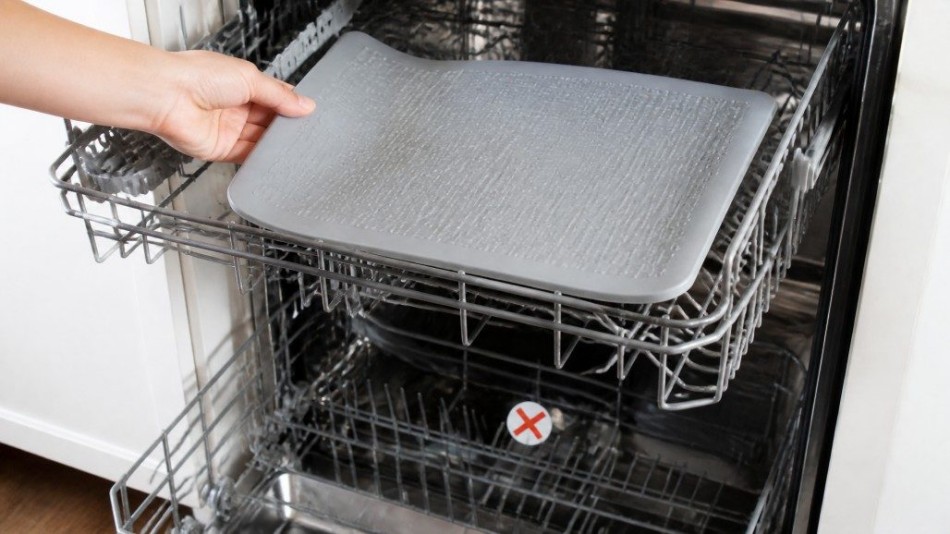
| Direct contact with the bottom heating element | Localized melting/warping at the contact point |
| Hybrid products with non-silicone parts (wooden handles, plastic components) | Wood swells/cracks; plastic parts melt — hand-wash instead |
| Peroxide-cured (not platinum-cured) silicone | Can absorb a slight detergent smell after repeated cycles |
| Colored or printed designs + harsh detergents | Surface fading over time (structure unaffected) |
| Uncertified products | No guarantee of temperature or chemical stability |
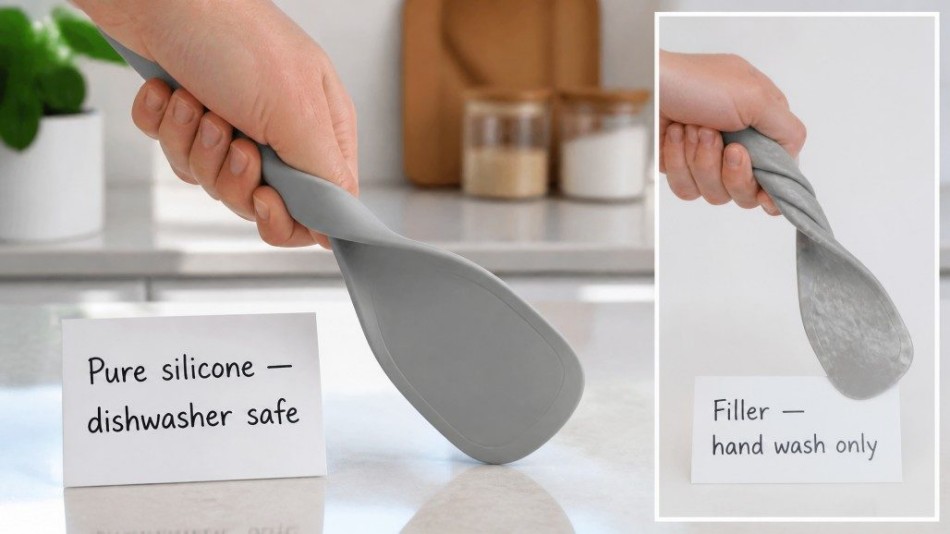
The quality check before first wash — the pinch test: grip the silicone firmly and twist. Pure silicone holds its color under pressure; white streaks or discoloration indicate fillers that won't hold up in the dishwasher .
Best-Practice Checklist for Dishwashing Silicone
 |  |  |
Synthesized from manufacturer and testing guidance :
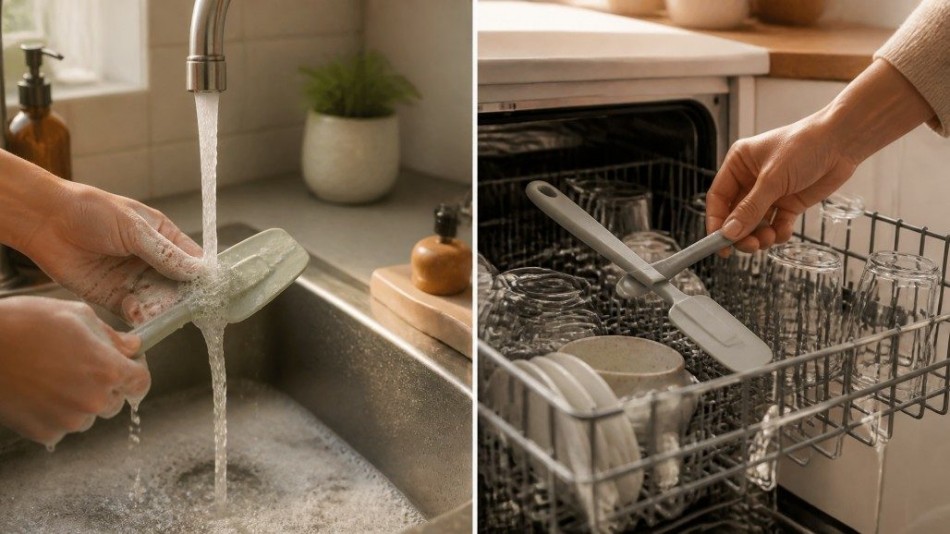
Load on the top rack. The top rack is farther from the heating element and receives gentler water pressure. Industry guidance is blunt: the bottom rack treats items "more like a pressure washer" than a gentle mist .
Choose a gentle or eco cycle. KEAN's manufacturing guidance recommends cycles below 140°F to protect elasticity — standard sanitizing cycles hit 150–160°F and can cause what it calls "micro-warping" . European guidance agrees: normal or eco programs, no intensive high-temperature cycles .
Skip the heated dry cycle. Avoid heated-dry, which can damage the material; air-dry instead .
Use mild detergent. Phosphate-free, non-abrasive, enzyme-based formulas prevent residue buildup, surface dulling and color fading. Harsh alkaline detergents can damage colored silicone . Ultra-concentrated or abrasive formulas are unnecessary .
Secure lightweight items. Prevent shifting, falling onto the element, or blocking water flow; use the silverware basket for small items and wedge larger tools between prongs .
Keep sharp objects away. Knife and fork edges can scratch silicone, creating crevices where bacteria can hide .
Unload promptly. Prolonged moisture can cause temporary clouding, odor retention and mildew; remove items when the cycle finishes and air-dry away from direct sunlight .
Inspect regularly. Check for cracks, tears, thinning, discoloration, tackiness or a persistent soapy odor — quality silicone shows no visible change after cycles; these signs indicate product quality issues or end-of-life .
The Odor Question: What Testing Actually Shows
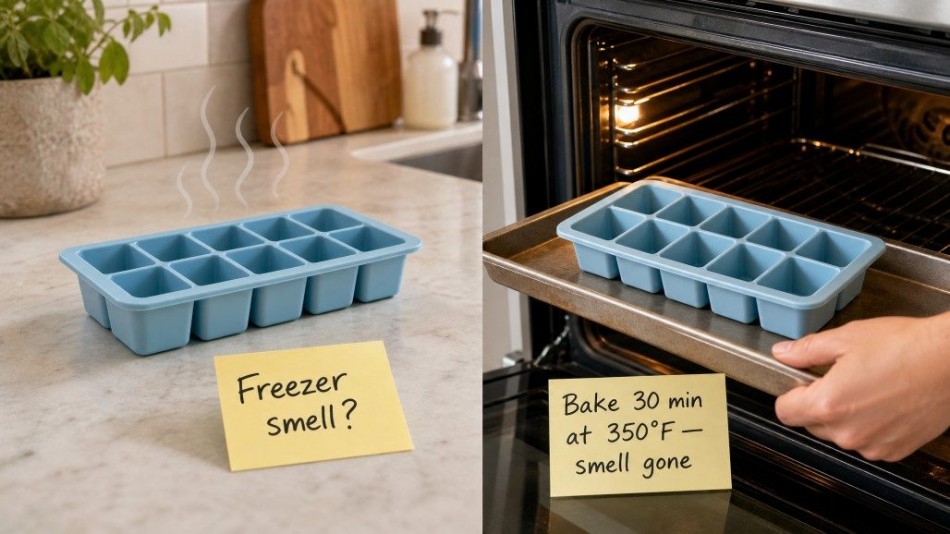 |  |
The one genuine limitation of silicone in the dishwasher is odor. Wirecutter's testing found that smells stick to silicone "like flies to flypaper" — and the dishwasher is not a reliable odor remover: it "might work, or it might not, or it might make your silicone taste like detergent instead" . Industry sources add that a persistent soapy odor after dishwasher runs usually signals lower-quality (peroxide-cured) silicone rather than a dishwasher problem .
Verified odor remedies:
Bake it out (most effective): 100% silicone only — preheat oven to 250–350°F, bake 20–40 minutes until the smell is gone. Wirecutter verified this on ice cube trays, pressure-cooker gaskets and travel-mug seals .
Vinegar soak: a 50/50 white-vinegar-and-water soak is only moderately effective — Wirecutter's testing found freezer smell "slightly reduced, but definitely still there" . For deep degreasing, a hot-water soak with white vinegar and bicarbonate is the industry recommendation .
Wash right after use: preventing odor buildup is easier than removing it .
Silicone vs Other Materials in the Dishwasher
| Material | Dishwasher safe? | Notes (verified) |
| Food-grade silicone | Yes (top rack, gentle cycle) | Heat-rated 400–500°F; chemically stable; doesn't shed microplastics |
| Plastic / nylon | Limited | Dishwasher heat and mechanical action can accelerate surface degradation; research (Heliyon, 2024) found plastic utensils shed microplastic particles into food during normal use — silicone does not |
| Wood | No | Sustained heat and moisture cause swelling, cracking, splintering; porous grain absorbs water and promotes bacterial growth |
| Stainless steel | Yes | Handles heat and detergent well, but can scratch nonstick cookware; silicone scratches nothing |
Dishwasher vs Hand Washing
Cleaning effectiveness: the dishwasher removes grease more consistently and sanitizes better (140–150°F water kills most foodborne bacteria) than most hand-washing . Hand washing offers more control for delicate or decorated items .
Longevity: neither method damages quality food-grade silicone under normal conditions; the small dishwasher risk is limited to heating-element contact, avoidable by top-rack placement .
Water use: modern dishwashers use 3–5 gallons per full cycle, vs up to 27 gallons hand-washing the same load .
How to Choose Dishwasher-Safe Silicone (Buyer's Checklist)
For consumers and B2B buyers alike, four markers separate reliable silicone from the rest :
Certifications: FDA 21 CFR 177.2600 (US) or LFGB (EU) approval for food contact, plus a clear heat-resistance rating .
Platinum-cured, filler-free: platinum curing leaves no residual byproducts and resists odor absorption; the pinch test reveals fillers .
100% silicone construction: seamless, one-piece designs sanitize fully and last; check labels for hybrid parts (wooden handles never go in the dishwasher) .
Manufacturer guidance: products explicitly certified "dishwasher-safe" by the maker — FDA/LFGB-approved food-grade silicone from a reputable manufacturer is confirmed safe for dishwasher cycles with zero chemical migration .
FAQ
1. Can silicone go in the dishwasher?
Yes — certified food-grade silicone can, with conditions: top rack, gentle/eco cycle, no heated dry, mild detergent . Filler-based or uncertified silicone should be hand-washed .
2. What temperature can silicone withstand in a dishwasher?
Dishwashers run 130–170°F (wash) and up to ~180°F (drying) ; food-grade silicone is rated for continuous use at 400–500°F (204–260°C) under FDA 21 CFR 177.2600 . The margin is enormous — heat is never the failure point in normal cycles.
3. Will the dishwasher damage silicone?
Not quality silicone: it's heat-resistant beyond dishwasher temperatures, chemically stable against detergents, and non-porous . The real risks are the heated dry cycle , direct heating-element contact , and low-quality filler products .
4. Why does my silicone smell after the dishwasher?
Two causes: silicone absorbs odors (it's gas-permeable), and lower-quality peroxide-cured silicone can absorb a soapy smell . Remedy for 100% silicone: bake at 250–350°F for 20–40 minutes , or deep-clean with hot water, white vinegar and bicarbonate .
5. Is the heated dry cycle safe for silicone?
Industry guidance says avoid it — the heated dry cycle can damage the material; air-dry instead . KEAN additionally recommends wash cycles below 140°F, noting sanitizing temperatures (150–160°F) can cause micro-warping in elastic silicone .
6. Can colored or printed silicone go in the dishwasher?
Yes, but harsh detergents may fade surface color over time — structure is unaffected . Mild, phosphate-free detergents preserve colored stock .
7. Can silicone baking molds and ice cube trays go in the dishwasher?
Yes — food-grade silicone molds and trays are dishwasher-safe on the top rack . For ice trays specifically, note that odors absorbed in the freezer persist through dishwashing; baking removes them .
8. How do I verify my silicone is dishwasher-safe?
Check for FDA/LFGB certification, a stated heat rating (400°F+), "100% silicone"/"platinum-cured" labeling, and manufacturer dishwasher-safe certification; perform the pinch test — white streaks under twist = fillers = not reliable .
Conclusion
The verified answer to "can silicone go in the dishwasher?" is yes — with quality and placement as the only variables. Food-grade silicone's 400–500°F heat rating gives it an enormous margin over the 130–180°F a dishwasher produces; its chemical stability and non-porous surface make it one of the easiest materials to sanitize . Follow the four rules — top rack, gentle cycle, no heated dry, mild detergent — and quality silicone will survive hundreds of cycles .
That's the standard Kean Silicone builds to. As a manufacturer of FDA/LFGB-certified food-grade silicone kitchenware and housewares — spatulas, baking molds, ice cube trays, food pouches and collapsible travel gear — we support global B2B clients with wholesale stock lines and custom OEM/ODM development, and we publish the same dishwasher-care guidance for our customers . Need a certified, dishwasher-safe silicone line for your market? Visit keansilicone.com to talk to our team.
Data Notes & Methodology
Temperature figures. Dishwasher operating ranges (130–170°F wash, 180°F drying) and silicone ratings (400–500°F continuous per FDA 21 CFR 177.2600; 450°F per KEAN's spec; 230–250°C per European sources) are cited to their sources at each point; figures differ by manufacturer and testing scope.
Odor and cleaning claims reflect hands-on testing by NYT Wirecutter and industry guidance ; individual results vary with product quality.
Regulatory basis. FDA 21 CFR 177.2600 (rubber articles intended for repeated use) was retrieved from the eCFR, current as of August 17, 2026 . FDA approval of food-grade silicone and dishwasher-safety statements are as reported by the American Chemistry Council's ChemicalSafetyFacts .
Dates. Sources were published between June 2018 and May 2026 ; all URLs were retrieved and verified on August 19, 2026.
References
U.S. Food and Drug Administration — 21 CFR 177.2600: Rubber articles intended for repeated use (eCFR, up to date Aug 17, 2026). https://www.ecfr.gov/current/title-21/chapter-I/subchapter-B/part-177/section-177.2600 (accessed Aug 19, 2026)
ChemicalSafetyFacts (American Chemistry Council) — Cooking with Silicones. https://www.chemicalsafetyfacts.org/health-and-safety/cooking-with-silicones/ (published Nov 19, 2024)
GIR — Is Silicone Dishwasher Safe for Long-Term Kitchen Use. https://gir.co/blogs/products/is-silicone-dishwasher-safe (published May 26, 2026)
Maé Innovation — Are silicone moulds dishwasher safe? https://mae-innovation.com/en/are-silicone-moulds-dishwasher-safe/ (published Jan 19, 2026)
KEAN (keantravel.com) — Can Silicone Kitchenware Be Put in the Dishwasher? https://keantravel.com/blogs/news/can-silicone-kitchenware-be-put-in-the-dishwasher (published Jan 21, 2026)
NYT Wirecutter — How to Get Smells Out of Silicone Kitchenware. https://www.nytimes.com/wirecutter/blog/how-to-get-smells-out-of-silicone-kitchenware/ (published Jun 18, 2018)
Lilly Teak — Are Silicone Utensils Dishwasher Safe? https://lillyteak.com/are-silicone-utensils-dishwasher-safe/ (published Dec 17, 2025)
Kean Silicone — official website. https://www.keansilicone.com/ (accessed Aug 19, 2026)


