Everything you need to know about silicone air fryer liners—benefits, safety, comparisons, and step-by-step usage.
Introduction
Air fryers have revolutionized home cooking, delivering crispy, delicious results with significantly less oil than traditional frying. But as with any popular kitchen appliance, questions arise about how to use it best—and safely.
One of the most common questions is: Can I use silicone in my air fryer?
The short answer is yes—but there are important caveats. Not all silicone is created equal, and using it correctly makes the difference between a convenient cooking experience and a potential kitchen disaster.
This comprehensive guide will answer all your questions:
Is silicone safe for air fryers?
How does it compare to parchment paper and aluminum foil?
What foods work best with silicone liners?
How do you clean and maintain silicone accessories?
What common mistakes should you avoid?
Is Silicone Safe for Air Fryers?
What Is Food-Grade Silicone?
Food-grade silicone is a synthetic polymer (polydimethylsiloxane, or PDMS) that combines silicon, oxygen, and carbon. It's not plastic—it's an elastomer, which means it's rubbery and flexible while being remarkably heat-resistant.
Key properties of food-grade silicone:
Non-toxic: BPA-free, phthalate-free, lead-free, and latex-free
Heat-resistant: Withstands temperatures from -40°C to 230°C (-40°F to 446°F)
Non-stick: Food releases easily without excessive oil
Chemically stable: Does not leach chemicals into food, even at high temperatures
Durable: Can be reused hundreds of times
Temperature Limits: How Hot Is Too Hot?
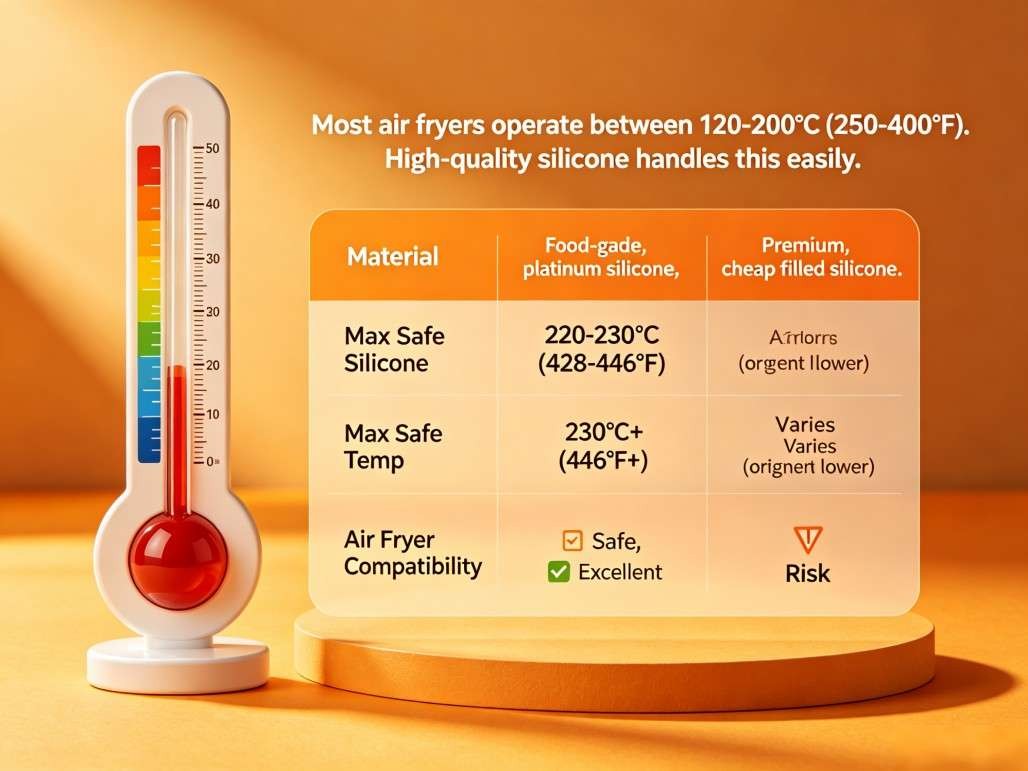
Most air fryers operate between 120°C and 200°C (250°F to 400°F). High-quality food-grade silicone is typically rated for temperatures up to 220°C–230°C (428°F–446°F) .
Material | Maximum Safe Temperature | Air Fryer Compatibility |
Food-grade silicone | 220°C–230°C (428°F–446°F) | ✅ Safe (most air fryers stay below 200°C) |
Platinum silicone (premium) | 230°C+ (446°F+) | ✅ Excellent |
Cheap/filled silicone | Varies (often lower) | ⚠️ Risk of melting or degradation |
Important: Silicone's actual melting point is around 1414°C (2577°F)—far beyond any home appliance. However, it can begin to degrade or warp if consistently used above its rated temperature. Always check your product's maximum temperature rating.
What the Experts Say
The FDA has approved food-grade silicone for use in kitchen products including baking molds, cupcake liners, food storage containers, and reusable straws.
The Chemical Safety Facts organization notes that silicone bakeware and cookware "can go from the freezer to the oven, microwave or dishwasher without affecting the quality of the product or the food".
Bottom line: When you buy high-quality, food-grade silicone from reputable manufacturers, it is safe for air fryer use.
Silicone vs. Parchment Paper vs. Aluminum Foil
One of the most common debates among air fryer users is which liner material works best. Each has its strengths and weaknesses.
Quick Comparison Table
Feature | Silicone Liner | Parchment Paper | Aluminum Foil |
Reusable | ✅ Yes (hundreds of uses) | ❌ No (single-use) | ❌ No (single-use) |
Upfront Cost | Higher ($10–20) | Low ($3–5 per roll) | Low |
Long-term Cost | Low (one-time purchase) | High (ongoing purchases) | High |
Airflow | Good (perforated versions best) | Good (perforated recommended) | Risky (can block airflow) |
Crispiness | Medium | Medium-High | High (if used correctly) |
Cleanup Effort | Wash after each use | Throw away | Throw away |
Environmental Impact | Low (reusable) | High (disposable) | High (disposable) |
Sticky Foods | Excellent | Excellent | Good |
Dishwasher Safe | ✅ Yes | ❌ No | ❌ No |
Deep Dive: Silicone Liners
Pros:
Reusable and eco-friendly: One liner can replace hundreds of parchment sheets
Easy cleanup: Most are dishwasher-safe; just wash and reuse
Non-stick surface: Food releases easily, even sticky items
Durable: Won't tear or puncture easily
Perforated options available: Allows hot air circulation for crispier results
Cons:
Higher upfront cost (typically $10-20 per liner)
Can slightly reduce crispiness compared to foil or perforated parchment
Bulkier to store than rolled parchment paper
Requires cleaning after each use (can't just throw away)
Best for:
Daily or frequent air fryer users
Those who want to reduce kitchen waste
Saucy or marinated foods
Everyday meals where cleanup is the priority
Deep Dive: Parchment Paper
Pros:
Zero cleanup—just toss after us
Low upfront cost
Good crispiness (especially perforated versions)
Disposable convenience
Cons:
Ongoing expense—costs add up over time
Environmental waste
Can burn if not weighed down by food
Must be perforated for best airflow
Best for
Occasional air fryer use
Sticky baked goods (cookies, pastries)
When you want maximum crispiness
Quick meals where you don't want to clean anythin
Deep Dive: Aluminum Foil
Pros:
Excellent for greasy meats—contains drippings
Can be shaped to fit any basket
High heat tolerance
Cons:
Risky for airflow—easily blocks circulation if not careful
Can react with acidic foods (tomatoes, citrus)
Single-use only
Not non-stick (food can stick badly)
Best for
Cooking greasy meats (bacon, sausages)
Containing messy drippings
Wrapping foods for even cooking
Which One Should You Choose?
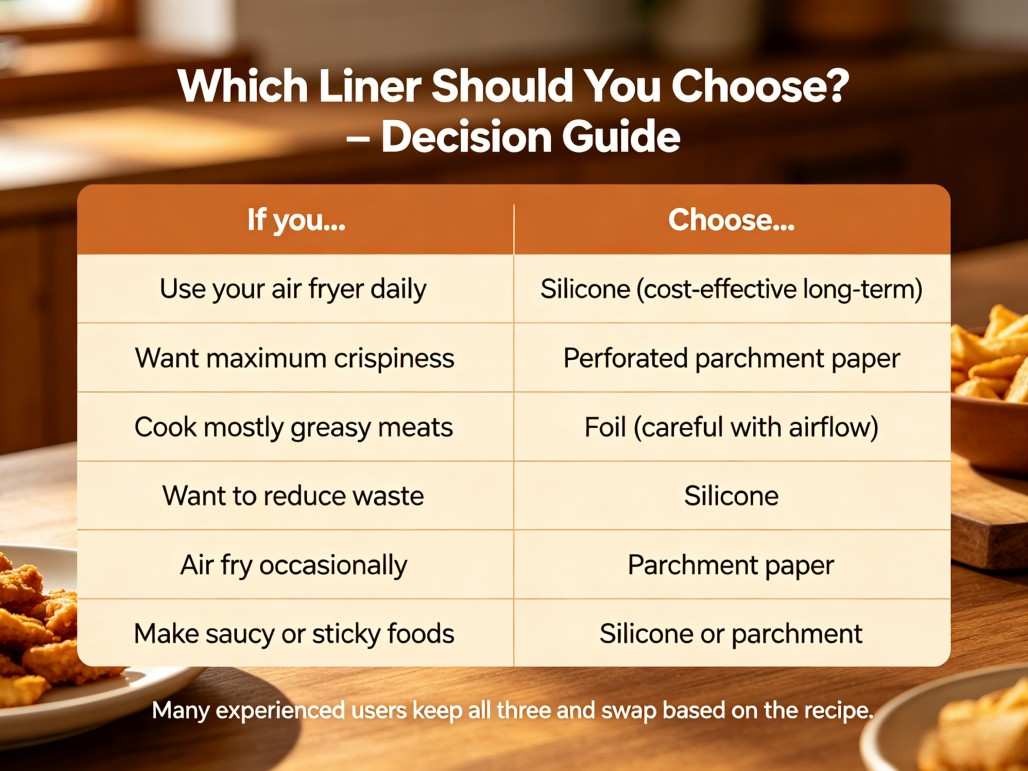
If you... | Choose... |
Use your air fryer daily | Silicone (cost-effective long-term) |
Want maximum crispiness | Perforated parchment paper |
Cook mostly greasy meats | Foil (with careful airflow management) |
Want to reduce waste | Silicone |
Air fry occasionally | Parchment paper (convenience wins) |
Make saucy or sticky foods | Silicone or parchment |
Expert tip from Fritaire: "If you cook often, the easiest setup is having all three and swapping based on the recipe".
Silicone-Compatible Cooking Appliances
Silicone isn't just for air fryers. High-quality food-grade silicone is remarkably versatile.
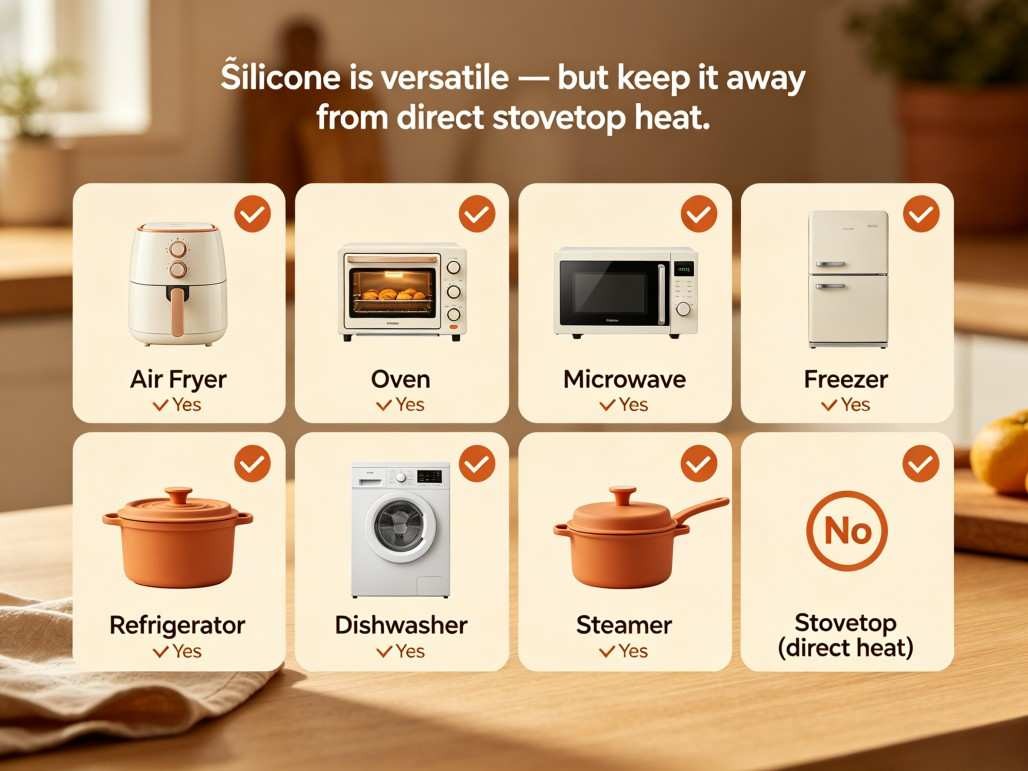
Appliances Silicone Can Handle
Appliance | Safe? | Temperature Limit | Notes |
Air Fryer | ✅ Yes | Up to 230°C | Use perforated liners for best airflow |
Oven | ✅ Yes | Up to 230°C | Check manufacturer's rating |
Microwave | ✅ Yes | N/A | |
Freezer | ✅ Yes | Down to -40°C | |
Refrigerator | ✅ Yes | Standard temps | Great for food storage |
Dishwasher | ✅ Yes | Top rack recommended | |
Steamer | ✅ Yes | Up to 100°C | Silicone steamers work well |
Stovetop (direct heat) | ❌ No | N/A | Not for direct flame or electric coil |
Broiler | ⚠️ Caution | May exceed 230°C | Check temperature—most broilers are too hot |
What About the Oven?
Can you put silicone in the oven? Yes—this is actually where silicone bakeware originated. Silicone baking mats (like Silpat) have been used in professional and home ovens for decades.
Oven-safe silicone can typically handle temperatures up to 220°C–230°C (428°F–446°F). Always check your specific product's rating, as some are only rated to 200°C (400°F).
Silicone in the oven vs. air fryer: The temperature requirements are similar, but air fryers have stronger, more direct airflow. This is why perforated silicone liners are recommended for air fryers—they allow hot air to circulate through the holes, ensuring even cooking.
Product Spotlight – Air Fryer Silicone Liners
If you're convinced that silicone is right for you, here's what to look for when shopping.
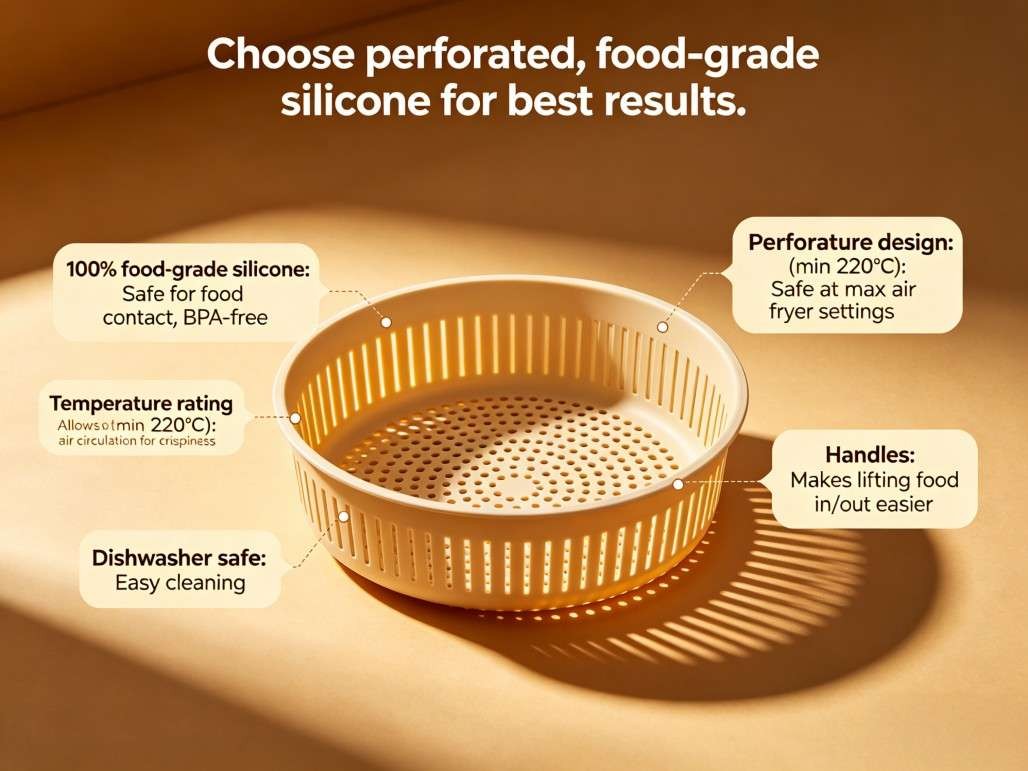
Key Features to Look For
Feature | Why It Matters |
100% food-grade silicone | Safe for food contact, BPA-free, non-toxic |
Perforated design | |
Temperature rating (min 220°C) | Ensures safety at max air fryer settings |
Dishwasher safe | Easy cleaning |
Ridges or raised pattern | |
Handles | |
Correct size for your basket | Prevents airflow blockage |
hat to Avoid
Non-food-grade silicone (check for certification)
Liners without perforations (blocks airflow, reduces crispiness)
Oversized liners (can touch heating element)
Cheap, unbranded silicone (may contain fillers)
Recommended Product Types
1. Perforated Silicone Mats
Flat mats with small holes that sit at the bottom of your air fryer basket. Best for everyday cooking of fries, vegetables, chicken, etc.
2. Silicone Baskets with Handles
Deeper containers that make it easy to lift food in and out. Great for foods that might spill or for easy transfer to serving plates.
3. Silicone Baking Cups
Small cups for muffins, egg bites, or individual portions. Perfect for baking in air fryers.
4. Silicone Lids/Covers
For covering bowls when reheating or for proofing dough.
How to Use Silicone in an Air Fryer – Step-by-Step Guide
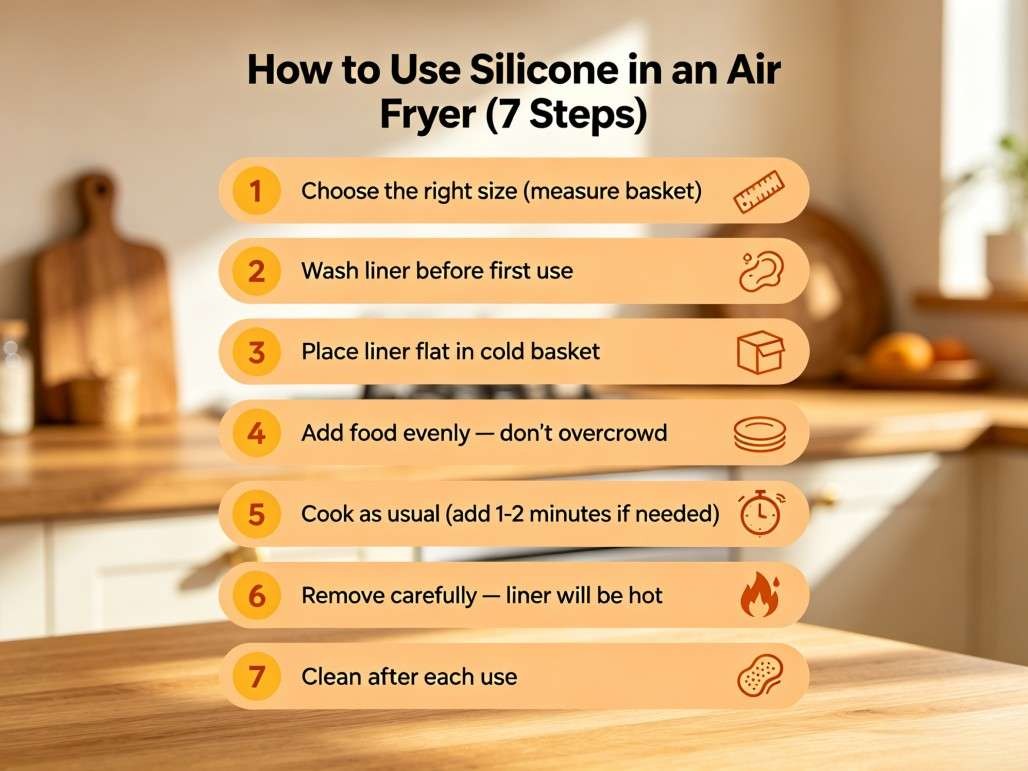
Step 1: Choose the Right Size
Measure your air fryer basket before purchasing. The liner should fit snugly inside without overlapping the edges.
Why this matters: An oversized liner can block airflow, touch the heating element, or get sucked up by the fan.
Step 2: Check Before First Use
Wash the liner with warm, soapy water
Rinse thoroughly
Check for any damage
Step 3: Place in Air Fryer
Insert the liner into the cold basket
Ensure it sits flat with no folds or creases
For perforated liners, holes should be facing up
Step 4: Add Food
Arrange food evenly on the liner
Don't overcrowd—leave space for air circulation
For best results, don't fill liner more than halfway
Step 5: Cook as Usual
Set your temperature and time
Silicone can handle standard air fryer temperatures
Pro tip: You may need to add 1-2 minutes to cooking time, as silicone can slightly reduce direct heat transfer
Step 6: Remove Carefully
Use the liner's handles (if available) or tongs
Warning: The liner will be hot—let it cool slightly before handling
Transfer food to plates
Step 7: Clean and Store
Wash after each use
Hand wash with warm soapy water, or place in dishwasher
Dry thoroughly before storing
Store flat or rolled, away from dust
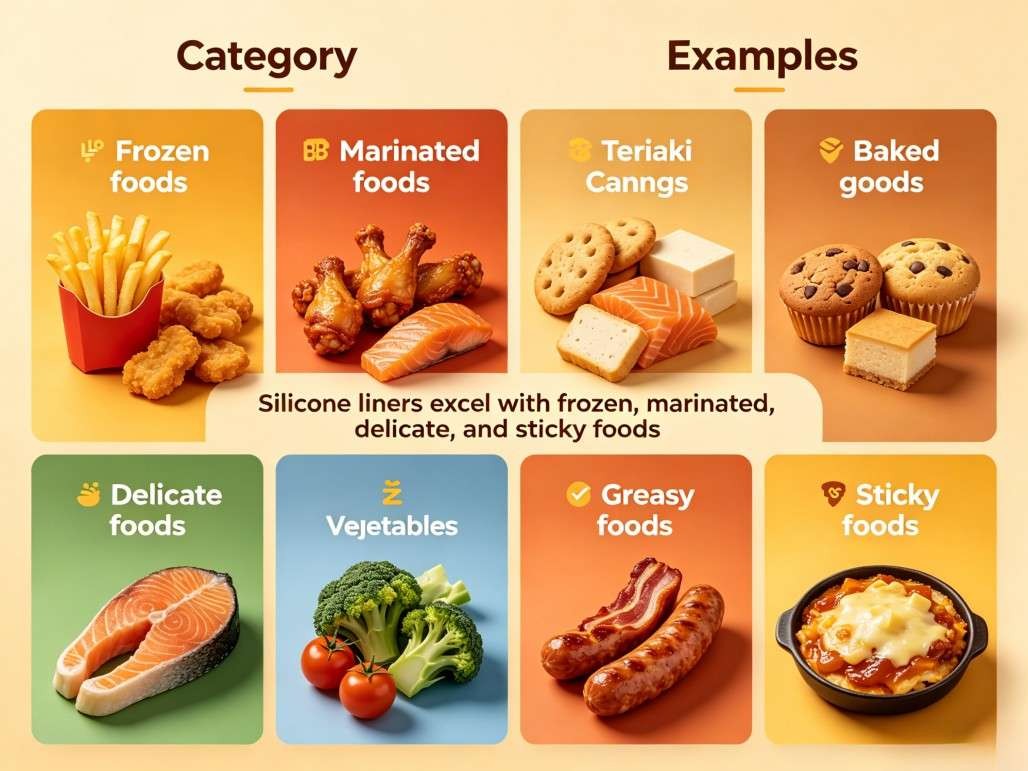
What Foods Work Best with Silicone Liners?
Excellent Choices
Food Type | Examples | Why It Works |
Frozen foods | French fries, chicken nuggets, mozzarella sticks | |
Marinated foods | BBQ wings, teriyaki salmon, tofu | |
Baked goods | Cookies, muffins, small cakes | |
Delicate foods | Fish fillets, vegetables, thin cutlets | |
Greasy foods | Bacon, sausages | |
Sticky foods | Cheese-topped dishes, glazed items | Non-stick surface saves frustration |
Foods to Avoid (or Use with Caution)
Food | Issue | Solution |
Very high-heat searing | May exceed silicone's safe temperature | Use bare basket or foil |
Heavy, dense foods | May cause liner to sag | Ensure liner has good support |
Foods that need maximum crispiness | Use perforated parchment instead |
Common Mistakes to Avoid
Based on expert recommendations, here are the most frequent errors people make with silicone air fryer liners.
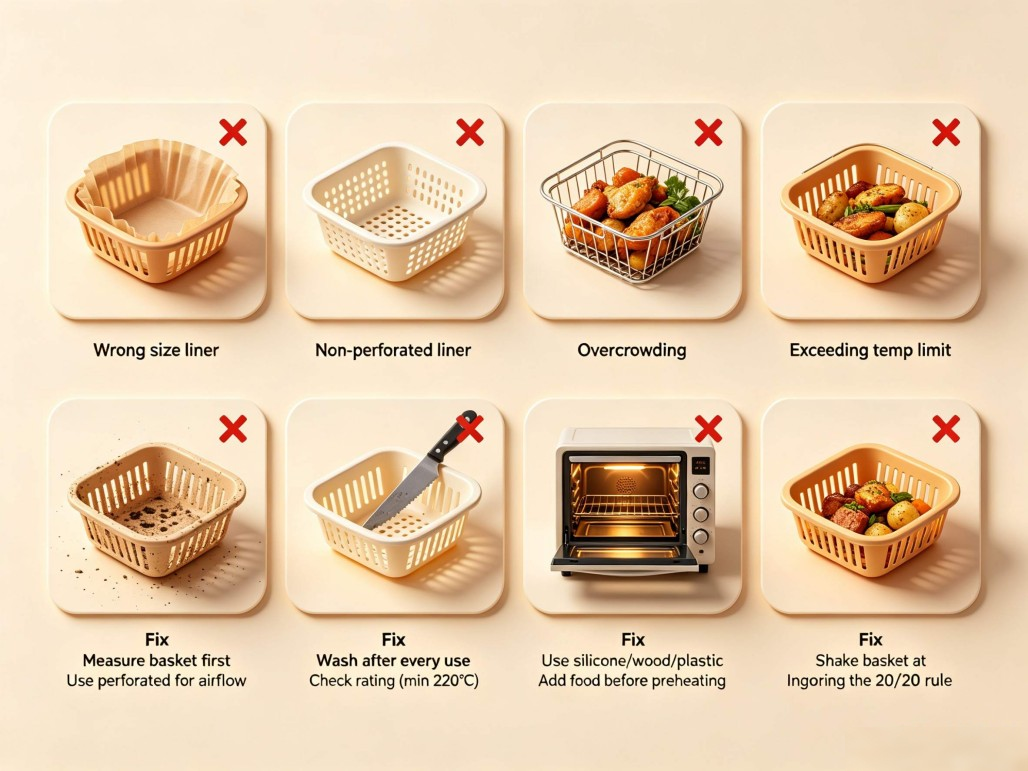
❌ Mistake 1: Using the Wrong Size Liner
The problem: An oversized liner blocks airflow, touches the heating element, or gets sucked up by the fan.
The fix: Measure your basket before buying. The liner should fit inside without overlapping edges.
❌ Mistake 2: Using Non-Perforated Silicone
The problem: Solid silicone blocks air circulation, leading to uneven cooking and soggy results.
The fix: Use perforated silicone liners specifically designed for air fryers.
❌ Mistake 3: Overcrowding the Liner
The problem: Too much food prevents proper air circulation, reducing crispiness.
The fix: Leave space between food items. Cook in batches if necessary.
❌ Mistake 4: Exceeding Temperature Limits
The problem: Some air fryers can exceed 230°C (446°F) on max settings. Low-quality silicone may degrade.
The fix: Check your liner's temperature rating. Most premium silicone is rated for 230°C.
❌ Mistake 5: Not Cleaning Properly
The problem: Residual grease builds up, causing odors and reducing non-stick performance.
The fix: Wash after every use with warm soapy water or in the dishwasher.
❌ Mistake 6: Using Sharp Utensils
The problem: Knives or forks can puncture silicone, creating tears that trap bacteria.
The fix: Use silicone, wood, or plastic utensils on silicone liners.
❌ Mistake 7: Ignoring the "20/20 Rule"
What is the 20/20 rule? When cooking frozen foods, shake the basket after 20 minutes of cooking at 200°C. This ensures even cooking and prevents sticking—regardless of what liner you're using.
❌ Mistake 8: Preheating with an Empty Liner
The problem: A lightweight silicone liner can blow around inside the preheating air fryer and potentially touch the heating element.
The fix: Either don't preheat, or place food on the liner before starting.
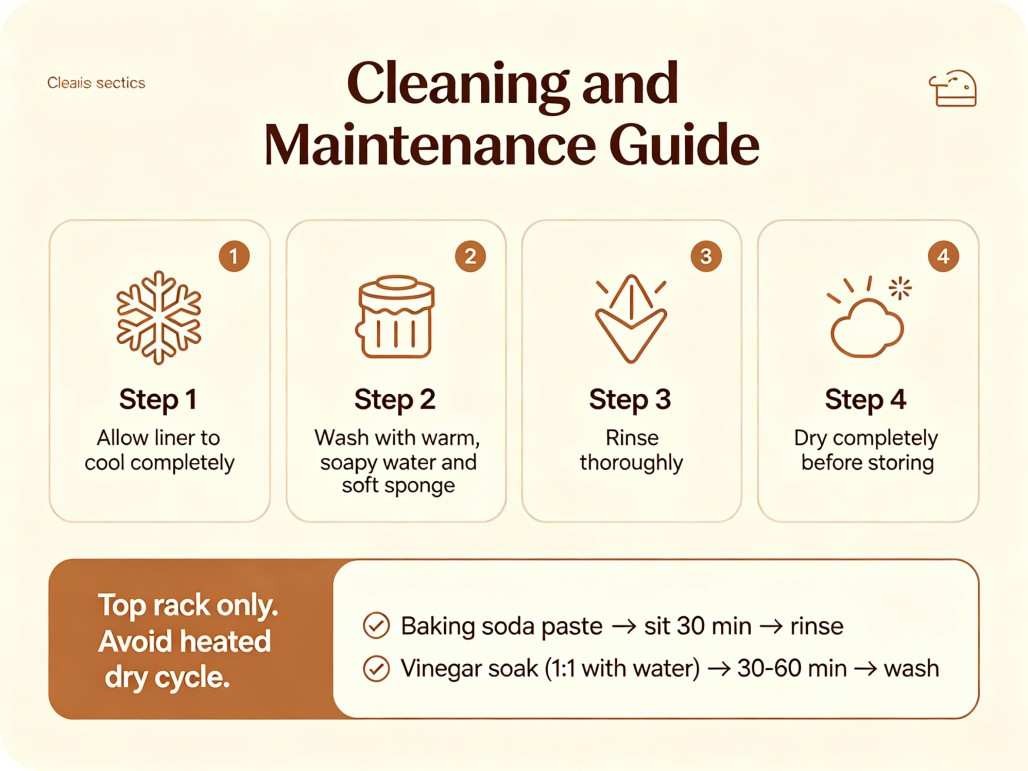
Cleaning and Maintenance Guide
Proper care extends your silicone liner's life and keeps it hygienic.
Daily Cleaning
| Step | Action |
1 | Allow liner to cool completely | |
2 | Remove any large food debris | |
3 | Wash with warm, soapy water | |
4 | ||
5 | Rinse thoroughly | |
6 | Dry completely before storing |
Dishwasher Instructions
Place on top rack only
Avoid the heated dry cycle—high heat can damage silicone over time
Use normal dishwasher detergent
Removing Stubborn Odors or Stains
Over time, silicone can absorb strong food odors (fish, curry, garlic) or develop stains from tomato-based foods.
Baking soda method
Make a paste of baking soda and water
Apply to the line
Let sit for 30 minutes
Rinse thoroughly
Vinegar method:
Soak liner in a mixture of equal parts white vinegar and water
Leave for 30-60 minutes
Wash as usual
Storage Tips
Store in a cool, dry place away from direct sunlight
Keep away from dust and pet hair
Don't fold or crease silicone liners (store flat or rolled)
When to Replace Your Silicone Liner
Sign | Action |
Visible cracks or tears | Replace immediately |
Sticky or tacky surface | Replace (material degradation) |
Deep scratches or punctures | Replace (bacteria risk) |
Normal use | Replace every 1-2 years with frequent use |
Frequently Asked Questions
Q: Will silicone melt in an air fryer?
A: High-quality, food-grade silicone will not melt at standard air fryer temperatures (up to 200°C/400°F). Premium silicone is rated to 230°C (446°F). However, cheap silicone with fillers may degrade.
Q: Is it better to use parchment paper or silicone in an air fryer?
A: It depends on your priorities. Silicone is better for frequent use, eco-friendliness, and long-term cost savings. Parchment paper is better for maximum crispiness, zero cleanup, and occasional use. Many people keep both.
Q: Can silicone air fryer liners go in the oven?
A: Yes—most silicone liners are also oven-safe up to the same temperature rating (typically 220°C–230°C). Always check your product's specifications.
Q: Are silicone air fryer liners safe for health?
A: Yes. FDA-approved, food-grade silicone is non-toxic, BPA-free, and does not leach chemicals into food. It's considered one of the safest options for non-stick cooking.
Q: What is the "25 rule" for air fryers?
A: The "25 rule" refers to reducing temperature by 25°F (about 15°C) when converting conventional oven recipes to air fryer recipes. This isn't specific to silicone liners but is a general air fryer cooking guideline.
Q: What foods should you not put in an air fryer?
A: Wet batters (like for frying fish or donuts), large whole roasts, cheese-heavy dishes (can melt and drip), and leafy greens (can blow around and burn). Silicone liners can help with some of these but don't solve all problems.
Q: Can diabetics use an air fryer?
A: Yes—air fryers are often recommended for diabetics because they require significantly less oil than deep frying, helping manage fat and calorie intake without sacrificing food texture.
Q: Is it unhealthy to use aluminum foil in an air fryer?
A: Not inherently, but foil can block airflow and react with acidic foods. When used correctly (small amounts, not blocking circulation), foil is generally safe. However, silicone or parchment are often better choices for most foods.
Q: What is the best liner to line an air fryer with?
A: For most people, perforated silicone liners offer the best balance of safety, reusability, ease of cleaning, and cooking performance. For maximum crispiness, choose perforated parchment paper.
Conclusion
Can you use silicone in an air fryer? Absolutely—with the right precautions.
Key Takeaways
Do | Don't |
✅ Use 100% food-grade silicone from reputable brands | ❌ Use cheap silicone with unknown fillers |
✅ Choose perforated liners for airflow | ❌ Use solid silicone that blocks circulation |
✅ Check temperature ratings (220°C+/428°F+) | ❌ Exceed the liner's maximum temperature |
✅ Wash after each use (dishwasher safe on top rack) | ❌ Use sharp utensils that can puncture silicone |
✅ Ensure proper fit—not touching heating element | ❌ Use oversized liners that block airflow |
✅ Replace when damaged or degraded | ❌ Continue using torn or cracked liners |
The Bottom Line
Silicone air fryer liners are a game-changer for frequent users. They save money over time, reduce kitchen waste, and make cleanup effortless. While they may slightly reduce crispiness compared to parchment paper, the convenience and eco-friendliness make them worthwhile for most home cooks.
For the best results, invest in high-quality, perforated, food-grade silicone liners from reputable manufacturers. Follow the usage and cleaning guidelines in this guide, and your silicone liner will serve you well for years.
And remember—you don't have to choose just one. Many experienced air fryer users keep silicone liners for daily cooking, parchment paper for maximum crispiness, and foil for greasy meats. Having all three lets you choose the right tool for every recipe.