



Silicone's soft, rubbery look often makes people think it would melt the moment it meets high heat — but the truth is quite different.
From industrial equipment to kitchenware and even baby products, silicone is a go-to material choice.
One of the reasons for its omnipresence is that it is highly resistant to temperature. It can withstand insanely high temperatures without melting. And that's not it, silicone performs well even in remarkably low temperatures.
Because of its different and versatile traits, silicone has become one of the most relied upon materials across a lot of industries, from domestic tools to aerospace parts and everything in between.
Understanding its thermal properties and performance can be very helpful for retailers, manufacturers, and brand owners who need to know what conditions will silicone melt especially when it comes to product development and market positioning.
This article gives an evidence-based analysis of silicone's temperature range, scientific principles, real-world applications, and customized solutions available for businesses.
Temperature Range Silicone Can Withstand
One of silicone's key properties is its ability to remain dimensionally stable in both high-temperature and low-temperature environments. Depending on how they are made, different silicone varieties have the following bearable temperature ranges:
Standard silicone rubber: –40°C to +200°C
High-temperature silicone compounds: up to +250°C
Industrial grade silicone: short-term resistance up to +300°C
Cold-resistant silicone varieties: remain flexible even at –60°C or lower
This broad thermal resilience allows silicone to function consistently in applications that involve drastic temperature changes and prolonged contact with heat or cold.
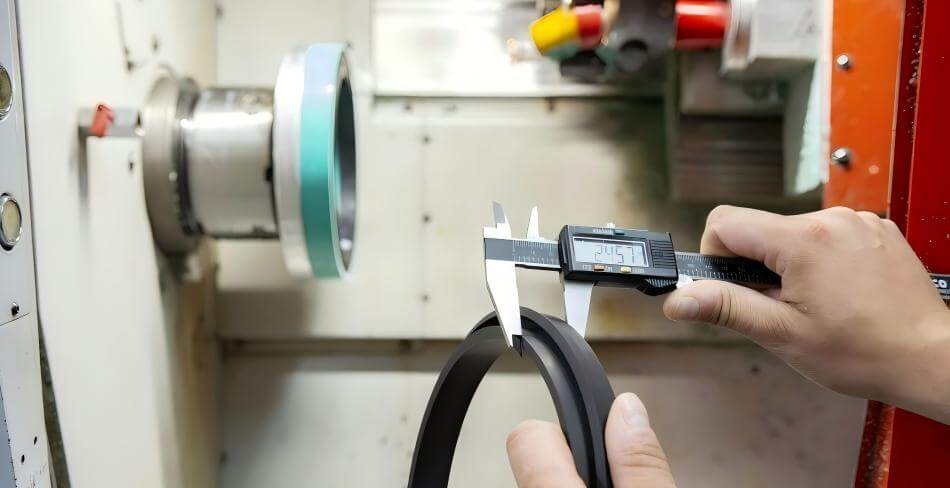
Application Examples of Silicone's Temperature Resistance
Silicone's broad thermal resilience makes it a practical choice for both industrial equipment and everyday household use.
Common Industrial Applications
Automotive Components
In the engine bay, temperature can go as high as 150°C or more. While this level of heat would push many materials close to their melting point, silicone stays far below its own melting or breakdown temperature. Silicone gaskets, hoses, and seals can maintain their integrity and elasticity easily at this temperature and hence have a long lifespan.
Aerospace and Aviation
Parts of aircrafts experience abrupt changes in temperature most of the time. Silicone, however, performs reliably because the melting point of silicone-based materials is far beyond the temperature range most electronics ever reach. This makes silicone perfect for sealing and absorbing vibration.
Electronics
Silicone is excessively used for wire insulation and protective coatings. Its unchanged performance even during wide temperature changes is a property that pays well when it comes to safeguarding electric parts.
Food-Grade and Medical Applications
Products such as a spatula, ice cube tray, sterilization seals, and medical tubing need a material that does not lose its shape and melting easily. Silicone would be a good choice, Even more important is food-grade silicone would not leach harmful chemicals.
Everyday Consumer Applications
Silicone's temperature resistance is equally suitable for household items. Here are a few examples:
Microwave and oven use: Is silicone microwave and oven safe? The answer would be YES! Since it can bear extreme heat, silicone is very widely used in household items that call for very high resistance to heat. For instance, it is used in making baking trays, oven-safe food containers, lids, and a lot more.
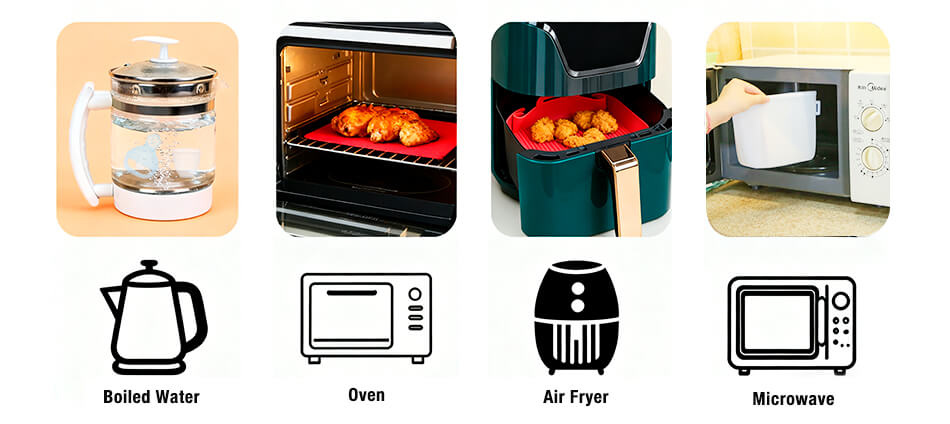
One of the main reasons is that silicone doesn't leach chemicals like usual plastics do, neither does it lose its shape. Hence, it is safe and dependable for daily use kitchen items.
Refrigerators and freezers: One of the most interesting properties of silicone is that it doesn't get brittle even when the temperatures fall insanely low. This is why it is used in manufacturing sealing gaskets for freezers, ice moulds, bags for storing food, and containers.
Dishwashers: Because silicone does not get easily affected by hot water and chemicals in detergents, it's safe to wash silicone utensils in a dishwasher. Even after several rounds, the colour doesn't fade and silicone keeps its shape intact.
Cookware and kitchen tools: Do you wonder why every other spatula is made with silicone nowadays? From spatulas to, kitchen gloves, baking trays, and mats silicone is everywhere. This is because it's safe and durable. It doesn't contaminate your food with chemicals even when you are using silicone utensils in boiling water or sizzling fried food.
Factors Affecting Silicone's Heat Resistance
If you wonder why silicone is capable of bearing such extreme temperatures unlike the usual organic rubbers, it has a lot to do with its chemical bonds, i.e. silicone oxygen bond. Below is how it impacts silicone's properties.
High bond strength: The Si–O bond has greater bond energy than carbon-based bonds, giving it more stability.
Flexibility at low temperatures: silicone is made with very long polymers that resist complete restriction of movement even under very low temperatures, thus avoiding cracking and brittleness.
Resistance to thermal oxidation: Silicone does not lose its shape easily, even in extreme heat or very long exposure to oxygen. This is why silicone items liver long.
Inherent insulation properties: As silicon has lower thermal conductivity therefore, it remains a go to choice for electronics and heat-sensitive systems.
These scientific properties are the reason why silicone maintains performance in places where many other materials fail to perform
Melting Point of Silicone Rubber
Interestingly, silicone doesn't have a set melting point. Instead of liquidating at high temperatures, it gradually gets softer over time until it finally decomposes only at unbelievably high temperatures.
Here are a couple of important points to understand about its melting point:
Silicone starts decomposing only when the temperature goes as high up as 300°C–350°C
These strengths of silicone make it a better choice than plastic making it more beneficial in applications such as baking equipment, industrial seals, and high-temperature machinery.
Ignition Point and Flammability
The combustion of silicon is virtually impossible which becomes another outstanding performance factor. Most silicone rubbers:
Have an ignition point at approximately 450°C
Exhibit self-extinguishing behaviour, means that the material stops burning when the flame source is removed. Form a stable, non-conductive ash layer, providing added protection in electrical environments. These features of silicone make it ideal for industrial use as well as household use, especially where fire resistance and safety are essential.
Cold-Resistance and Low-Temperature Performance
A remarkable property of silicone is that it can maintain its elasticity even at very freezing temperatures of around -60°C or even lower. At this point most other elastomers lose their resistance and become brittle or start cracking. Even at –60°C, silicone retains elasticity and shape.
This makes it a good fit for outdoor equipment, refrigeration parts, aerospace parts, and settings where the temperature drops sharply.
Kean Customized Temperature-Resistant Silicone
At KEAN, we recognize that thermal performance is not a one-size-fits-all requirement. As a specialized manufacturer with deep material expertise, we partner with brands and retailers to develop silicone solutions that are precisely engineered for specific temperature environments and functional demands.
We customize silicone compounds to match the exact thermal, mechanical, and compliance needs of your products. Whether your application involves repeated autoclaving, prolonged oven exposure, outdoor freezing, or industrial-level heat cycles, KEAN delivers materials that perform reliably. Our customization capabilities include:
Performance-Enhancing Properties: Adjustable hardness, elongation, tear strength, and compression set to ensure functionality across temperature cycles.
Specialized Additives: Incorporation of UV stabilizers, flame retardants, and thermal conductors/insulators based on operational conditions.
Compliance & Safety: Full food-grade (FDA, LFGB),and RoHS-compliant material options—ideal for consumer applications.
To guarantee that every product performs as specified in real-world conditions, KEAN operates an in-house laboratory equipped for advanced thermal testing.


